Written by Dr. Dawson, DPM, FACFAS, Foot and Ankle Surgeon · Last updated November 2026
It usually happens on a push-off. A step back on the tennis court. A first stride in a pickup game. You feel a pop in the back of your ankle, and it feels like someone kicked you in the calf. You turn around to see who did it. Nobody is there. That story is so common it is almost a diagnosis by itself; the Achilles tendon, the thick cord that links your calf to your heel, has torn through.
A rupture scares people, and it should be taken seriously, but it is also an injury with two good treatment paths. One is surgery, and the other is a boot, worn the right way, with rehab that starts right away. This guide walks through both, the numbers behind them, and the boot protocol I use when surgery is not the choice.
📌 TL;DR
An Achilles rupture is a full tear of the tendon, usually felt as a pop during push-off. Surgery and boot treatment both work, and in the largest trial, function at one year was the same either way. The trade is simple. Skipping surgery raises the chance the tendon tears again, about 6 in 100 versus fewer than 1 in 100 with surgery, and surgery adds wound and nerve risks instead. The boot path only works if the torn ends touch when the foot points down, and that check happens in the first few days. So a fresh rupture is a days problem, not a weeks problem. Get seen fast.
What a Rupture Is
The Achilles is the strongest tendon in the body, and it takes the force of your whole calf every time you walk, climb, or push off to run. A rupture is a tear through most or all of that tendon, and most tears land a few centimeters above the heel bone, in a stretch of tendon with a thinner blood supply.
This is not the same problem as Achilles tendinopathy, which is a worn, sore tendon that is still in one piece. A rupture is a tendon in two pieces; the treatment plans are different, and so is the clock.
Who tears an Achilles? The classic patient is active and in their 30s, 40s, or 50s. Basketball, tennis, pickleball, and soccer supply a steady share, and so do falls and a missed step off a curb. Many people had a sore tendon for months first and never had it checked, and some had no warning at all.
⚠️ Medication warning: Fluoroquinolone antibiotics (ciprofloxacin, levofloxacin, and their relatives) carry a known tendon warning and raise the risk of tendon rupture. If you felt a pop while taking one, tell the clinician who sees you, because it changes the conversation.
🔗 Related Reading: Achilles Tendinopathy: Your Complete Guide to Understanding and Healing: The sore, worn tendon that often comes before a tear, and the loading program that treats it.
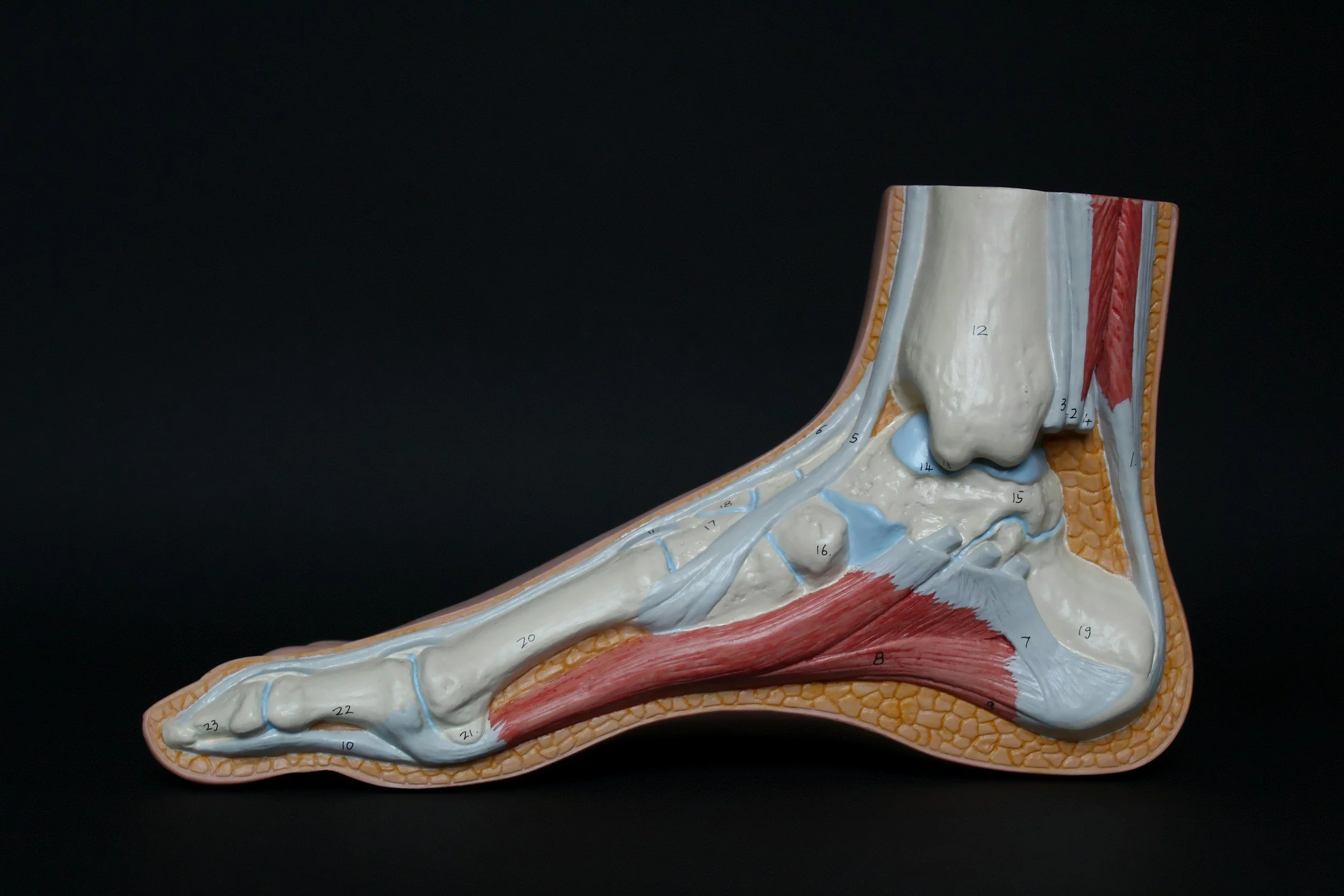
Most ruptures tear a few centimeters above the heel bone, where the tendon’s blood supply runs thin.
How We Know It Is Torn
Three findings do most of the work.
A gap you can feel. Run a thumb down the tendon and there is a soft dent where the tear is.
The squeeze test. You lie face down and I squeeze your calf, and a connected tendon pulls the foot down while a torn one does not; the foot just sits there.
No push-off. You cannot rise onto your toes on that side. Not won't. Can't.
Ultrasound adds one key piece of information; it shows whether the torn ends come together when the foot points down. That single fact decides whether the boot path is open to you, and it is covered below; an MRI is sometimes used for surgical planning or when the picture is not clear.
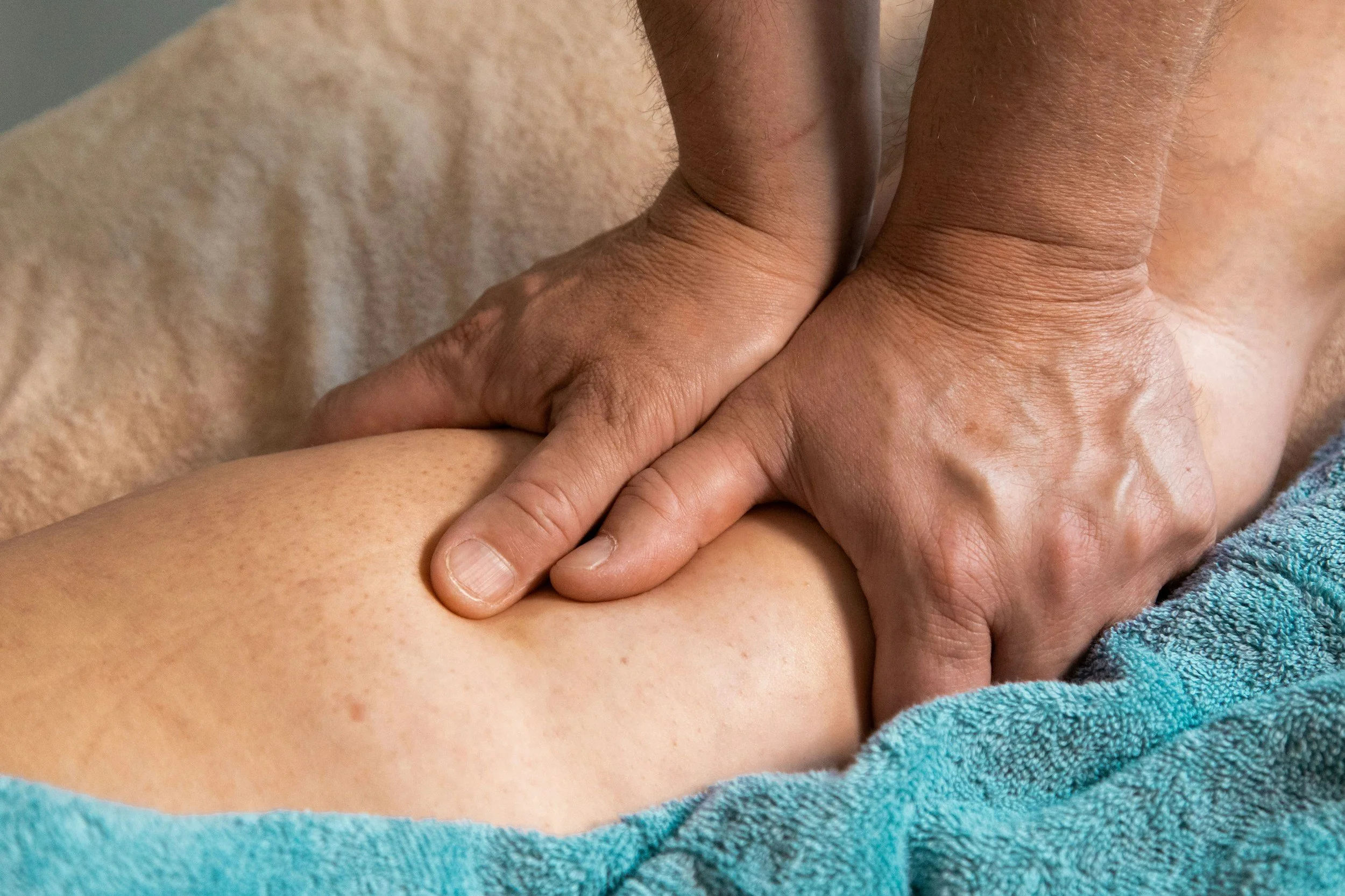
The calf squeeze test: if the foot does not move when the calf is squeezed, the tendon is not connected.
Surgery or No Surgery
Twenty years ago this was not much of a debate, and a torn Achilles got surgery. Then the trials got bigger and the rehab got better, and the answer changed.
The largest trial ran in Norway and was published in the New England Journal of Medicine in 2022. It enrolled 554 people with a fresh rupture and split them three ways, into no surgery, open repair, and minimally invasive repair. At one year, the change in function scores was the same in all three groups. Surgery was not better.¹
The difference showed up in one place. Re-rupture. About 6 in 100 people tore the tendon again without surgery, while with surgery it was fewer than 1 in 100 in each surgical group.¹ That gap is real, and it is the main thing surgery buys you.
The risks run the other way too. Nerve injury happened in about 1 in 100 people treated without surgery, and it happened in about 3 in 100 after open repair and about 5 in 100 after the minimally invasive repair.¹ Surgery also brings a wound that can get infected, and a boot brings none of that.
An earlier Canadian trial points at why the boot path works at all. In that study, both groups, surgery and no surgery, used the same fast rehab, with early weight bearing and early motion. With rehab held equal, strength and motion came out the same, and re-ruptures were close, 3 without surgery and 2 with it, out of 72 people in each group.² The rehab is not the side dish. It is a main ingredient.
And when the choice is between two ways of treating without surgery, the boot did as well as a cast, and it lets you walk from day one. The UK STAR trial enrolled 540 people, all treated without surgery, and compared a walking boot with early weight bearing against a traditional cast. Healing and function at 9 months were the same³, and that trial is why the modern no-surgery path is a boot you walk in, not a cast you sit in.
A Swedish trial of 100 people adds one more piece; symptoms and quality of life at one year matched between surgery and no surgery. But two jump and hop tests favored the surgical group⁴, so if explosive jumping is your living or your sport, that belongs in the conversation.
So the decision is a trade, made with the numbers on the table. Same function at one year. A higher re-tear chance without surgery. Wound and nerve risks with it. Your sport, your job, and your appetite for each risk decide the rest.
Who Can Skip Surgery
The boot path has a gate, and the gate is physical; point the foot down, the position called equinus. If the two torn ends meet in that position, the tendon can knit back together inside the boot. If a gap stays open with the foot fully pointed, a boot cannot close it, and that patient needs the surgery conversation.
We check this with ultrasound and exam, and we check it early; the first few days are when the ends are easiest to bring together. A rupture that is weeks old is a harder problem, and the options narrow.
The boot path also asks something of you, eight weeks in a boot, day and night, and rehab that starts in the boot and runs for months. People who cannot do that part are not good candidates, no matter what the ultrasound shows.
Surgery tends to lead when the gap stays open, when the tear is old, when this is a second tear, or when a high-demand athlete weighs the re-tear numbers and the jump test data and chooses the repair. Those are judgment calls, and I make them with the patient, not for the patient.
When surgery is the choice, I lean minimally invasive, and a midsubstance bridge repair is my preference. My surgical patients usually bear weight right away, in a walking boot with a heel lift.
The Boot Protocol I Use
The boot in this protocol is an articulating boot with a hinge at the ankle. The hinge lets your foot point down freely, and a stop on the hinge blocks it from bending back up too far. That stop is the whole safety system, and it holds the torn ends together while the ankle still gets to move.
Day one. The boot goes on with the foot pointed down and the stop set at its most pointed position. You put your full weight through the boot from the first day, and crutches are for balance at first, not for keeping weight off, because weight bearing is part of the treatment, and it is the piece the UK STAR results rest on.³
Clot prevention. A leg in a boot carries a real blood clot risk, so at your first visit we talk through prevention, and whether you need blood-thinning medicine, which depends on your own risk factors.
Weeks 1 and 2. The stop stays at the most pointed setting, and the boot stays on day and night, even to sleep. It comes off only to wash and check the skin, and the foot stays pointed down the whole time it is off.
Weeks 2, 4, and 6. At each visit I move the stop one step closer to flat, and by week 8 your foot sits flat in the boot. Do not change the hinge setting yourself. The steps look small, but each one is a dose of stretch the healing tendon has to be ready for.
Therapy starts in the boot. Several times a day, point your foot down and let it relax back inside the range the hinge allows, because movement inside the stop is safe, and it helps the tendon heal stronger. Add calf squeezes, holding each for a slow count of 5, working up to 30 reps a day, and add toe curls and straight leg lifts so the rest of the leg does not waste away while the tendon heals.
Never walk barefoot. Not even a few steps to the bathroom at night. Most re-tears happen in one quick unprotected moment, and the highest risk window is the first 10 weeks or so; half the re-ruptures in the Norwegian trial happened in that span.¹
Week 8. If the tendon feels solid and connected, the boot comes off and you move into regular shoes with a heel lift in both shoes. The lifts come out over the next month or so, and therapy now shifts to building strength back, starting with two-leg heel raises.
Weeks 8 to 12. One rule matters most in this stretch. Do not bend the ankle up past flat. A healing tendon that gets stretched too early can heal long, and a long tendon means a weak push-off for good; that is the complication I work hardest to prevent in this phase.
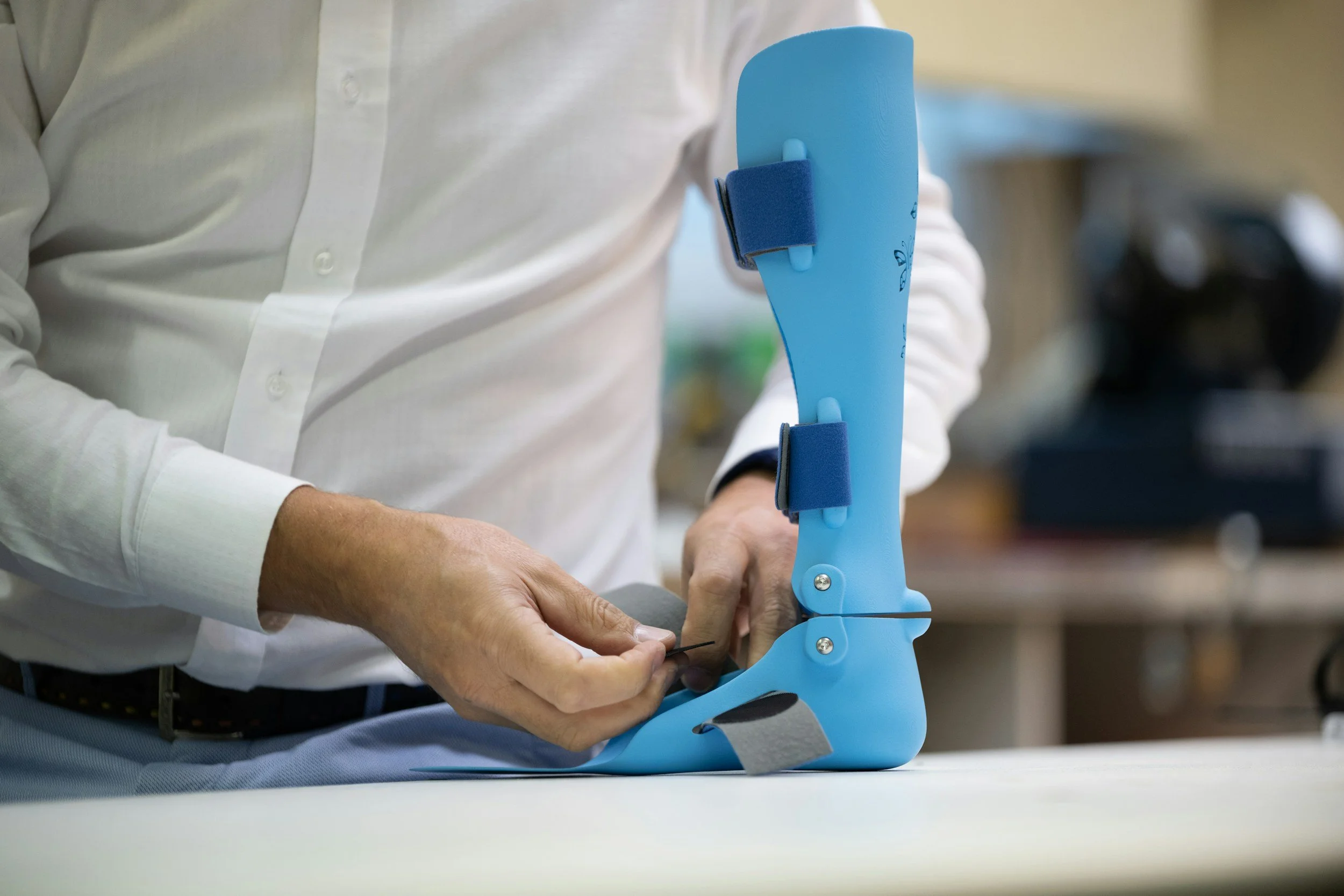
The articulating boot, whose hinge lets the foot point down while the stop blocks it from bending back too far.
🔗 Related Reading: Ankle Sprains: Your Complete Recovery and Prevention Guide: The balance and calf work in sprain rehab overlaps a lot with the later stages of rupture rehab.
A Special Case: Tears Up by the Muscle
Some ruptures tear higher, where the tendon meets the calf muscle, which doctors call the musculotendinous junction. These tears behave a little differently, and the boot is often the better fit here, not the fallback.
Stitches hold poorly in muscle. That is a plain mechanical fact, and it takes away much of what surgery offers at this level. The junction also has a better blood supply than the thin stretch lower down, so healing has more to work with. The same gate applies, and if the ends meet with the foot pointed down, the boot protocol runs the same way.
Expect two differences. There is usually more swelling and bruising early, because the tear is in tissue with more blood flow, and strength comes back slower, because the injury involves the muscle itself, not just the cord below it. Set that expectation early and the slower curve is a plan, not a disappointment.
Recovery Timeline
Every tendon heals on its own clock, but the shape of the year looks like this.
| Window | What it usually looks like |
|---|---|
| Weeks 0 to 2 | Boot on, foot pointed down, full weight in the boot, daily in-boot exercises |
| Weeks 2 to 8 | Hinge stop advanced one step at each visit, foot flat by week 8 |
| Weeks 8 to 12 | Boot off, heel lifts in both shoes, two-leg heel raises, no bending up past flat |
| Months 3 to 5 | Single-leg strength work, lifts out, longer walks, light cycling |
| Months 5 to 6 | Running starts if strength tests pass |
| Months 6 to 9 | Back to sport, cutting and jumping last |
Driving usually returns around weeks 8 to 10 for a right-sided tear, once the boot is off and you can work the pedals safely. A left-sided tear in an automatic car is often sooner, so ask at your visit, because your case decides it.
About the end of that table, in the Swedish trial, people in both groups still had measurable deficits on the injured side at one year.⁴ A rupture is a long injury even when everything goes right, and the rehab is how you shrink that deficit.
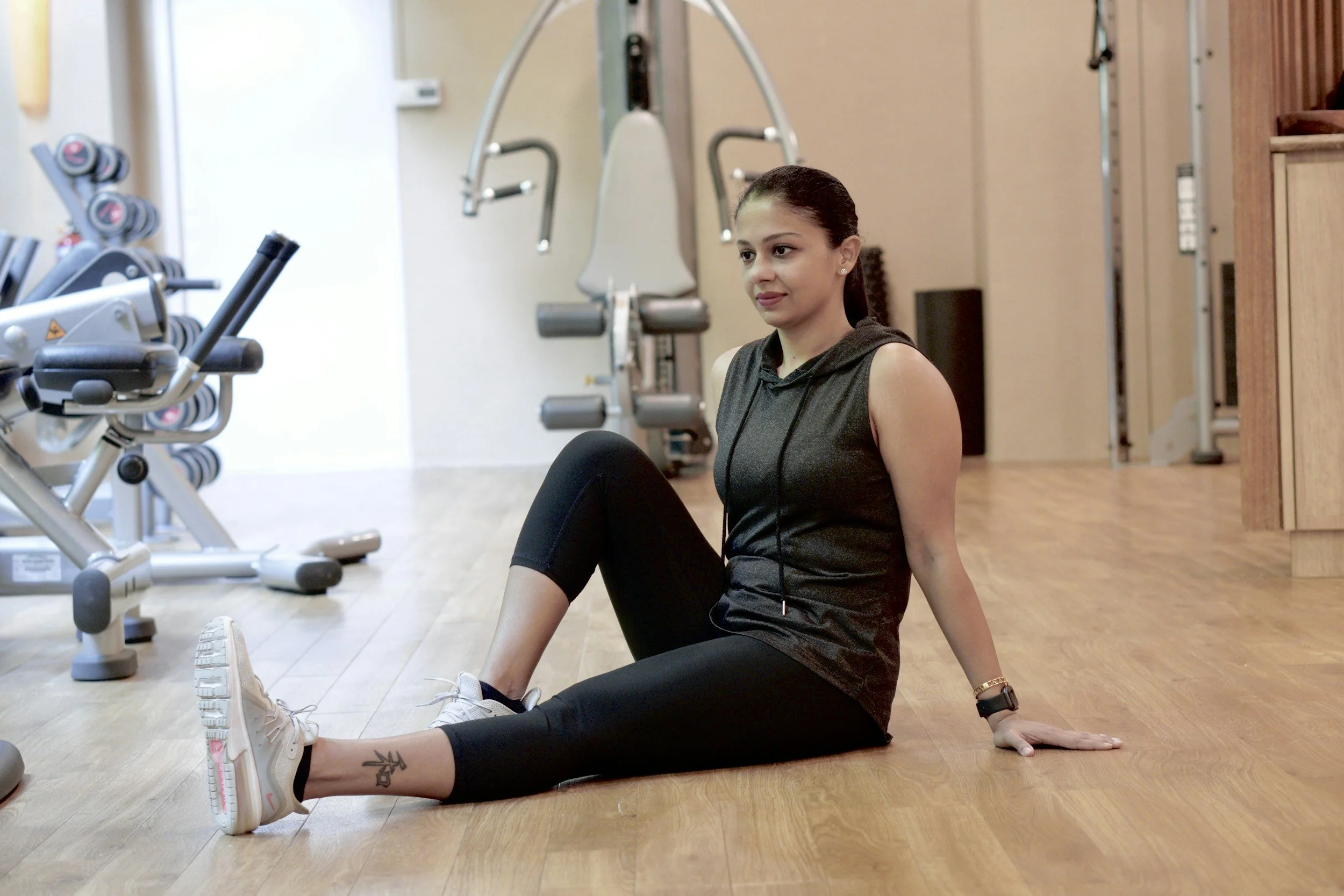
Two-leg heel raises are the first strength milestone after the boot comes off.
Get Seen Fast, and Call If
A fresh rupture rewards speed, so if you felt the pop, get seen within the first few days. That is when the torn ends are easiest to bring together and when every option is still open.
Call the office the same day if:
- You fall, or step down hard on the foot with the boot off
- You feel another pop in the back of the ankle
- Your calf swells, aches, or feels warm and tight, which can be a blood clot, and it needs a same-day call
- Your toes go numb, pale, or blue, or the boot cracks or breaks
Frequently Asked Questions
Do I need surgery to get back to my sport?
Not for function. In the largest trial, function at one year was the same with or without surgery.¹ Surgery lowers the chance of a second tear, and jump and hop testing favored surgery in one trial⁴, so if your sport is built on jumping and cutting, we weigh those two facts together and decide.
Can I walk on it right away?
In the boot, yes. Full weight from day one is part of the protocol, and the boot trial data behind this approach used early weight bearing.³ Barefoot, no. Not one step. The boot is what makes walking safe.
I waited a week before coming in. Did I miss my window?
Come in anyway. A week is not game over, because the ends are checked the same way, and if they meet with the foot pointed down, the boot path may still be open. The window narrows with time, which is why the next step is an appointment, not more waiting.
What happens if it tears again?
Half of second tears happen in the first 10 weeks, often in a fall or a barefoot moment.¹ A re-rupture usually ends the boot path; surgery becomes the main option, and it works better on a fresh second tear than a late one, so call the same day.
Will my calf ever be as strong as the other one?
For most people it gets close, and some keep a small deficit; in the Swedish trial, both the surgery and no-surgery groups still tested weaker on the injured side at one year.⁴ The part you control is the rehab, because the tendon rebuilds in response to load, and the months of heel raise work are where push-off strength comes back.
Can I take the boot off at night once it feels better?
No. Feeling better is not the same as healed, and sleep is when an unguarded foot bends the wrong way. The boot stays on day and night until the week 8 visit, and that rule has no early exit.
🦶 Recommended Products for Achilles Rupture Recovery
These items are listed for education and reference only. They are not a substitute for medical advice. Please see your podiatrist for specific recommendations. I may receive a commission if you purchase through these links, at no additional cost to you. The articulating boot itself is fitted in clinic. It is not a store purchase, because the hinge settings are part of the treatment.
- EvenUp Walking Boot Leveler: Worn on the opposite shoe, it levels your hips while you walk in the boot, which saves your back and the other knee
- Stretching Bands: For the band resistance work your therapist adds as the tendon starts taking load again
References
- Myhrvold SB, Brouwer EF, Andresen TKM, Rydevik K, Amundsen M, Grün W, Butt F, Valberg M, Ulstein S, Hoelsbrekken SE. Nonoperative or Surgical Treatment of Acute Achilles' Tendon Rupture. New England Journal of Medicine. 2022;386(15):1409-1420. DOI: 10.1056/NEJMoa2108447. PMID: 35417636.
- Willits K, Amendola A, Bryant D, Mohtadi NG, Giffin JR, Fowler P, Kean CO, Kirkley A. Operative versus nonoperative treatment of acute Achilles tendon ruptures: a multicenter randomized trial using accelerated functional rehabilitation. The Journal of Bone and Joint Surgery. American Volume. 2010;92(17):2767-2775. DOI: 10.2106/JBJS.I.01401. PMID: 21037028.
- Costa ML, Achten J, Marian IR, Dutton SJ, Lamb SE, Ollivere B, Maredza M, Petrou S, Kearney RS; UKSTAR trial collaborators. Plaster cast versus functional brace for non-surgical treatment of Achilles tendon rupture (UKSTAR): a multicentre randomised controlled trial and economic evaluation. The Lancet. 2020;395(10222):441-448. DOI: 10.1016/S0140-6736(19)32942-3. PMID: 32035553.
- Olsson N, Silbernagel KG, Eriksson BI, Sansone M, Brorsson A, Nilsson-Helander K, Karlsson J. Stable surgical repair with accelerated rehabilitation versus nonsurgical treatment for acute Achilles tendon ruptures: a randomized controlled study. The American Journal of Sports Medicine. 2013;41(12):2867-2876. DOI: 10.1177/0363546513503282. PMID: 24013347.
Prefer a one page version? Print the Achilles Rupture handout.
For your physical therapist: Nonoperative PT Protocol (boot)
For your physical therapist: Postoperative PT Protocol (repair)