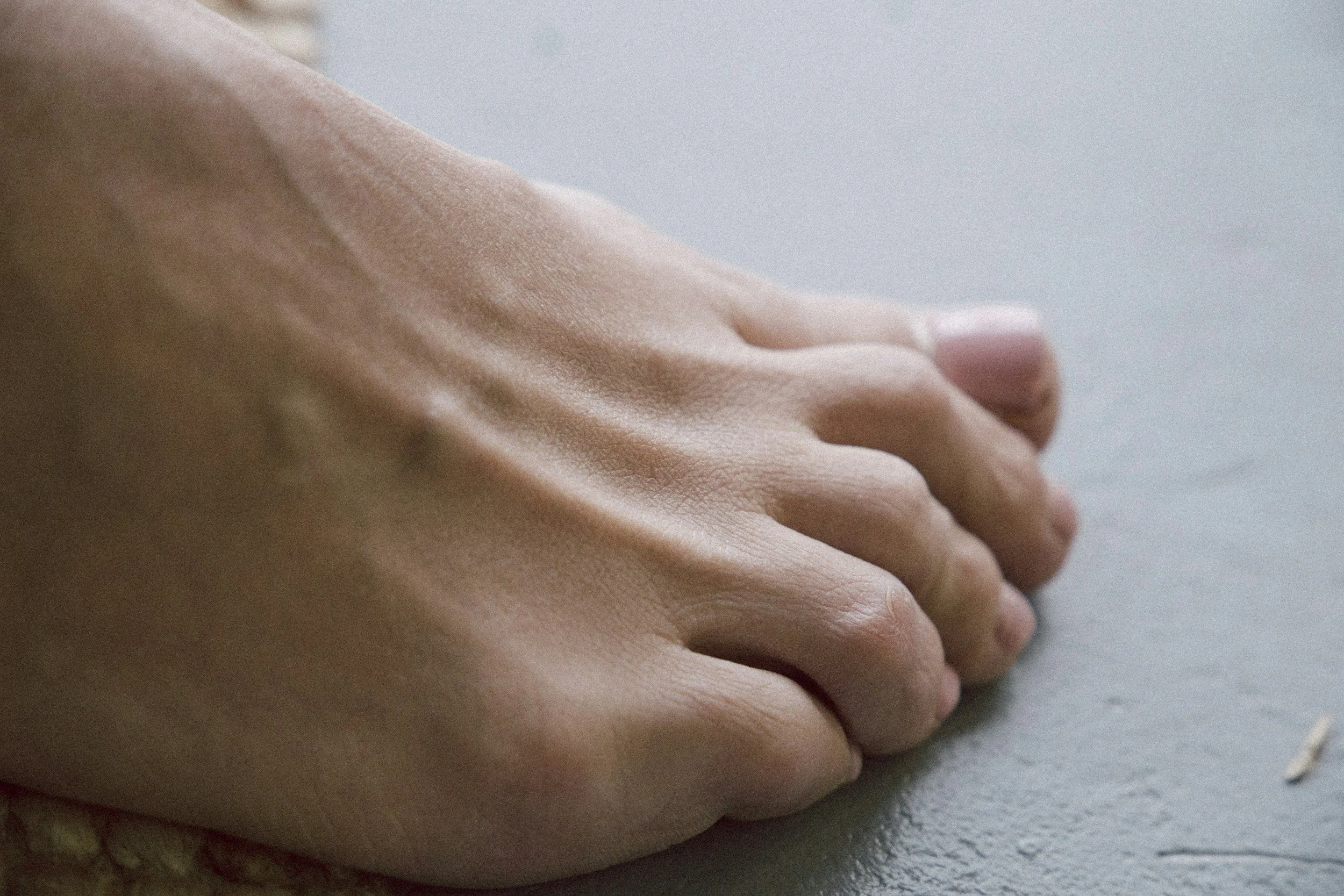
The second toe, doing exactly what a hammertoe does. It curls down at the middle joint and the knuckle takes the rubbing.
Written by Dr. Dawson, DPM, FACFAS, Foot and Ankle Surgeon · Last updated November 2026
It usually starts with a shoe. The second toe has started riding up, and the knuckle catches the top of the shoe with every step. A corn grows on the knuckle. You buy a wider shoe. The corn comes back anyway.
By the time the toe shows up in my clinic, it has already survived a drugstore splint, a tube of corn pads, and a few months of hoping it straightens out on its own. It has not straightened out. It rarely does.
A hammertoe is not a toe that is broken. It is a toe that has lost a tug of war. On one side, the long tendon that curls the toe down. On the other, the small muscles inside the foot that are supposed to hold the toe flat. When the small muscles lose, the toe curls and stays curled. That is the whole mechanism, and every treatment in this article is aimed at one side of that rope or the other.
📌 TL;DR
- A hammertoe is a toe bent down at the middle joint. The second toe is the usual suspect, and a long second toe is the usual setup.¹ ²
- Shoes, padding, and splints buy comfort. They do not reliably straighten a toe that has been curling for years.¹ ²
- Flexible means it still straightens with your fingers. Rigid means it stays put. That one test decides most of the treatment plan.²
- Surgery is worth discussing when pain keeps interfering with life, or when a corn keeps coming back despite good shoes. The operation depends on whether the toe still moves.¹
- For the middle joint, cutting the bone out and fusing it work about equally well. Two randomized trials found no clinical difference between them.⁶ ⁷
- If the joint is not arthritic, the bone can be cut and realigned through small incisions instead, and the joint is kept. In the research so far, that corrects the toe as well as open surgery, with fewer wound problems.¹² ¹³
- If you have diabetes and a hammertoe, read the diabetes section. A curled toe plus numb feet is how ulcers start, and there is a small operation that heals them.⁹ ¹⁰ ¹¹
What exactly is a hammertoe?
A hammertoe is a toe that bends down at its middle joint, the proximal interphalangeal joint. The joint at the base of the toe often tips up at the same time, which is what pushes the knuckle into the top of the shoe. The end joint usually stays straight.¹
The second toe takes the hit most often. It is the longest toe on many feet, so it reaches the end of the shoe first and takes the most pressure. When a bunion pushes the big toe sideways, the second toe gets crowded out of its space and curls to make room.²
Three cousins get confused with a hammertoe, and the difference matters because the treatment is different.
Mallet toe. Only the end joint bends down. The middle joint stays straight. It is a smaller problem in a smaller joint, and it usually behaves better.
Claw toe. All three joints are involved at once. The base joint tips up and both smaller joints curl down, usually in several toes. A claw toe points at a bigger cause, often a nerve or muscle problem, and it deserves a wider workup than a single hammertoe.
Crossover toe. The toe does not just curl. It drifts sideways and crosses over the big toe. That means the joint at the base has become unstable, and the small ligament underneath it, the plantar plate, is usually part of the story.²
The test that decides the plan
Push the toe straight with your fingers. If it straightens, it is flexible. The joints are still moving, and the tendons are doing the pulling. If it stays bent no matter how gently you push, it is rigid. The joint itself has changed shape, and no splint or exercise is going to talk it straight again.²
That one test is the fork in the road for everything below. A flexible toe gets the conservative plan, and most flexible toes never need an operation at all. A rigid toe gets a bone operation or it gets left alone.
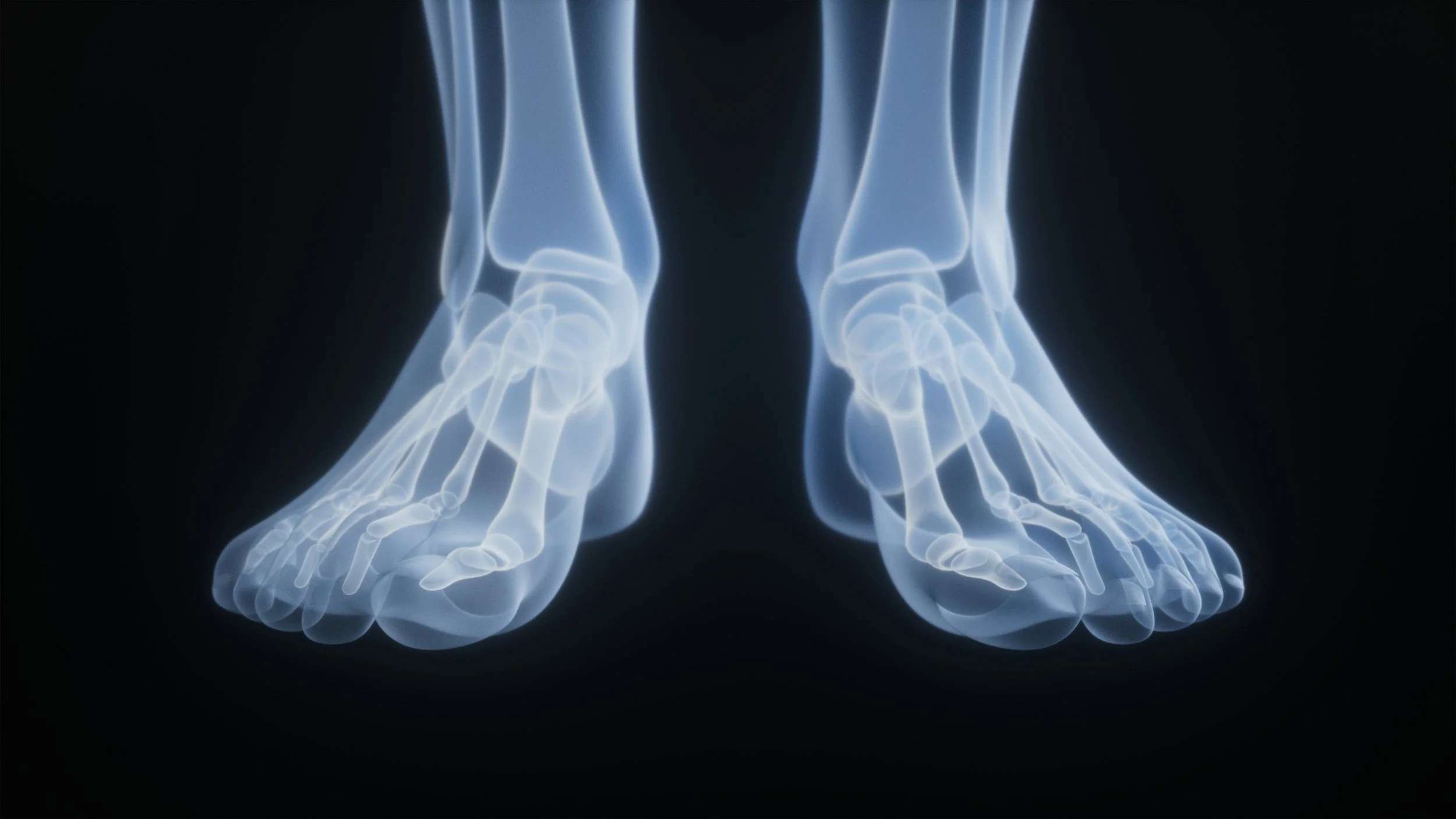
The three joints of a lesser toe. A hammertoe bends at the middle one. A mallet toe bends at the tip. A claw toe involves all three.
Why did I get one?
Usually, several factors are involved, and shoes are only one of them. A 2025 review in the Journal of the American Academy of Orthopaedic Surgeons puts the causes in four buckets. Inherited foot structure, shoes that squeeze, injury, and medical conditions that change how the muscles and nerves work.¹
The muscle imbalance. This is the engine. The small muscles inside the foot weaken or lose their leverage, and the long flexor tendon that runs under the foot keeps pulling the toe down. Once the toe curls, the mechanics get worse on their own, because a curled toe gives the flexor tendon even more leverage.¹ ²
The long second toe. A second toe longer than the big toe is common, and it is a setup. The toe hits the end of the shoe first, bends to fit, and stays bent. It is not a flaw in the toe. It is a toe in a shoe that was not built for it.
The bunion next door. A big toe drifting sideways pushes the second toe out of its space. The second toe has nowhere to go but up and over. Fixing the hammertoe without looking at the bunion is how you get a second operation.
Flatfoot. A foot that rolls in puts more load on the small muscles that hold the toes flat, and those muscles give up sooner.
Diabetes and nerve problems. Neuropathy does two things at once. It weakens the small muscles, so the toe curls. And it takes away feeling, so the pressure goes unnoticed until the skin breaks. Diabetes does not directly cause a hammertoe, but a person with diabetes and a hammertoe is a person whose toe needs watching.²
Inflammatory arthritis and nerve conditions. Rheumatoid arthritis, and conditions that change muscle control, can drive the same imbalance from a different direction.²
How common is this? In one community study of 784 adults aged 65 and older, 6 in 10 had a lesser toe deformity.³ It is one of the most common things I see, and it gets more common with age, which is exactly what you would expect from a problem that is mostly mechanics plus time.
🔗 Related Reading: Bunions: What Helps, When to Consider Surgery, and What Recovery Is Really Like. A bunion pushing the big toe over is one of the most common reasons the second toe curls, and the two problems often need to be fixed together.
What does it do to your foot?
The toe itself is the least of it. The damage comes from what the curled toe rubs against.
The corn on the knuckle. The raised joint rubs the top of the shoe, and the skin thickens to protect itself. That thickening is a corn, and it is a pressure report. Shaving it off without changing the pressure is like tearing up a complaint letter and expecting the problem to go away. It comes back, because the pressure never left.
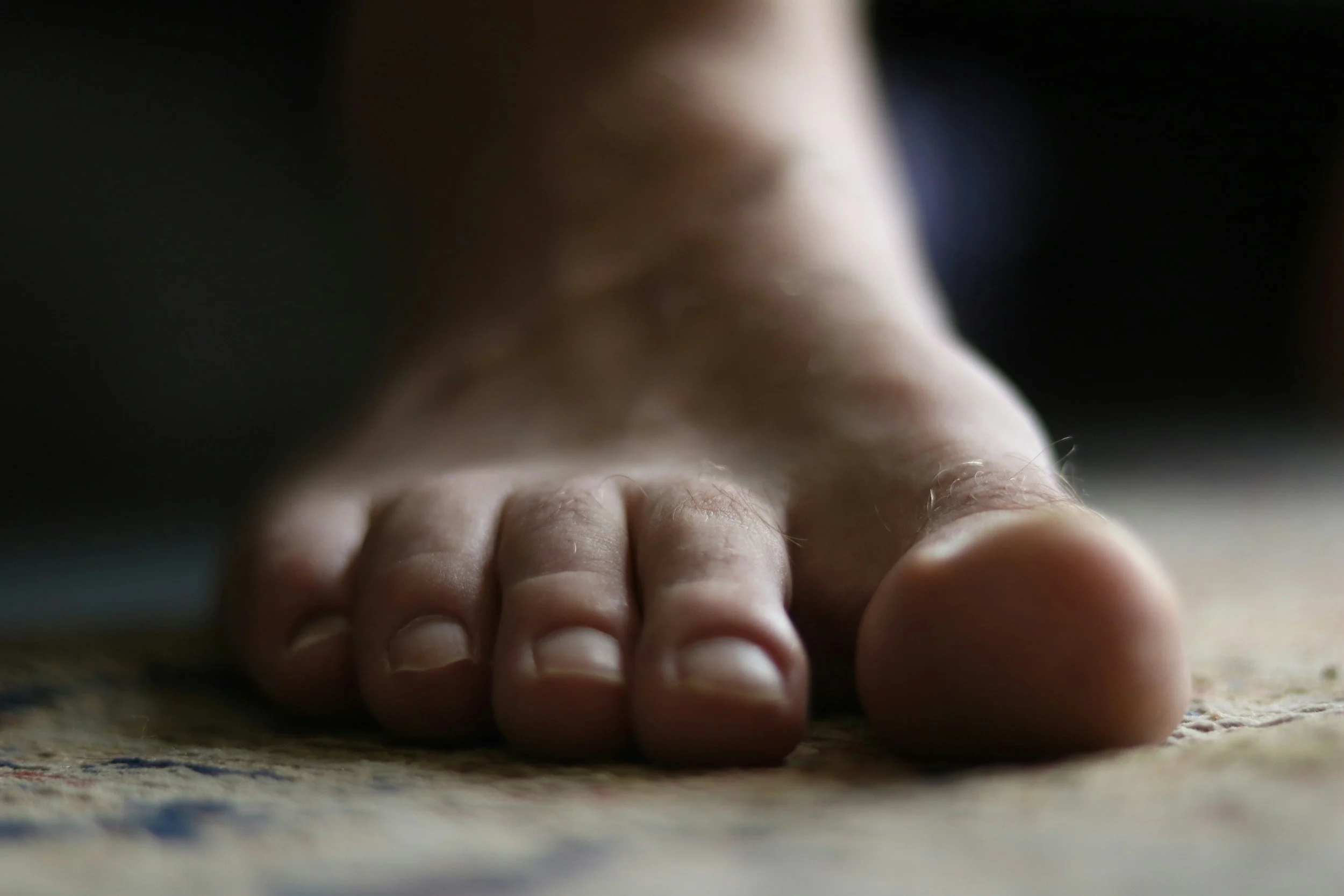
The corn is the skin filing a complaint. It tells you where the pressure is. Treat the pressure and the corn stops coming back.
Pain at the tip. A curled toe presses its tip into the ground with every step. The tip gets sore, then callused, then sore under the callus.
The shoe problem. You buy shoes for the toe, not the foot. The rest of the shoe fits and the toe box does not, so you size up and the heel slips, or you wear sandals in January. The toe starts choosing the shoes.
The toe that rides up. A toe that has lost its grip on the ground stops doing its job in walking. The ball of the foot takes the load the toe used to carry, and the pain moves forward under the metatarsals. That is transfer pain, and it is why fixing only the corn never quite finishes the job.
The crossover. Left alone long enough, an unstable base joint lets the toe drift sideways over the big toe. At that point the joint itself is the problem, not just the tendon.²
If you have diabetes, this section is yours
A curled toe plus numb feet is the combination that makes ulcers. The toe tip presses into the ground, or the knuckle presses into the shoe, and you cannot feel it happening. The skin breaks quietly. That is why a hammertoe in a person with diabetes is not a cosmetic problem, and not a wait and see problem either. Check the tops and the tips of your toes every day. If you find a red spot, a blister, or a break in the skin, get it looked at the same week. Do not use acid corn removers, and do not cut a corn off yourself. Both can open a wound you will not feel until it is infected. The small tendon operation in the surgery section exists largely for this exact situation, and the evidence for it is strong.⁹ ¹⁰ ¹¹
🔗 Related Reading: Your Complete Guide to Diabetic Foot Care: Protecting Your Feet for Life. The daily foot check, the shoe rules, and the warning signs that mean get seen now.
What helps at home
Start with the shoe. Everything else is a support act.
Shoes with a deep, wide toe box. The toe needs room to sit flat without touching the top or the end of the shoe. Fit the shoe to the longer foot, and check the fit standing up, at the end of the day, when your feet are at their largest. A shoe that fits in the morning and squeezes by dinner is a shoe that does not fit. High heels push the foot forward and bend the toes to fit the slope, so they make the problem worse.
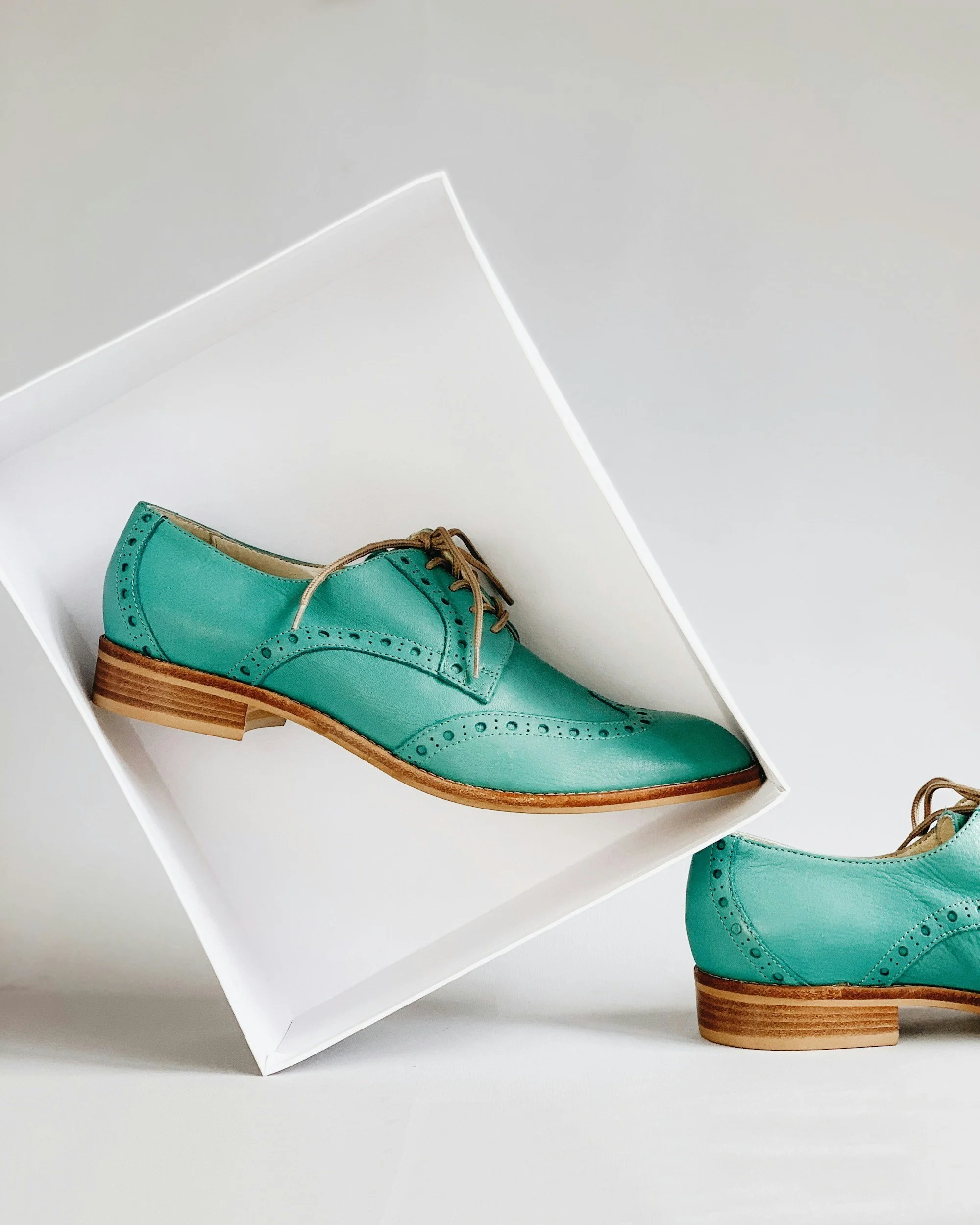
The single most useful thing you can buy for a hammertoe. Room for the toe to sit flat.
Padding. A corn pad, a silicone sleeve over the knuckle, or a toe spacer between crowded toes can cut the rubbing enough to make the day comfortable. These are comfort tools. They do not straighten the toe, and anyone selling them as a cure is selling you a piece of foam with a promise attached.¹
Taping and splinting. Tape or a small splint can hold a flexible toe straighter while it is on. Some people find it comfortable, and it is worth trying for a flexible toe. No tape or splint has been shown to permanently straighten a hammertoe. It works while you wear it. It stops working when you take it off. If a splint is uncomfortable, or it rubs a new sore, stop using it. A device you will not wear corrects nothing.
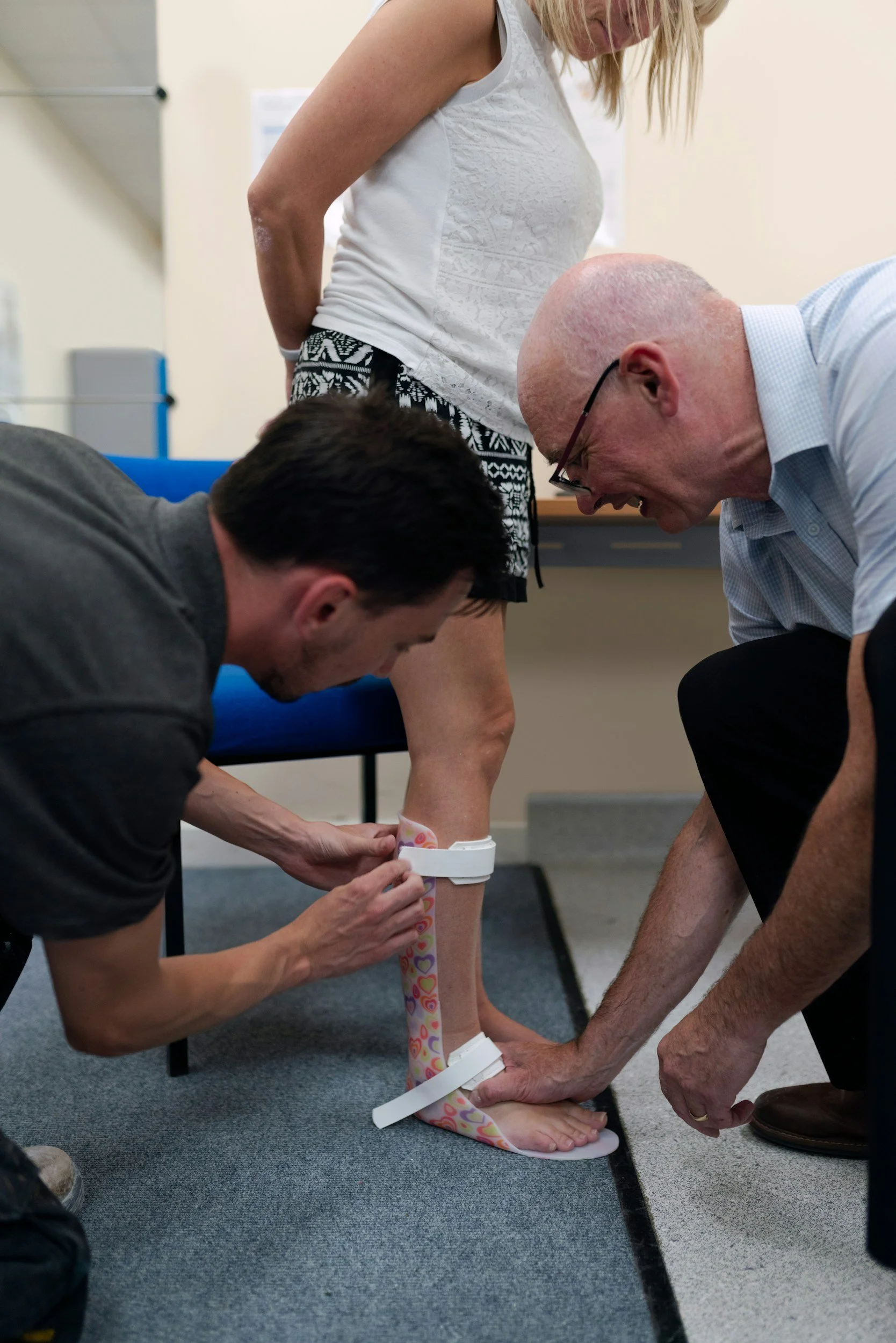
Tape holds a flexible toe straighter while you wear it. It is a comfort tool, not a cure.
Toe exercises. Spreading the toes, scrunching a towel with your toes, picking up marbles. These are the usual recommendations, and they are worth doing for a flexible toe, because stronger small muscles are the side of the rope you want to win.¹ No trial has shown exercises reversing a hammertoe. They may keep a flexible toe supple and help the muscles that hold it flat. They will not unbend a rigid one. Do them because they help the foot, not because anyone promised you a straight toe.
What not to buy. Toe straighteners, magnetic toe correctors, and overnight devices that promise to realign the toe while you sleep. The mechanism they would need does not exist. A rigid joint does not remodel overnight, and a flexible toe straightens the moment the device comes off. Save the money for shoes that fit.
How long to give it. Give the shoe and padding plan 6 to 8 weeks of genuine consistency before judging it. If nothing has changed, the problem is not your effort. It is the toe, and it is time to talk about the next rung.
🔗 Related Reading: Corns and Calluses: What They Really Mean and How to Treat Them. The corn on a hammertoe knuckle is pressure made visible, and that guide covers what the skin is telling you.
An office visit starts with the push test, a look at the shoes you actually wear, and standing X-rays to see the joints and whether arthritis or a bunion is part of the picture. Bring the shoes. The ones that hurt are more informative than the ones that do not.
Corn and callus care. In the office, the corn gets trimmed safely, with sterile instruments and a look at the skin underneath. That is the right way to deal with a corn that hurts. The wrong way is a blade at home, especially with diabetes or poor circulation.
Orthotics. An insert can shift load off the ball of the foot and give the toes a better platform. It does not straighten a hammertoe. In a foot where the toe has stopped gripping and the ball of the foot is taking the load, an insert with a metatarsal pad can make walking noticeably more comfortable.¹ That is a real effect, and it is not the same as a correction.
Padding fitted properly. A silicone sleeve or a molded pad placed in the right spot beats a drugstore pad placed in the wrong one. Small difference, real comfort.
The conversation that matters. The visit is mostly a decision conversation. Is the toe flexible or rigid? What is driving it? What do you want to get back to? The answers decide whether the next step is a better shoe or an operation, and they decide which operation.
When is surgery worth discussing?
Surgery becomes worth discussing when the toe keeps interfering with life despite reasonable nonsurgical treatment. Pain that returns every day, a corn that comes back no matter what shoe you wear, a toe that has started crossing over, or shoes you cannot find because of one toe.¹
You do not need surgery because the toe looks bent. Plenty of hammertoes are painless and stay that way. You also do not need to wait until the toe is rigid and crossed over. The right time is when the toe is costing you something you want back, and the conservative plan has had its 6 to 8 weeks.
Surgery is the exception, not the default, and it is reserved for toes that have earned it by failing the simpler plan first.
What does surgery actually do?
The operation depends on the toe. A flexible toe, a rigid toe, a toe whose joint is worth keeping, and an unstable joint are four different operations.
The middle joint: remove it or fuse it
For a rigid toe, the operation is at the middle joint. There are two ways to handle that joint, and this is one of the rare places in foot surgery where the research has actually compared them head to head.
Resection arthroplasty. The head of the bone is removed, the toe straightens, and a thin pin holds it while it heals. The joint keeps a little movement, or it fuses on its own. In one long term series, 63 patients with 118 toes were followed for about 5 years after this operation. Pain was relieved in 92 of every 100 toes, and 84 of every 100 patients were satisfied. The joint fused on X-ray in 81 of every 100 toes, and the rest formed a stable fibrous union that worked just as well.⁴ A second series of 75 patients with 100 second toes followed for almost 4 years found the same shape of result. Pain scores improved from 46 to 94, satisfaction averaged 9.3 out of 10, and only 2 cases needed another operation. The most common complication was a floating toe, where the toe loses its grip and stops touching the ground, and it was the reason 7 patients rated their satisfaction lower.⁵
Fusion, or arthrodesis. The joint surfaces are removed and the two bones are joined into one, held with a pin or a small screw. The toe stays straight and stays stiff at that joint, which is the tradeoff. It is the more predictable way to hold the correction, and when the joint is arthritic, it is the operation that holds.
Two randomized trials compared these two operations directly, and both found the same thing. In the first, 55 patients with 89 toes were assigned by chance to one operation or the other, and there was no clinical difference between them. Pain and function were good to excellent in both groups, and the only edge for fusion was straighter alignment on X-ray.⁶ In the second, 37 patients with 48 toes, pain was at zero in both groups at 6 months, and the function scores were 83 and 80, essentially the same. The fusion group healed on X-ray more often, and it did not change how the toe felt.⁷
The X-ray heals more reliably with a fusion. The patient does not feel the difference. The choice between them comes down to the toe in front of me, the stiffness I need to hold, and the recovery the patient can live with.
Keeping the joint: the minimally invasive osteotomy
There is another option when the joint is still good. If the joint itself is not arthritic, it does not have to be removed or fused. The bone can be cut through small incisions with a fine burr and realigned, and the joint is kept. An angular osteotomy cuts the bone at an angle and shifts it, so the toe lines up straight. When the joint is not too arthritic, the angular osteotomy is the one I prefer. A shortening osteotomy takes out a small cylinder of bone, which relaxes the tight soft tissues pulling the toe down.¹⁶
Most hammertoes I fix are corrected with minimally invasive osteotomies or fusions. There is no plate or screw holding most of these. In my practice the toe is secured with a soft splint, and you bear weight on it right away in a surgical shoe or a boot. The cut heals over the following weeks while the splint and the shoe protect it.
The research on this approach is young. A 2022 systematic review of minimally invasive lesser toe surgery found only 5 studies good enough to include, out of 92 screened.¹⁵ What exists so far is encouraging. In a randomized trial of 100 patients with lesser toe deformities, the minimally invasive operations corrected the toes as well as open surgery and function a year and a half later was the same, while wound complications and infections were more common in the open group.¹² In a comparison of 675 toes, infection followed about 2 in 100 toes treated with percutaneous osteotomies and about 5 in 100 treated the open way.¹³ In a 2026 series of 98 percutaneous osteotomies, patients reported much less pain and disability at a year, and no infections were reported at all.¹⁴
The tradeoff is recurrence. In that 2026 series, 7 in 100 toes later needed a fusion because the deformity came back.¹⁴ A joint that is kept can drift again in a way a fused joint cannot. That is the price of keeping the joint, and it is why the arthritic toe still gets the fusion.
The flexible toe: releasing the tendon
A flexible toe is a tendon problem, and the operation matches. A flexor tenotomy cuts the tight tendon underneath the toe through a tiny puncture, usually with a needle, and the toe straightens. No pin, no bone work, and most people walk out in a regular shoe the same day.
For a flexible toe without diabetes, this is a small operation for a specific problem. In my practice I reserve it for the toe whose only complaint is a corn at the tip, and for a person with diabetes who has an ulcer at the tip of the toe. I frame it as a starting point. If it does not correct the toe enough, more surgery may follow. It is not the operation for a rigid toe, and it is not a substitute for the bone operation when the joint has already changed shape.
The unstable joint: the crossover toe
When the toe has drifted sideways and the base joint is loose, straightening the middle joint alone will not hold. The base joint needs work too. That usually means shortening the metatarsal with a Weil osteotomy, which takes pressure off the ball of the foot, sometimes with a repair of the plantar plate underneath the joint, and sometimes with a tendon transfer to rebalance the pull. In the review literature, tendon transfer for an unstable base joint carried about 90 percent satisfaction.² This is the most complex of the three operations, and it is the one where getting the diagnosis right matters most. A crossover toe treated like a simple hammertoe is a toe that comes back.
| Procedure | What it does | Fits best | Recovery pattern | Watch for |
|---|---|---|---|---|
| Flexor tenotomy | Cuts the tight flexor tendon through a tiny puncture so a flexible toe straightens | A flexible toe whose only complaint is a corn at the tip, or a toe tip ulcer in diabetes | Walking in a regular shoe the same day in most cases | Pressure shifting to a neighboring toe, recurrence if the imbalance continues⁹ ¹⁰ |
| Minimally invasive osteotomy | Cuts and realigns the bone through small incisions so the toe straightens and the joint is kept | A toe whose joint is not too arthritic | Weight bearing right away in a surgical shoe or boot, toe held with a soft splint | Recurrence, floating toe, numbness, delayed union¹² ¹⁴ |
| PIP resection arthroplasty | Removes the head of the bone at the middle joint, pin holds the toe while it heals | Rigid toe, including the second toe in most series | Surgical shoe for a few weeks, pin usually out in 3 to 6 weeks | Floating toe, stiffness, recurrence, numbness⁴ ⁵ |
| PIP fusion (arthrodesis) | Joins the two bones at the middle joint into one solid piece | Rigid toe where the correction must hold exactly | Protected shoe while the fusion heals, usually 6 weeks | Nonunion, stiffness at that joint, transfer pain under the next toe⁶ ⁷ |
| Weil osteotomy with plantar plate repair | Shortens the metatarsal and repairs the ligament under the base joint | Crossover toe with an unstable base joint | Protected weight bearing, longer recovery than a toe only operation | Floating toe, stiffness, recurrence if the instability is undertreated² |
What recovery is actually like
Most hammertoe operations are done as day surgery, and most people walk out the same day in a surgical shoe or a stiff soled shoe. How much weight the foot takes depends on the operation. After a minimally invasive osteotomy in my practice, you bear weight on it right away. After a resection or a fusion, you keep weight on the heel and the outside of the foot for the first days while the toe heals. If a pin was used, it usually comes out in the office in 3 to 6 weeks. Swelling hangs around for weeks and sometimes months, and the toe stays a little stiff. That stiffness is usually the point, not a complication, when the joint was fused. Full recovery is measured in months, not days. Driving needs its own discussion, especially after right foot surgery or while taking sedating pain medication.
Age alone does not make the operation riskier. In one study of 47 patients, the group aged 65 and older had the same improvement in pain and function as the younger group, and complications were no more common in the older group than in the younger one.⁸
What can go wrong?
Possible complications include infection, numbness, stiffness, the toe not touching the ground, the deformity coming back, the fusion not healing solid, and pain shifting to the next toe. Occasionally, another procedure is needed. Smaller incisions do not make those risks disappear, and neither does a smaller toe. Before deciding, ask what your surgeon sees as the biggest risks for your foot, how likely they are, and how they would be managed.
A special case: diabetes and the toe that will not heal
This is the one place where a small operation stops being elective and starts being the treatment. When a flexible hammertoe has caused an ulcer on the tip of the toe, the tendon is the problem, and cutting it is the fix.
In a randomized trial of 95 people with diabetes and hammertoe ulcers, a needle tenotomy healed every ulcer, against about 4 in 10 with standard care alone, and it also kept new ulcers from forming. No serious adverse events were recorded.⁹ A 2023 systematic review of 11 studies found the same shape of result. Healing in 92 to 100 of every 100 ulcers, in 2 to 4 weeks, with few mild complications. The most common problem was pressure shifting to a neighboring toe, which is why surgeons sometimes release all the toes at once.¹⁰
The international guideline on offloading diabetic foot ulcers now recommends this operation for a neuropathic ulcer on the tip of a flexible toe.¹¹ It is a small procedure with a large effect, and it is the reason a hammertoe in a person with diabetes gets seen early instead of watched.
What I want you to take away
You do not need to become an expert in toe surgery to make a good decision. Start with shoes that give the toe room and padding that cuts the rubbing. If the toe still runs your life, get it assessed and ask someone to explain the options in plain English.
The goal is a toe that sits flat, a shoe that fits, and a foot you stop having to plan your shoes around. The operation, when it is the right call, is a means to that, not a prize for enduring the pain the longest.
🔗 Related Reading: Foot Pain by Location: A Map of What Each Spot Usually Means. Hammertoe pain sits in the forefoot, and the chart shows what else lives in that same neighborhood.
🛠️ Feet Made Simple: Products I Recommend for Hammertoes
These products sit here, after the treatment plan, on purpose. They support the nonsurgical side of this guide, shoes with room for the forefoot and padding that cuts the rubbing on the knuckle and the load under the ball of the foot. No shoe or pad straightens a hammertoe, and none of them substitutes for the assessment above when pain is running your life. This article is for education only and is not a substitute for medical advice. I may receive a commission if you purchase through these links, at no additional cost to you.
👟 Shoes
- Topo Atmos 2 – Maximalist shoe with a roomy forefoot, so the knuckle is not pressed into the top of the shoe.
- Altra Torin 9 – Zero-drop shoe with a naturally wide forefoot fit.
🦶 Pressure Relief and Protection
- Silicone Toe Sleeves – Cushion the knuckle and cut the rubbing that makes a hammertoe sore.
- Felt Metatarsal Pads – Shift load off the ball of the foot when the toe has stopped gripping.
Frequently Asked Questions
Can a hammertoe be straightened without surgery?
A flexible toe can be held straighter with shoes, padding, and taping, and that is often enough to make it comfortable. A rigid toe cannot be straightened without surgery. No splint, exercise, or device has been shown to permanently straighten either kind.¹ ²
Do toe splints and straighteners work?
They work while you wear them, on a flexible toe. They do not change the toe. If a splint is comfortable and it helps, use it. If it rubs a new sore or you will not wear it, it is not doing anything for you.
Will it get worse if I leave it alone?
Often, yes, and slowly. A flexible toe tends to become rigid over time as the joint adapts to the bent position. That does not mean every hammertoe needs surgery. It means a painless flexible toe deserves a shoe plan now, so it has the best chance of staying flexible.²
Is hammertoe surgery painful, and how long am I off my feet?
Most people walk in a surgical shoe the same day. Pain is usually manageable with the medication plan your surgeon gives you, and it settles over the first week. A pin, if one is used, usually comes out in 3 to 6 weeks, and swelling can continue for months. Full recovery is measured in months.⁴ ⁵
Will the toe be stiff after surgery?
If the joint was fused, yes, at that joint, and that is the point of the operation. If the joint was reshaped rather than fused, it keeps some movement. Either way, the toe will feel different from a normal toe for a while, and the stiffness usually matters less than the pain that is gone.⁶ ⁷
I have diabetes. Is a hammertoe more dangerous for me?
Yes. A curled toe plus numb feet is how ulcers start, because pressure goes unnoticed until the skin breaks. Check your toes every day, never use acid corn removers, and get a red spot or a break in the skin looked at the same week. A small tendon release heals most toe tip ulcers in 2 to 4 weeks.⁹ ¹⁰ ¹¹
References
- Jastifer JR, Martin KD. Hammertoes: Anatomy, Pathophysiology, and Comprehensive Treatment Strategies. The Journal of the American Academy of Orthopaedic Surgeons. 2025;33(16):e919-e927. DOI: 10.5435/JAAOS-D-25-00025. PMID: 40233363.
- Shirzad K, Kiesau CD, DeOrio JK, Parekh SG. Lesser toe deformities. The Journal of the American Academy of Orthopaedic Surgeons. 2011;19(8):505-514. DOI: 10.5435/00124635-201108000-00006. PMID: 21807918.
- Dunn JE, Link CL, Felson DT, Crincoli MG, Keysor JJ, McKinlay JB. Prevalence of foot and ankle conditions in a multiethnic community sample of older adults. American Journal of Epidemiology. 2004;159(5):491-498. DOI: 10.1093/aje/kwh071. PMID: 14977645.
- Coughlin MJ, Dorris J, Polk E. Operative repair of the fixed hammertoe deformity. Foot & Ankle International. 2000;21(2):94-104. DOI: 10.1177/107110070002100202. PMID: 10694020.
- O'Kane C, Kilmartin TE. Review of proximal interphalangeal joint excisional arthroplasty for the correction of second hammer toe deformity in 100 cases. Foot & Ankle International. 2005;26(4):320-325. DOI: 10.1177/107110070502600408. PMID: 15829216.
- Schrier JC, Keijsers NL, Matricali GA, Louwerens JWK, Verheyen CCPM. Lesser toe PIP joint resection versus PIP joint fusion: a randomized clinical trial. Foot & Ankle International. 2016;37(6):569-575. DOI: 10.1177/1071100716629776. PMID: 26843544.
- Scheidt S, Nowak V, Mittag F, Götze M, Wülker N, Hofmann UK. Comparison of lesser toe proximal interphalangeal joint arthrodesis versus resection arthroplasty: a randomized controlled study. Orthopedics. 2022;45(2):86-90. DOI: 10.3928/01477447-20220105-08. PMID: 35021029.
- Mueller CM, Boden SA, Boden AL, Maidman SD, Cutler A, Mignemi D, Bariteau J. Complication rates and short-term outcomes after operative hammertoe correction in older patients. Foot & Ankle International. 2018;39(6):681-688. DOI: 10.1177/1071100718755472. PMID: 29444584.
- Andersen JA, Rasmussen A, Engberg S, Bencke J, Frimodt-Møller M, Kirketerp-Møller K, Rossing P. Flexor tendon tenotomy treatment of the diabetic foot: a multicenter randomized controlled trial. Diabetes Care. 2022;45(11):2492-2500. DOI: 10.2337/dc22-0085. PMID: 36151947.
- Calvo-Wright MM, López-Moral M, García-Álvarez Y, García-Madrid M, Álvaro-Afonso FJ, Lázaro-Martínez JL. Effectiveness of percutaneous flexor tenotomies for the prevention and management of toe-related diabetic foot ulcers: a systematic review. Journal of Clinical Medicine. 2023;12(8):2835. DOI: 10.3390/jcm12082835. PMID: 37109172.
- Bus SA, Armstrong DG, Crews RT, Gooday C, Jarl G, Kirketerp-Møller K, Viswanathan V, Lazzarini PA. Guidelines on offloading foot ulcers in persons with diabetes (IWGDF 2023 update). Diabetes/Metabolism Research and Reviews. 2024;40(3):e3647. DOI: 10.1002/dmrr.3647. PMID: 37226568.
- Weigang B, Garkisch A, Simon A, Mittlmeier T. Correction of lesser toe deformities: minimally invasive versus open surgery, a prospective randomised study. Archives of Orthopaedic and Trauma Surgery. 2025;145:511. DOI: 10.1007/s00402-025-06114-1. PMID: 41284098.
- Yassin M, Garti A, Heller E, Robinson D. Hammertoe Correction With K-Wire Fixation Compared With Percutaneous Correction. Foot and Ankle Specialist. 2017;10(5):421-427. DOI: 10.1177/1938640016681069. PMID: 27909213.
- Loder BG, Aljumail A, Cherry DA. Percutaneous hammertoe correction using extra-articular osteotomies: a retrospective study of patient-reported outcomes and complications. The Journal of Foot and Ankle Surgery. 2026;65(4):115.e1-115.e6. DOI: 10.1053/j.jfas.2026.01.019. PMID: 41621773.
- Edwards SR, Murray MG, Gilheany MF. Minimally invasive surgery for pedal digital deformity: a systematic review. Journal of Foot & Ankle. 2022;16(3):306-309. DOI: 10.30795/jfootankle.2022.v16.1647.
- Bastías GF, Sage K, Orapin J, Schon L. Diaphyseal proximal phalangeal shortening osteotomy for correction of hammertoe deformity: operative technique and radiological outcomes. Foot and Ankle Specialist. 2024;17(1):29-38. DOI: 10.1177/19386400211012800. PMID: 34142594.
Prefer a one page version? Print the Hammertoes handout.