
Written by Dr. Dawson, DPM, FACFAS, Foot and Ankle Surgeon · Last updated November 2026
The story usually starts at about 3 in the morning. A big toe that felt fine at dinner is now throbbing hard enough to wake its owner up. By sunrise the toe is red, swollen, and hot. The bedsheet hurts it. Air hurts it. Some of these patients arrive at my office wearing one shoe and carrying the other, because putting the second shoe on is not a negotiation the toe is willing to have. That is podagra, the classic gout flare in the big toe joint, and it is one of the most painful things a foot can do to a person on short notice. It is also very treatable, once you know what you are actually treating.
“📌 TL;DR: Gout is a crystal problem. Uric acid builds up in the blood, forms needle-shaped crystals in a joint, and the immune system attacks them all at once. A flare is treated with anti-inflammatory medicine started early: an NSAID, low-dose colchicine, or a steroid. The flare is not the disease, though. The disease is the uric acid level, and the long-term fix is lowering it below 6 mg/dL, usually with allopurinol. One warning rides above everything else in this guide. A hot, swollen joint with a fever is an infection until proven otherwise, and that version gets seen the same day.”
What Is Gout, Anyway?
Your body makes uric acid every day as it breaks down purines, a normal part of food and of your own cells. The kidneys filter most of it out. Hyperuricemia means uric acid is running high in the blood, and when it stays high long enough, the excess can settle out of solution as monosodium urate crystals, tiny needles that
deposit in and around joints. Think of a hinge with grit worked into it. The hinge still moves, but every movement grinds, and the grit does not sweep itself out.
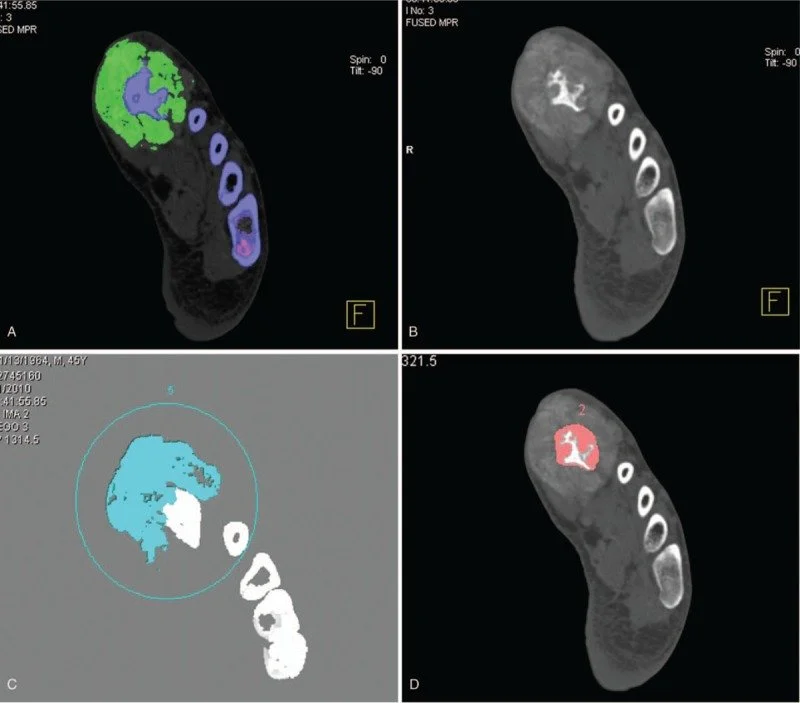
Dual-energy CT paints urate deposits green. This is gout you can point at, years of crystal buildup made visible in one scan. Image: Shi et al., Medicine, 2019 (CC BY-NC 4.0).
The crystals can sit quietly in a joint for years. A flare starts when some of them shed into the joint space and the immune system notices them all at once. The pain of gout is not the crystal itself. It is the full-scale inflammatory response your body launches at the crystals.³ That is why gout treatment comes in two separate jobs that patients constantly merge into one. Job one is putting out the fire in the joint. Job two is draining the grit out of the hinge over the following months, and job two is the one that actually changes the disease.
The big toe joint, the first metatarsophalangeal joint (the knuckle where your big toe meets the foot), is the most common first address. About half of first flares happen there. Cooler joints at the far end of the circulation are where urate gives up and crystallizes first, and the big toe is about as far from the heart as a joint gets.
Who Gets Gout?
Gout is the most common inflammatory arthritis in adults.² In the NHANES national survey, 3.9 percent of US adults had gout, about 8.3 million people, with rates of 5.9 percent in men and 2.0 percent in women. About 21 percent of adults had hyperuricemia, high uric acid without symptoms.¹
That second number matters. Most people with high uric acid never have a flare, which is why a high lab value by itself is not a diagnosis and why gout cannot be diagnosed off a blood test alone. The risk climbs with age, with kidney disease (the kidneys are the exit door, and a slow door backs everything up), with diuretics, the water pills prescribed for blood pressure, and with the metabolic company gout keeps: high blood pressure, diabetes, and weight carried around the middle.² Genetics load the gun here more than patients expect. How efficiently your kidneys and gut excrete urate is heavily inherited, which is why gout runs in families and why two people can eat the same dinner and only one of them is awake at 3 in the morning.
Common flare triggers, once the crystals are already in the joint:
Alcohol, especially beer, and especially a heavier night than usual
A big purine-heavy meal: red meat, shellfish, organ meats
Dehydration: illness, a stomach bug, a long hot day with too little water
Starting or stopping a urate medicine, or starting a new diuretic
A knock or minor injury to the joint, or surgery somewhere else entirely
Notice what that list is. Triggers pull the trigger. They do not load the gun. The loading happened over years of high uric acid, and that is the part worth treating.
What a Flare Feels Like
A flare builds fast. Pain climbs over a few hours, peaks within the first day, and the joint becomes red, hot, swollen, and exquisitely tender. Patients use the word throbbing, and for once the word is accurate. Even patients who tolerate pain well describe a gout flare as a different category. Walking is miserable. Sleep is worse, because the toe finds the bedsheet no matter how carefully the bed is arranged.
Untreated, a flare burns itself out over about 7 to 10 days as the immune response settles.³ That timeline fools people. The flare ending feels like the problem ending. It is not. The crystals are still in the joint, the urate is still high, and the next flare is already on the schedule. Early flares may come a year apart. Left alone, they tend to arrive more often, stay longer, and involve more joints.
When a patient limps in carrying a shoe instead of wearing it, gout is on my short list before I have touched the foot. But a short list is not a diagnosis, and the next section is the one that keeps people safe.
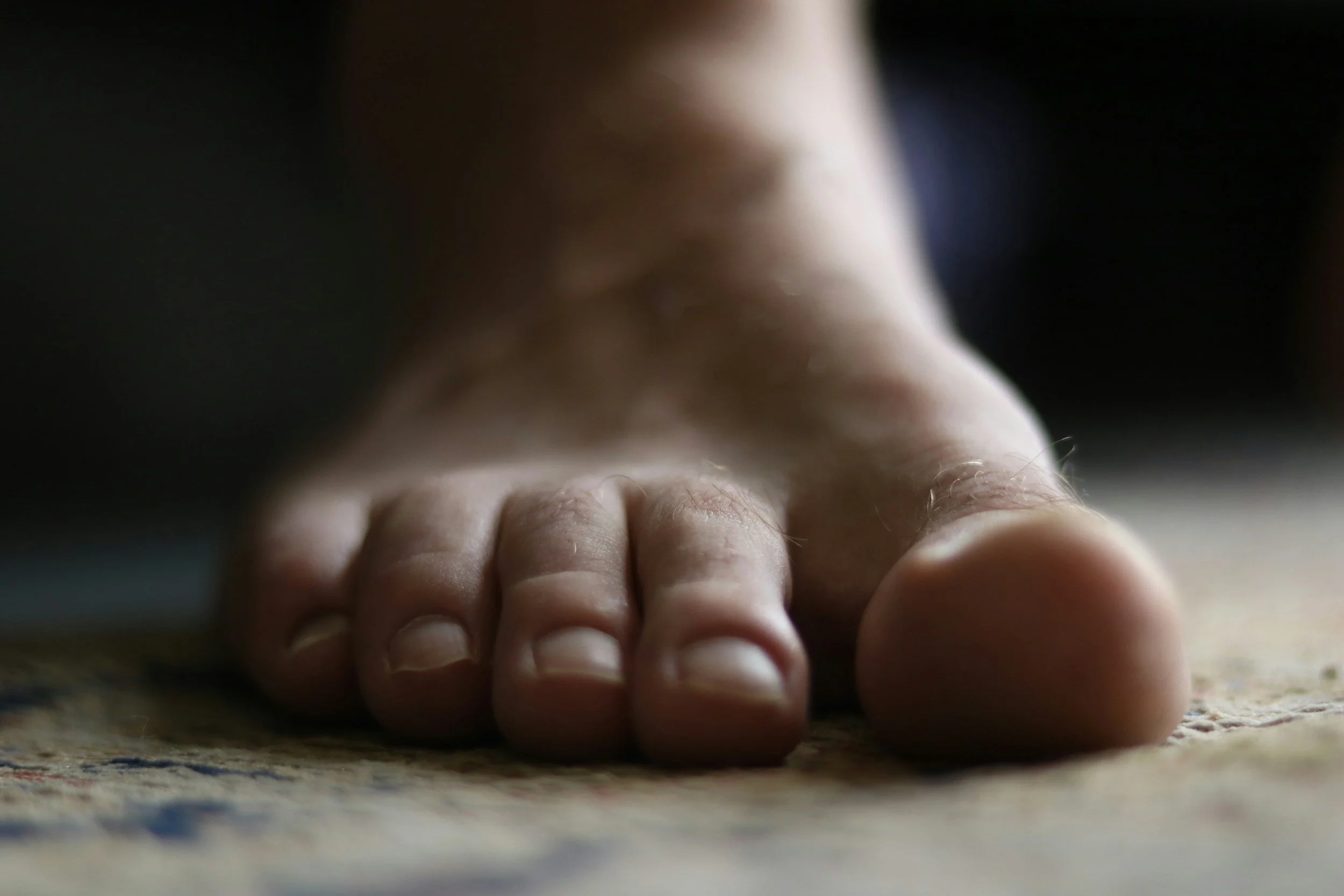
Podagra. One joint, overnight, with redness and swelling that make a bedsheet feel like sandpaper.
🔗 Related Reading: Foot Pain by Location: A Map of What Each Spot Usually Means: Pain that arrives overnight, hot, red, and swollen has its own row on the map, and it says call the same day.
Gout, Infection, or Something Else?
Here is the problem. Four different conditions can give you a hot, red, painful big toe, and they do not share a treatment plan. One of them destroys joints if it waits.
| The question | Gout | Septic joint (infection inside the joint) | Cellulitis (skin infection) | Bunion or big toe arthritis |
|---|---|---|---|---|
| How it starts | Overnight, often from nothing | Over 1 to 2 days, sometimes after a cut, a procedure, or an illness | Spreads outward from a break in the skin | Months to years of slow change |
| Where it hurts | Inside one joint, exquisitely | Inside one joint, and any movement of it is brutal | The skin and tissue around the joint, more than the joint itself | At the bump, or deep in a stiff joint |
| Fever | Possible, usually low grade | Common, but missing in more than 4 of 10 cases⁹ | Common as it spreads | No |
| The giveaway | A prior flare just like it, or crystals in joint fluid | It cannot be ruled out by looking. Joint fluid has to be tested | A visible entry point: a crack, a blister, an athlete's foot break | The toe drifts, or will not bend like the other one |
Read the fever row twice. In the JAMA review of the septic arthritis literature, fever was present in only 57 percent of infected joints.⁹ No fever does not clear a hot joint. Neither does a previous gout diagnosis, because gout and infection can occupy the same joint at the same time, and the crystal that explains the pain can also be sitting in an infected joint. I treat a hot, swollen joint with a fever as an infection until the evidence says otherwise. That order of operations is deliberate. Gout will wait a day for its diagnosis. An infected joint will not wait at all.
The bunion row earns its place because the two get confused in both directions. A bunion is a slow drift of the toe with a bump that rubs in shoes. Big toe arthritis, hallux rigidus, is a stiff joint that aches with push-off and will not bend upward like its partner. Neither arrives overnight, red and hot, on a toe that was fine at dinner. If yours did, it is not the bunion acting up.
🔗 Related Reading: Hallux Rigidus (Big Toe Arthritis): What It Is and How to Treat It: The stiff big toe that aches and will not bend, and how it differs from a toe that is inflamed.
How Gout Is Proven
The definitive test is joint fluid. When I can draw fluid out of the joint and the lab finds needle-shaped urate crystals under the microscope, the argument is over. Fluid testing also runs the other direction. The same sample gets checked for bacteria, which is how the septic joint in the table above gets caught instead of assumed away. In a first flare, in any flare with fever, and in any flare that does not behave the way gout is supposed to behave, fluid is the test that settles it.³,⁴
Blood work helps and misleads in roughly equal measure. A high uric acid supports the diagnosis. A normal one does not erase it. During an acute flare, serum urate can drop into the normal range, because the inflammatory response itself changes how the kidneys handle urate.³ So the patient whose toe is screaming and whose lab slip says 6.4 may still have gout, and the correct move is to recheck the level a few weeks after the flare settles, not to close the file.
Imaging has a supporting role. On ultrasound, urate coating the cartilage surface shows up as a bright line called the double contour sign. In one study of crystal-proven gout, it appeared in 92 percent of gout joints and in none of the comparison joints.¹⁸ Dual-energy CT goes further and color-codes the urate itself. In a prospective validation study against crystal-proven cases, it was 93 percent specific, meaning a scan that lights up green is strong evidence, while its sensitivity of 78 percent means a quiet scan does not end the search.¹⁷ Plain X-rays in early gout are usually normal, which is their own kind of information. Years of disease later, they start showing the erosions and deposits described below.
The double contour sign. Urate frosting on the cartilage lights up as a second bright line where only one should be.
🔗 Related Reading: Foot and Ankle Anatomy: A Quick Reference Map: The first metatarsophalangeal joint and the structures around it, for anyone who wants the map before the tour.
Treating the Flare: The First Two Days
Flare treatment has one rule that outranks the drug choice. Start early. The inflammatory cascade is easiest to stop while it is still gathering speed, and both the American and European guidelines put early treatment at the front of the plan.⁴,⁵ Waiting three days to see if it settles on its own is how a 3 day flare becomes a 10 day flare.
Three drug families do the work, and the trial evidence says they are closer in effectiveness than their reputations suggest. The choice usually turns on the patient's other problems: kidney function, stomach history, diabetes, blood thinners, heart failure.
| Treatment | The trial-tested pattern | Where it shines | Watch out for |
|---|---|---|---|
| NSAIDs (naproxen, indomethacin) | Full anti-inflammatory dose from the first sign, naproxen 500 mg twice a day in the equivalence trial⁷ | Healthy kidneys, healthy stomach, no blood thinner | Kidneys, stomach bleeding, heart failure, anticoagulants |
| Colchicine | Low dose only: 1.2 mg, then 0.6 mg one hour later⁶ | Caught in the first day or two, and when NSAIDs are off the table | Kidney and liver disease, and a real list of drug interactions |
| Steroids (prednisone, prednisolone) | Prednisolone 35 mg once a day for 5 days matched naproxen in a head-to-head trial⁷ | Kidney disease, blood thinners, stomach risk | Blood sugar rises, which matters in diabetes; mood and sleep take a hit in some people |
| Ice and rest | An add-on, never the whole plan⁴ | Every flare, alongside whichever drug is chosen | Skin checks if you have neuropathy or poor circulation |
The doses in this table are the patterns the trials tested. They are prescription medicines, taken as prescribed by your doctor.
Two of those rows deserve a paragraph each, because the internet gets both wrong.
Colchicine is a low-dose drug now. The old schedule, a pill every hour or two until the pain stopped or the diarrhea started, is gone, and the AGREE trial is why. In that randomized, placebo-controlled trial, the low-dose schedule (1.8 mg total over one hour) put 37.8 percent of patients at half their pain gone by 24 hours, against 15.5 percent on placebo, with a side effect profile the researchers could not distinguish from placebo. The high-dose arm worked about the same for pain and gave 76.9 percent of its patients diarrhea.⁶ Same benefit, a fraction of the misery. If your colchicine instructions look like the old schedule, that prescription needs a second look.
Steroids are not the consolation prize. In the Dutch primary care trial, prednisolone 35 mg a day and naproxen produced equivalent pain relief in crystal-proven gout.⁷ In a 416 patient emergency department trial, prednisolone matched indomethacin over 14 days, with fewer minor side effects in the first hours.⁸ For the patient with kidney disease who cannot take an NSAID and missed the colchicine window, a short steroid course is a first-line answer, not a fallback.
One more flare rule, because stopping it is a common and costly mistake. If you already take allopurinol or another urate-lowering drug, keep taking it through the flare. The American guideline recommends continuing it rather than stopping.⁴ Stopping and restarting swings the urate level, and swinging urate is itself a flare trigger.
Ice is the supporting actor. Twenty minutes at a time, a towel between the pack and the skin, while the medicine does the real work.
The Long Game: Lowering the Uric Acid
Everything above this section treats a symptom. This section treats the disease.
The American College of Rheumatology guideline strongly recommends urate-lowering therapy for anyone with tophi, joint damage from gout, or frequent flares (two or more a year), and allopurinol is the first-line drug for essentially everyone, including patients with chronic kidney disease.⁴ The strategy has a name worth learning: treat to target. The target is a serum urate below 6 mg/dL, checked on labs and held there, because below that level the existing crystals slowly dissolve back into solution and new ones stop forming. The grit comes out of the hinge the same way it went in, gradually, and only while the level stays low.
The dosing pattern matters more than the drug name. Allopurinol starts low, no more than 100 mg a day, lower in kidney disease, and climbs in small steps every few weeks until the lab hits target.⁴ The 300 mg tablet many patients sit on for years is a starting neighborhood, not a ceiling. A urate of 7.8 on 300 mg is not allopurinol failing. It is allopurinol underdosed, and the fix is titration, not abandonment.
Three things to expect in the first months:
Flares can increase at first. Dropping the urate destabilizes old deposits as they dissolve, and shedding crystals is what flares are. The guideline recommends anti-inflammatory prophylaxis, a low daily dose of colchicine or an NSAID, for the first 3 to 6 months of urate lowering.⁴ A flare in month two of allopurinol is the treatment working on the deposits, not failing.
The commitment is long. Urate lowering is measured in years, and for most patients it is indefinite, because the kidneys that let the level climb have not changed. Stopping the drug returns the level, and the deposits, on a delay.
The lab is the scoreboard. Symptoms lie in both directions. The number below 6 is how you know the hinge is actually being swept.
Febuxostat is the main alternative, a different drug in the same urate-lowering family, and its evidence needs a straight telling. In the FACT trial, febuxostat 80 mg got 53 percent of patients below 6 mg/dL, against 21 percent on a fixed 300 mg allopurinol dose that was never titrated.¹⁴ It lowers urate well. Then the safety story split in two. The CARES trial, in patients with established cardiovascular disease, found febuxostat noninferior on the combined cardiovascular endpoint but with higher all-cause and cardiovascular mortality, and it earned the drug an FDA boxed warning.¹⁵ The later FAST trial, in an older European population followed about 4 years, found febuxostat non-inferior with no increase in deaths.¹⁶ Both trials are real. They enrolled different patients and they disagree, and any source that quotes only one of them is selling something. The guideline position threads it: allopurinol first, febuxostat as a considered alternative, with the patient's heart history part of the decision.⁴
One genetic footnote with real consequences. A gene variant called HLA-B*58:01 raises the risk of a severe allergic reaction to allopurinol, and it is more common in people of Southeast Asian descent and in African American patients. The guideline conditionally recommends testing for it before starting allopurinol in those groups.⁴ It is a blood test that takes one line to order and removes a rare but serious risk.
Food, Beer, and the Honest Math
Patients always ask about diet, and they deserve the real numbers instead of a lecture. The best data come from the Health Professionals Follow-up Study, which tracked more than 47,000 men for 12 years. The men eating the most meat had a relative risk of gout of 1.41 against the men eating the least. Seafood came in at 1.51. Dairy ran the other direction, at 0.56, a genuinely protective association. And the finding that surprises everyone: purine-rich vegetables, peas, beans, lentils, spinach, were not associated with increased risk at all.¹⁰ The purine list taped to a thousand refrigerator doors has vegetables on it that the evidence does not support removing.

The two biggest dietary levers in one frame. Beer and shellfish are where the evidence actually points, not at the spinach.
Alcohol is the strongest dietary lever, and beer is the worst of it. In the companion study, risk climbed steadily with total alcohol, and per serving, beer carried a relative risk of 1.49, spirits 1.15, and wine no significant increase at moderate intake.¹¹ Beer brings a double hit, alcohol plus a purine load from the brewing process.
Sugar is the other lever with real data behind it. Two or more sugar-sweetened sodas a day carried a relative risk of 1.85, diet soda showed no association, and fructose itself tracked with risk.¹²
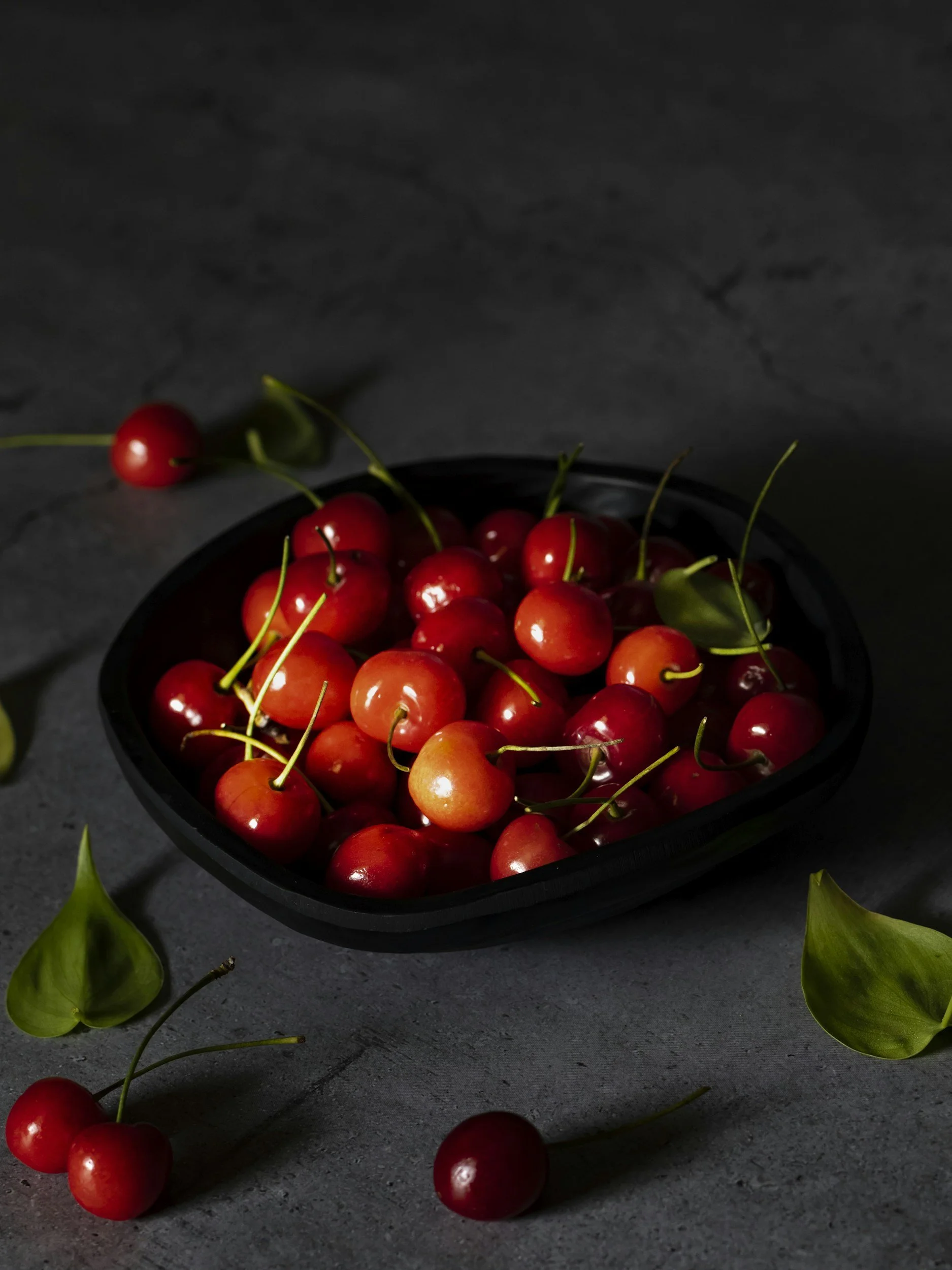
Cherries have real data behind them, a 35 percent lower flare risk in one study. Data is not the same as a prescription, and they work best next to allopurinol, not instead of it.
Cherries get their own paragraph because patients ask, and because there is actual data. In a case-crossover study of 633 people with gout, eating cherries in the two days before a study period was associated with a 35 percent lower risk of a flare, and cherry intake combined with allopurinol was associated with a 75 percent lower risk than neither.¹³ That is an association from an observational design, not a trial, and it does not make cherries a drug. It makes them a reasonable thing to eat that might help some, next to the medication that does the documented work.
Now the honest math. Those are real effects, and cutting beer and soda is worth doing. But notice what kind of numbers they are. They shift the odds of developing gout across a population over years. For a patient whose urate is 9.2 with crystals already in the joint, no achievable diet reliably pulls that level below 6 and holds it there, which is why both major guidelines recommend the dietary changes as an addition to urate-lowering medication, not a substitute for it.⁴,⁵ Diet is the supporting crew. It is not the treatment.
Tophi: When Gout Stops Visiting and Moves In
Given enough years at a high enough level, urate stops being an occasional event and becomes a physical deposit. A tophus is a chalky lump of crystals and inflammatory tissue, and in the foot they favor the big toe joint, the midfoot, the Achilles tendon, and the heel. Early tophi are firm, painless bumps that patients mistake for bunions or cysts. Later ones stretch the skin thin, break open and drain a white, toothpaste-like material, refuse to heal, and erode the bone underneath them. A tophus is gout with an address and a forwarding plan.
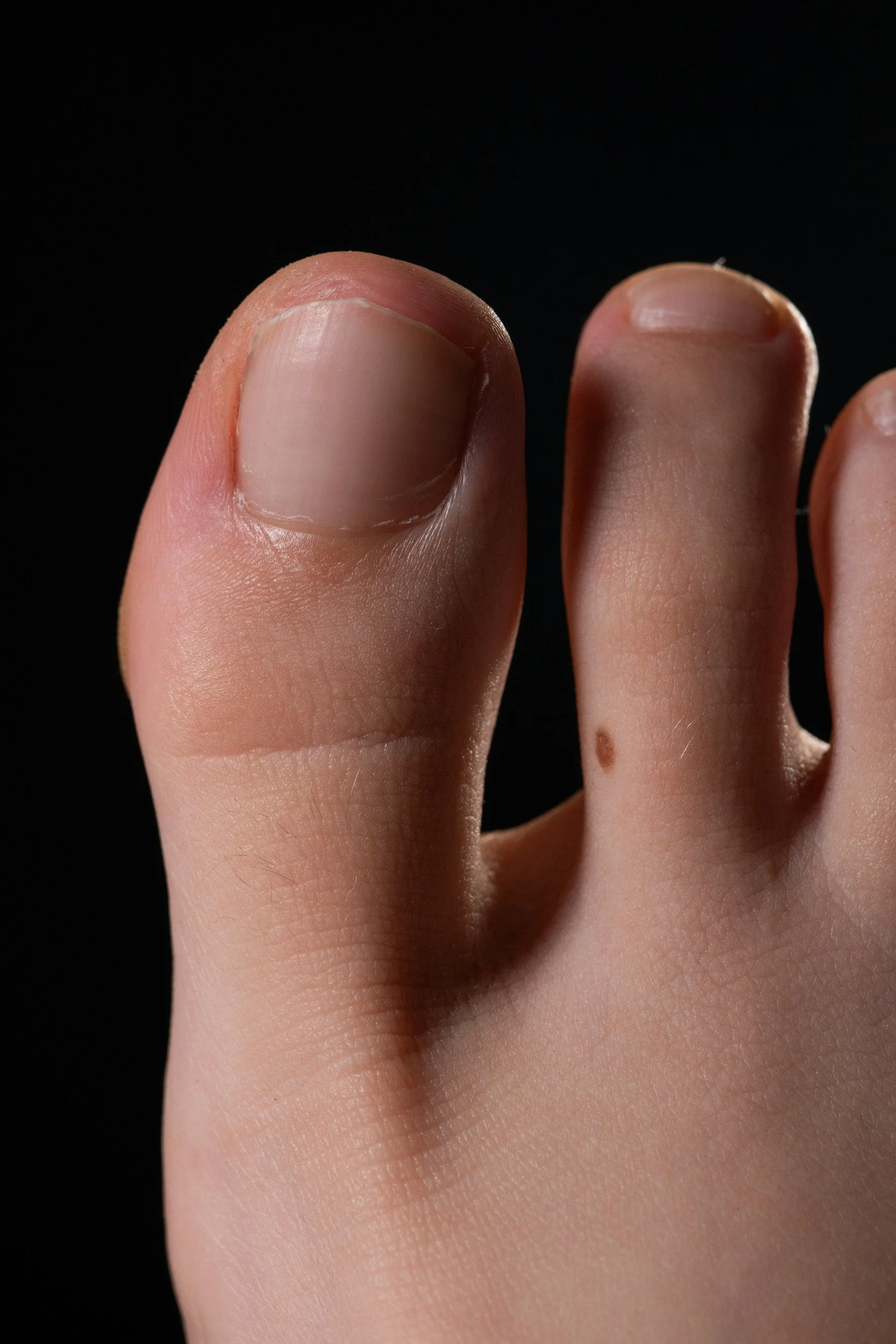
A tophus. Years of uric acid made physical, sitting on the joint like it pays rent.
Tophi change the math in two ways. They are the clearest possible indication for urate-lowering therapy, full stop.⁴ And the European guideline sets a lower target for severe disease, below 5 mg/dL, held until the deposits resolve, because deeper lowering dissolves them faster.⁵ On effective therapy, tophi shrink. It takes months to years, it is not fast, and it only happens while the level stays down. The patient who takes allopurinol in the months they remember to is a patient whose tophi stay exactly where they are.
Does Gout Ever Need Surgery?
Rarely, and never as the treatment for gout itself. No operation lowers uric acid. The literature reserves surgery for the complications of neglected deposits: a tophus that has ulcerated and will not heal, one that is infected or keeps getting infected, a deposit destroying a joint or deforming a toe so it cannot fit a shoe, or a lump whose diagnosis is genuinely in doubt and needs to come out to be identified.³,⁴ Even then, the operation removes a deposit. The disease that built it is still running, and without urate control the deposit simply rebuilds in the scar.
Most of my gout patients never need me in an operating room. The ones who do almost always share a history: years of flares treated one at a time, and a urate level nobody ever treated to target. That is the preventable version of this disease, and preventing it is the entire point of the long game section above.
Get Seen Today If
Most gout can wait for a scheduled appointment and a proper workup. These cannot:
A hot, swollen joint plus a fever, or a joint that gets rapidly worse over a day. Infection until proven otherwise.⁹
Redness that is spreading, red streaks up the foot, or a break in the skin near the joint.
An open, draining lump over a joint, especially with white chalky material.
You have diabetes, poor circulation, or a suppressed immune system and a foot has turned hot and swollen, even if it does not hurt much.
You cannot bear weight on the foot.
🔗 Related Reading: Your Complete Guide to Diabetic Foot Care: Protecting Your Feet for Life: Why a hot, swollen foot follows different rules when diabetes is in the picture, and why it never gets a wait-and-see weekend.
🔗 Related Reading: Charcot Foot: The Hot, Swollen Foot That Does Not Hurt: The diabetic foot emergency that gets mistaken for gout, and why the first days decide the outcome.
Gout FAQ
Can gout be cured?
The crystals already in a joint can be dissolved, and flares can be stopped from coming back, by holding uric acid below 6 mg/dL. What does not change is the tendency. Stop the urate-lowering medication and the level climbs again, and the deposits rebuild. Rheumatologists call that remission on treatment, and it is a good outcome. It just is not a cure you can walk away from.⁴
My uric acid was normal during the flare. Does that rule gout out?
No. Serum urate commonly drops into the normal range during an acute flare, so a normal result mid-flare proves very little. The useful number is the one drawn a few weeks after the flare has settled. The definitive test during a flare is the joint fluid, where the crystals either show up or they do not.³
Can I treat gout with diet alone and skip the medication?
For a first flare with a mildly elevated level, a trial of lifestyle change and monitoring is a reasonable conversation. For recurrent flares, tophi, or joint damage, the evidence and both major guidelines land in the same place: diet moves the odds, medication moves the level, and only the level dissolves crystals. Beer and sugar-sweetened soda are the two dietary changes with the strongest data behind them.⁴,¹⁰,¹¹,¹²
Why did I flare right after starting allopurinol? Is it not working?
It is working, and the flare is a known side effect of it working. As the urate level falls, old deposits start dissolving and shedding crystals, and shedding crystals is the flare mechanism. This is why prophylaxis, a low daily anti-inflammatory dose, is recommended for the first 3 to 6 months of urate lowering, and why the instruction is to keep taking allopurinol through the flare rather than stopping it.⁴
Do cherries actually help?
There is one decent study. In 633 people with gout, cherry intake was associated with a 35 percent lower risk of a recurrent flare, and cherries plus allopurinol together were associated with a 75 percent lower risk than neither.¹³ It is observational data, so it shows an association, not proof. Cherries are food, not treatment. Eat them if you like them, and let the medication carry the load.
🛠 Feet Made Simple: Products I Recommend for Gout
These items are listed for education and reference only. They are not a substitute for medical advice. Please see your podiatrist for specific recommendations. I may receive a commission if you purchase through these links, at no additional cost to you.
Ankle Ice Pack – Wraps and molds around the forefoot better than a bag of frozen peas, and stays cold through a full 20 minute icing session during a flare.
Brooks Ghost Max 3 – Cushioned, stable, and roomy through the forefoot. The shoe most likely to be tolerated in the week after a flare, and a sane daily shoe after that.
OOfos Recovery Sandal – For the house during a flare, when a closed shoe is not happening and barefoot on tile is worse.
References & Clinical Evidence
Good medical advice should be backed by more than a convincing sales pitch. The recommendations in this guide draw from peer-reviewed clinical trials, systematic reviews, and professional treatment guidelines. Here is the research behind the advice.
Zhu Y, Pandya BJ, Choi HK. Prevalence of gout and hyperuricemia in the US general population: the National Health and Nutrition Examination Survey 2007-2008. Arthritis & Rheumatism. 2011;63(10):3136-3141. DOI: 10.1002/art.30520. PMID: 21800283.
Kuo CF, Grainge MJ, Zhang W, Doherty M. Global epidemiology of gout: prevalence, incidence and risk factors. Nature Reviews Rheumatology. 2015;11(11):649-662. DOI: 10.1038/nrrheum.2015.91. PMID: 26150127.
Dalbeth N, Gosling AL, Gaffo A, Abhishek A. Gout. The Lancet. 2021;397(10287):1843-1855. DOI: 10.1016/S0140-6736(21)00569-9. PMID: 33798500.
FitzGerald JD, Dalbeth N, Mikuls T, Brignardello-Petersen R, Guyatt G, Abeles AM, Gelber AC, Harrold LR, Khanna D, King C, Levy G, Libbey C, Mount D, Pillinger MH, Rosenthal A, Singh JA, Sims JE, Smith BJ, Wenger NS, Bae SS, Danve A, Khanna PP, Kim SC, Lenert A, Poon S, Qasim A, Sehra ST, Sharma TSK, Toprover M, Turgunbaev M, Zeng L, Zhang MA, Turner AS, Neogi T. 2020 American College of Rheumatology Guideline for the Management of Gout. Arthritis & Rheumatology. 2020;72(6):879-895. DOI: 10.1002/art.41247. PMID: 32390306.
Richette P, Doherty M, Pascual E, Barskova V, Becce F, Castañeda-Sanabria J, Coyfish M, Guillo S, Jansen TL, Janssens H, Lioté F, Mallen C, Nuki G, Perez-Ruiz F, Pimentao J, Punzi L, Pywell T, So A, Tausche AK, Uhlig T, Zavada J, Zhang W, Tubach F, Bardin T. 2016 updated EULAR evidence-based recommendations for the management of gout. Annals of the Rheumatic Diseases. 2017;76(1):29-42. DOI: 10.1136/annrheumdis-2016-209707. PMID: 27457514.
Terkeltaub RA, Furst DE, Bennett K, Kook KA, Crockett RS, Davis MW. High versus low dosing of oral colchicine for early acute gout flare: Twenty-four-hour outcome of the first multicenter, randomized, double-blind, placebo-controlled, parallel-group, dose-comparison colchicine study. Arthritis & Rheumatism. 2010;62(4):1060-1068. DOI: 10.1002/art.27327. PMID: 20131255.
Janssens HJ, Janssen M, van de Lisdonk EH, van Riel PL, van Weel C. Use of oral prednisolone or naproxen for the treatment of gout arthritis: a double-blind, randomised equivalence trial. The Lancet. 2008;371(9627):1854-1860. DOI: 10.1016/S0140-6736(08)60799-0. PMID: 18514729.
Rainer TH, Cheng CH, Janssens HJ, Man CY, Tam LS, Choi YF, Yau WH, Lee KH, Graham CA. Oral Prednisolone in the Treatment of Acute Gout: A Pragmatic, Multicenter, Double-Blind, Randomized Trial. Annals of Internal Medicine. 2016;164(7):464-471. DOI: 10.7326/M14-2070. PMID: 26903390.
Margaretten ME, Kohlwes J, Moore D, Bent S. Does this adult patient have septic arthritis? JAMA. 2007;297(13):1478-1488. DOI: 10.1001/jama.297.13.1478. PMID: 17405973.
Choi HK, Atkinson K, Karlson EW, Willett W, Curhan G. Purine-rich foods, dairy and protein intake, and the risk of gout in men. The New England Journal of Medicine. 2004;350(11):1093-1103. DOI: 10.1056/NEJMoa035700. PMID: 15014182.
Choi HK, Atkinson K, Karlson EW, Willett W, Curhan G. Alcohol intake and risk of incident gout in men: a prospective study. The Lancet. 2004;363(9417):1277-1281. DOI: 10.1016/S0140-6736(04)16000-5. PMID: 15094272.
Choi HK, Curhan G. Soft drinks, fructose consumption, and the risk of gout in men: prospective cohort study. BMJ. 2008;336(7639):309-312. DOI: 10.1136/bmj.39449.819271.BE. PMID: 18244959.
Zhang Y, Neogi T, Chen C, Chaisson C, Hunter DJ, Choi HK. Cherry consumption and decreased risk of recurrent gout attacks. Arthritis & Rheumatism. 2012;64(12):4004-4011. DOI: 10.1002/art.34677. PMID: 23023818.
Becker MA, Schumacher HR, Wortmann RL, MacDonald PA, Eustace D, Palo WA, Streit J, Joseph-Ridge N. Febuxostat compared with allopurinol in patients with hyperuricemia and gout. The New England Journal of Medicine. 2005;353(23):2450-2461. DOI: 10.1056/NEJMoa050373. PMID: 16339094.
White WB, Saag KG, Becker MA, Borer JS, Gorelick PB, Whelton A, Hunt B, Castillo M, Gunawardhana L; CARES Investigators. Cardiovascular Safety of Febuxostat or Allopurinol in Patients with Gout. The New England Journal of Medicine. 2018;378(13):1200-1210. DOI: 10.1056/NEJMoa1710895. PMID: 29527974.
Mackenzie IS, Ford I, Nuki G, Hallas J, Hawkey CJ, Webster J, Ralston SH, Walters M, Robertson M, De Caterina R, Findlay E, Perez-Ruiz F, McMurray JJV, MacDonald TM; FAST Study Group. Long-term cardiovascular safety of febuxostat compared with allopurinol in patients with gout (FAST): a multicentre, prospective, randomised, open-label, non-inferiority trial. The Lancet. 2020;396(10264):1745-1757. DOI: 10.1016/S0140-6736(20)32234-0. PMID: 33181081.
Choi HK, Burns LC, Shojania K, Koenig N, Reid G, Abufayyah M, Law G, Kydd AS, Ouellette H, Nicolaou S. Dual energy CT in gout: a prospective validation study. Annals of the Rheumatic Diseases. 2012;71(9):1466-1471. DOI: 10.1136/annrheumdis-2011-200976. PMID: 22387729.
Thiele RG, Schlesinger N. Diagnosis of gout by ultrasound. Rheumatology. 2007;46(7):1116-1121. DOI: 10.1093/rheumatology/kem058. PMID: 17468505.
Clinical evidence evolves. These references support the educational information presented in this article and do not replace individualized medical evaluation or treatment.
