
Written by Dr. Dawson, DPM, FACFAS, Foot and Ankle Surgeon · Last updated November 2026
The first thing I ask in clinic is not how much it hurts. It is where. A patient points at the bottom of the heel, or presses two fingers into the ball of the foot, or traces a line down the outside edge, and that pointing does half my diagnostic work before I have touched anything. Pain has a return address. Where it hurts tells you which structure is complaining, and each address has a usual suspect. About 1 in 4 adults over 45 live with frequent foot pain,¹ so if you are reading this at the kitchen counter with one shoe off, you have company. Find your spot on the map below, and you will usually find your answer, or at least know which full guide to read next.
📌 TL;DR
Foot pain is local. Each spot on the foot has a short list of usual causes, and the list changes completely from one spot to the next. Bottom of the heel is usually plantar fasciitis. Ball of the foot is usually a nerve or overload. Top of the foot over the laces is usually tendons, unless one pinpoint spot keeps getting worse, which needs an X-ray. Use the map and the tables below to find your spot, try the first move listed for it, and watch for the small set of signs that should skip the home trial and go straight to a doctor.
Jump to your spot: Heel pain · Arch and inside ankle pain · Ball, top and toe pain · Outside of the foot and ankle pain · When it hurts · Red flags
The Map
Three views. The sole, the top, and the side. The ankle only makes sense from the side, so its zones live there. The numbers match the table that follows, and they stay the same through the whole page.
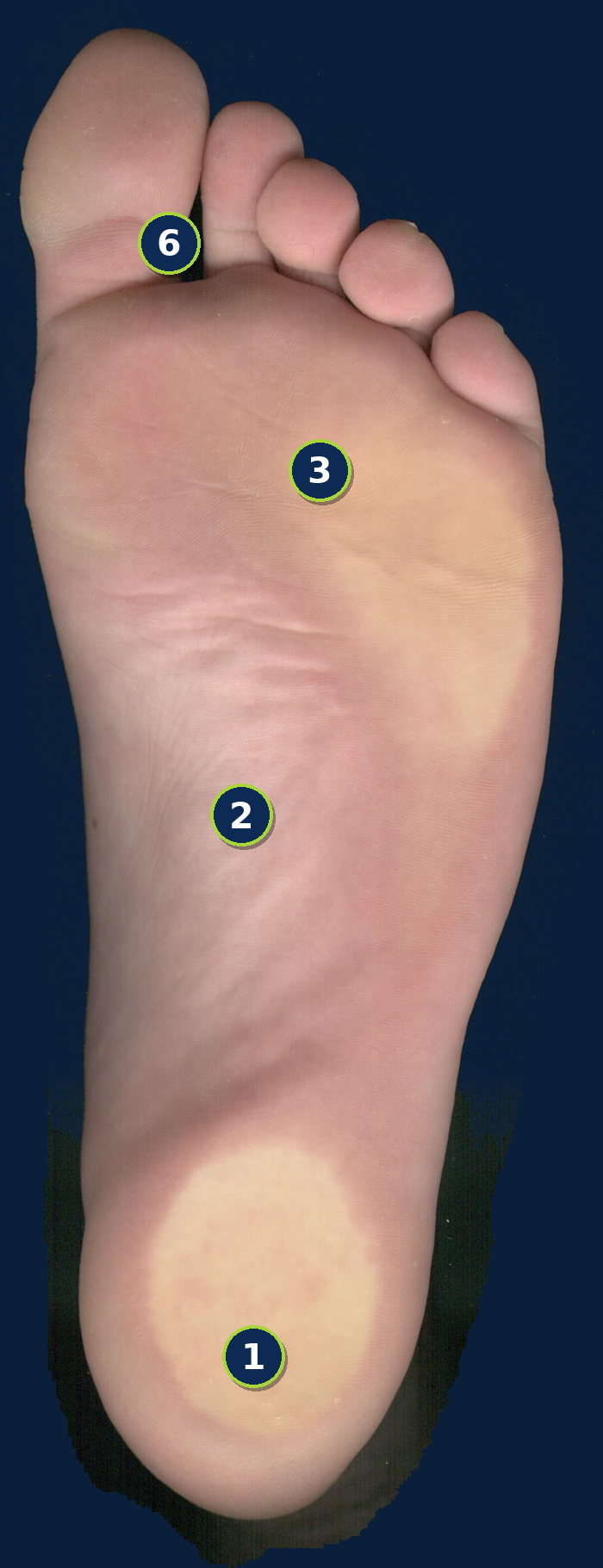
The sole. Most foot pain lives down here, and zones 1 and 3 are the two busiest addresses in my clinic. Photo by Phulvar, Wikimedia Commons (CC BY-SA 3.0), zone numbers added.
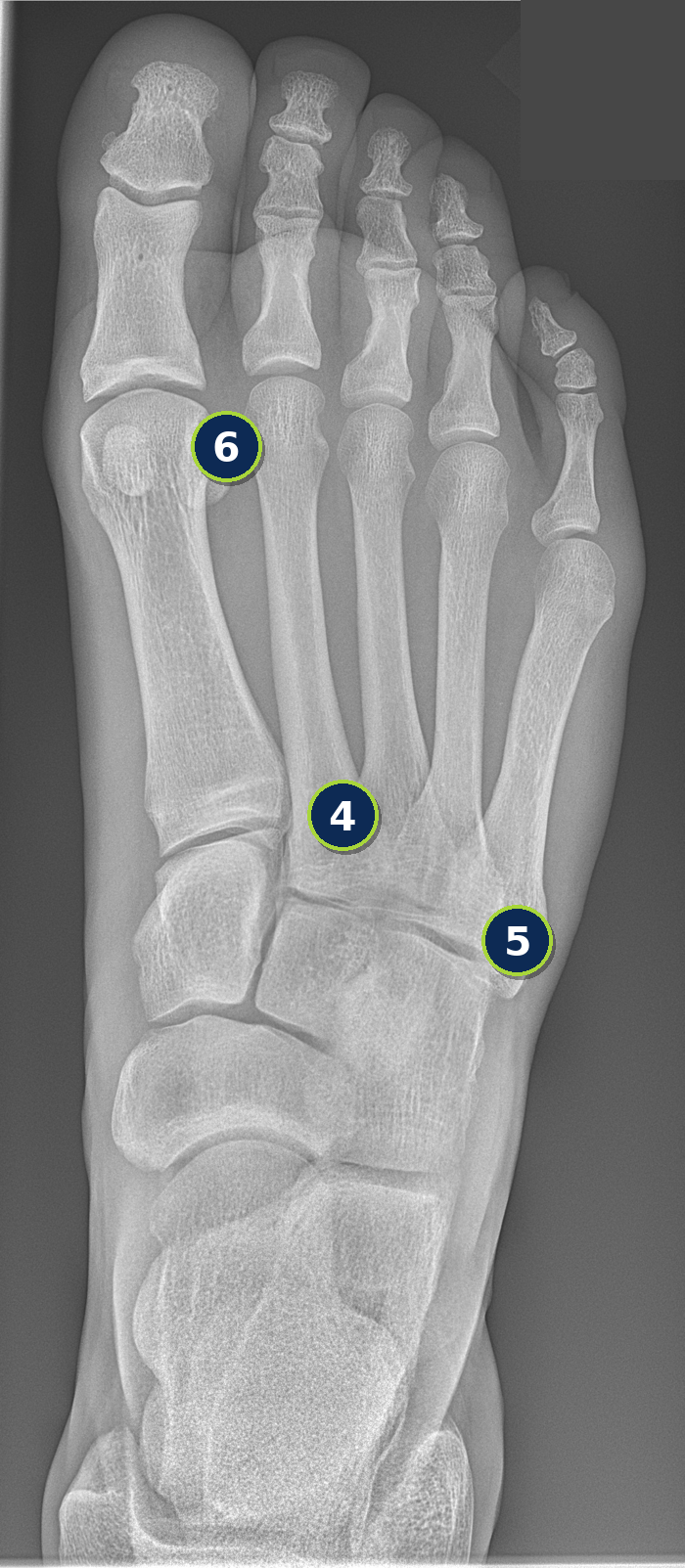
The top, on an X ray so the joints show. The ankle zones are not here. They live on the side view below, where they actually sit. X ray by Mikael Häggström, Wikimedia Commons (CC0), zone numbers added.
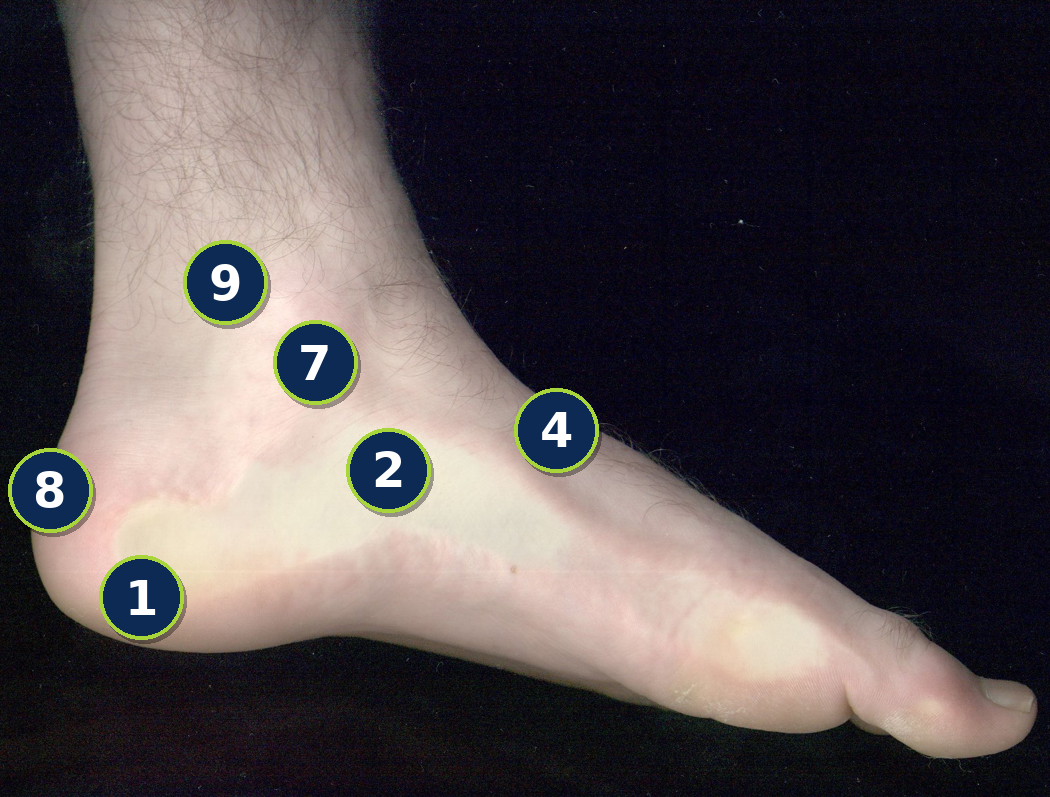
The side, seen from the inside. The only angle where the ankle joint, the inner ankle bone, the back of the heel and the arch all sit where they really sit. Zone 10 is on no map. Burning or numbness in both feet does not have one address, and it gets its own row below. Photo by Phulvar, Wikimedia Commons (CC BY-SA 3.0), zone numbers added.
The Whole Map at a Glance
| # | Where it hurts | What it usually is | The tell |
|---|---|---|---|
| 1 | Bottom of the heel | Plantar fasciitis | Sharp with your first steps in the morning, then eases as you walk |
| 2 | The arch | An overloaded plantar fascia, or a tendon that is losing its fight to hold the arch up | An ache that builds the longer you are on your feet |
| 3 | Ball of the foot | A pinched nerve (Morton's neuroma), irritated sesamoid bones, or plain overload | A pebble in your shoe that is never there when you check |
| 4 | Top of the foot | Irritated tendons, midfoot arthritis, or a stress fracture | Hurts over the laces and gets worse with activity |
| 5 | Outside edge | Peroneal tendon irritation, or a stress injury of the fifth metatarsal | Aching along the outer border, worse with side-to-side movement |
| 6 | Toes and the big toe joint | A bunion, big toe arthritis, hammertoes, or an ingrown toenail | Sore, stiff or bent toes, worse in tight shoes or at the nail edge |
| 7 | Inside of the ankle | Posterior tibial tendon trouble, or a pinched nerve in the tarsal tunnel | Pain behind the inner ankle bone, sometimes with tingling or burning |
| 8 | Back of the heel | Achilles tendinopathy | Stiff in the morning, sore where the tendon meets the bone |
| 9 | The ankle itself | A sprain that never fully settled, or ankle arthritis | A deep joint ache, with swelling or a feeling of giving way |
| 10 | Both feet, burning or numb | Peripheral neuropathy | Worse at night, starts in the toes and creeps upward |
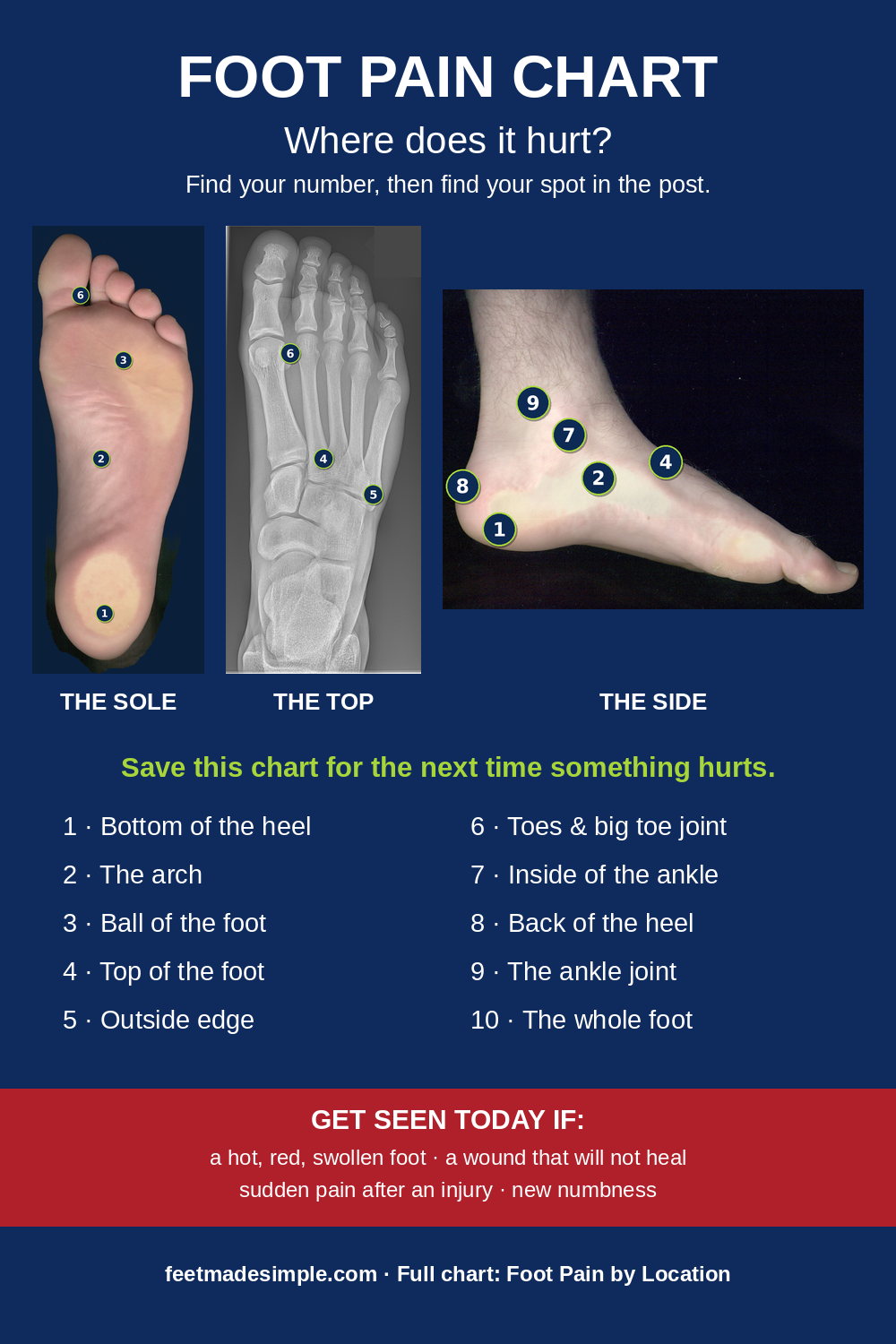
Save this chart. It is the whole page on one card, and it is the version to send to the family member who keeps describing their foot pain over the phone.
Heel Pain: Bottom vs Back of the Heel
The heel has two addresses and they are not interchangeable. Pain underneath is the plantar fascia until proven otherwise. Plantar fasciitis alone accounts for about a million doctor visits a year in the United States,² and roughly 1 in 10 people will have it at some point in their lives.³ Pain at the back, where the tendon meets the bone, is the Achilles. Patients mix these up constantly, and the treatments are different enough that the mix-up costs them months.
| If this is you | Think this instead |
|---|---|
| Heel pain that gets worse the longer you walk, not better | A calcaneal stress fracture, not plantar fasciitis |
| Squeezing the sides of your heel hurts | A stress fracture until an X-ray says otherwise |
| A deep bruised feeling in the center of the heel, worst barefoot on hard floors | A bruised or thinning heel fat pad, not the fascia |
🔗 Related Reading: Plantar Fasciitis: A Podiatrist's Guide to Diagnosis & Evidence-Based Management: The full heel pain guide, with the stretching program that does most of the work.
🔗 Related Reading: Achilles Tendinopathy: Your Complete Guide to Understanding and Healing: Back of the heel pain, the rehab progression, and when the tendon needs more than rest.
Arch Pain and Inside Ankle Pain
The arch and the inside of the ankle are one system, not two. The posterior tibial tendon runs behind the inner ankle bone and holds your arch up from underneath, so when it struggles, both addresses start complaining and the arch tires by the end of the day. Burning or tingling that runs from the inner ankle into the sole is a different tenant in the same building. That is a nerve, pinched in the tarsal tunnel, the ankle's version of carpal tunnel.
| Where exactly | What it usually is | First move |
|---|---|---|
| Arch ache that builds through a workday | Overload of the fascia and the arch muscles | Supportive shoes, then check whether your shoes have quietly worn out |
| Pain behind the inner ankle bone, arch flattening on one side only | Posterior tibial tendon dysfunction | Get it looked at early, this one is easier to help in its early stages |
| Burning or tingling from the inner ankle into the sole | Tarsal tunnel syndrome | Note when it happens, especially if it wakes you at night, and get examined |
| Zone 7, a sore bump on the inside of the midfoot, just in front of the inner ankle bone | An accessory navicular, a small extra bone some people are born with | A pad that offloads the bump and supportive shoes. An X-ray settles it if it stays sore |
🔗 Related Reading: Posterior Tibial Tendon Dysfunction (Adult Acquired Flatfoot): When Your Arch Betrays You: Why one arch falls and the other does not, and what bracing and surgery can and cannot do.
🔗 Related Reading: Foot and Ankle Neuropathy: Myths, Scams, And What Actually Works: Burning, tingling and numbness, separated into what is real, what is sold, and what actually helps.
Ball of Foot Pain, Top of Foot Pain and Toe Pain
The front of the foot is crowded. The ball, the top, the toes and the nails all share a few square inches, and each keeps its own short list. Under the ball, a pinched nerve and two small bones under the big toe joint cause most of it. On top, the tendons that lift your toes run right under your laces and complain about pressure and overuse. The toes themselves bend, drift and stiffen, and the nail edge digs in. One warning runs through this whole section. Pain you can cover with one fingertip, on one bone, that gets a little worse every week is a stress fracture until proven otherwise, wherever in the front of the foot it sits.
| Spot | Usual cause | The tell |
|---|---|---|
| Between the toes, burning into the toes | Morton's neuroma | Squeezing the forefoot or narrow shoes set it off, taking the shoe off helps |
| Directly under the big toe joint | Sesamoiditis | Push off and stairs hurt, it feels like stepping on a pebble that is part of you |
| Spread across the whole ball | Metatarsalgia, plain overload | End of the day ache, better in cushioned shoes |
| Top of the foot, one pinpoint bony spot | Stress fracture | Focal, worsening weekly, does not warm up and fade |
| Big toe joint, stiff more than sore | Hallux rigidus, big toe arthritis | The toe will not bend up like the other one |
| Big toe joint, drifting toward the second toe | Bunion | The bump, the shoe rub, and the drift you can see |
| Under the second toe joint | Capsulitis, or a plantar plate injury | Aching under the second toe, with the toe starting to lift or drift toward the big toe |
| Toes bent and rubbing on top | Hammertoes | Corns on top of the toes, and pain in closed shoes |
| Edge of the toenail, red and sore | Ingrown toenail | Hurts when it is pressed, and angrier after tight shoes or a fresh trim cut too short |
🔗 Related Reading: Morton's Neuroma: A Complete Guide to Symptoms, Diagnosis, and Treatment: The pebble in the shoe, why it happens, and the ladder from shoe changes to surgery.
🔗 Related Reading: Sesamoiditis: Big Pain From Little Bones Under the Great Toe: The two small bones under the big toe that cause an outsized amount of pain.
🔗 Related Reading: Bunions: What Helps, When to Consider Surgery, and What Recovery Is Really Like: What actually helps a bunion, and what modern minimally invasive surgery looks like.
🔗 Related Reading: Hallux Rigidus (Big Toe Arthritis): What It Is and How to Treat It: A stiff, arthritic big toe joint, and the options from inserts to fusion.
🔗 Related Reading: Ingrown Toenails: Causes, Safe Home Care, and When to See a Podiatrist: The nail edge that digs in, what home care is safe, and when the toe needs a procedure instead of another soak.
Pain on the Outside of the Foot and Ankle Pain
The outside edge is where old ankle sprains go to keep complaining. The peroneal tendons run behind the outer ankle bone and down the edge of the foot, and they get irritated by the same roll that sprained the ligaments. The fifth metatarsal, the long bone along the outer edge, is the other tenant, and it is a bone that breaks in two distinct ways with two very different levels of patience for healing. Deep pain inside the ankle joint itself, especially with evening swelling, points at the joint rather than anything around it.
| Spot | Usual cause | Watch out |
|---|---|---|
| Behind the outer ankle bone, aching down the edge | Peroneal tendon irritation | Snapping or popping there means the tendon may be slipping, get it examined |
| One tender spot halfway along the outer edge | Fifth metatarsal stress injury | Pain that is still there at rest needs an X-ray |
| A tender bump at the base of the fifth metatarsal after a roll | A fracture of the fifth metatarsal base | Some of these heal slowly by design, do not walk it off for weeks |
| Deep in the ankle, stiff in the morning, swollen by evening | Ankle arthritis, often from an old injury | A joint that locks or gives way needs a workup |
🔗 Related Reading: Ankle Sprains: Your Complete Recovery and Prevention Guide: Why sprains keep hurting months later, and the rehab that finishes the job.
🔗 Related Reading: Ankle Fractures: Surgery, Recovery & What to Expect: When the ankle is actually broken, which fractures need surgery, and what recovery takes.
🔗 Related Reading: Complete Guide to Ankle Arthritis: Your Treatment Options Explained: The worn ankle joint, and the full range of what can be done about it.
When It Hurts Is a Clue Too
Same foot, same spot, and the timing still changes the answer. Run your pain down this table after you run it across the map.
| The pattern | Points toward | First move |
|---|---|---|
| First steps in the morning, then it eases | Plantar fasciitis | Stretch before your feet hit the floor |
| Builds the longer you are on your feet | Overload of a fascia, a tendon or a tired arch | Audit the load. Shoes, hours and surfaces, in that order |
| Wakes you at night, burning | A nerve problem | Get it checked, and sooner if you have diabetes |
| Arrived overnight, hot, red and swollen | Gout, or an infection | Call the same day, this one does not take home treatment first |
| Started with a twist or a fall | A sprain, or a fracture | If you cannot take four steps on it, get an X-ray |
Get Seen Today If
Most foot pain is a try the first move and give it two weeks problem. These are not.
| The sign | Why it cannot wait |
|---|---|
| You cannot bear weight, or cannot take four steps | That is the fracture rule, and it needs an X-ray today |
| A joint is hot, red and swollen, with or without fever | Infection and gout look alike at the start, and one of them eats joints |
| You have diabetes and a new sore, a red area, or one hot swollen foot | A hot swollen diabetic foot that does not hurt much can be a Charcot collapse starting |
| One foot has gone flat, or changed shape | A tendon may have failed, and shape changes get harder to reverse |
| New numbness that is spreading, or a foot that drags | Nerve problems that are moving need a workup, not a wait |
🔗 Related Reading: Charcot Foot: The Hot, Swollen Foot That Does Not Hurt: The diabetic foot emergency that gets mistaken for a sprain or gout, and why the first days matter.
🔗 Related Reading: Your Complete Guide to Diabetic Foot Care: Protecting Your Feet for Life: The daily foot check and the habits that keep small problems small.
❓ Frequently Asked Questions
Why does the bottom of my heel hurt?
In most people it is plantar fasciitis, the overloaded band under the foot, and the giveaway is pain with the first steps of the morning that eases as you walk. A bruised fat pad feels deeper and more central, and is worst barefoot on hard floors. Heel pain that gets worse the longer you walk, or hurts when the sides of the heel are squeezed, follows the stress fracture pattern and needs an X-ray.
Why does my arch hurt?
Usually load. The plantar fascia and the tendon that holds your arch up share the work, and an ache that builds through the day on your feet is that system getting tired. Shoes that have quietly worn out are the most common fixable cause. An arch that is flattening on one side only, with pain behind the inner ankle bone, is the posterior tibial tendon asking for help, and that one is worth an appointment sooner rather than later.
Why does the top of my foot hurt?
Usually the tendons that lift your toes, irritated by tight laces, a shoe tongue, or a sudden jump in activity. Midfoot arthritis causes a deeper ache in the same area. The exception that matters is one pinpoint spot on one bone that keeps getting worse week by week. That pattern is a stress fracture until an X-ray proves otherwise.
What does pain on the outside of the foot mean?
Most often the peroneal tendons, which run behind the outer ankle bone and get irritated after a rolled ankle or with side to side sports. A tender spot along the fifth metatarsal bone itself is the other common source, and that one can be a stress injury, so focal bone pain on the edge earns an X-ray rather than a month of waiting.
Why do my feet hurt in the morning?
The classic morning pain is plantar fasciitis, worst with the first steps and easing within minutes. A stiff, sore back of the heel points at the Achilles instead. Morning stiffness in many joints at once that takes an hour or more to loosen up is a different pattern, and it is worth raising with your doctor because it can point at inflammatory arthritis.
How do I know if my foot pain is serious?
Four questions sort most of it. Can you bear weight and take four steps? Is any joint hot, red and swollen? Do you have diabetes with a new sore or a hot foot? Is the shape of the foot changing? A yes to any of those means get seen promptly. Pain that is simply not improving after two weeks of sensible care earns an appointment too.
Can shoes alone cause foot pain?
Yes, and it is one of the most common findings in my clinic. Shoes wear out from the inside before they look worn out. Bend your shoe. If it folds in the middle instead of at the toes, or twists like a wet towel, its support is gone, whatever the tread looks like.
Should I see a podiatrist or wait it out?
Wait it out when the pain matches a benign row on the map, you can walk on it, and it is clearly improving. Book the appointment when it is not improving after two weeks, when any red flag above is present, or when the same spot keeps coming back. Coming back is information. It usually means the load problem underneath was never fixed.
Products That Cover Most of the Map
You do not need a different product for every zone. While you sort out which address is yours, these six cover most of the map.
Disclosure: These are general recommendations I use in practice. Some links are affiliate links which support Feet Made Simple at no cost to you. Always confirm with your provider before starting new treatments.
- Brooks Ghost Max 3 (sponsored link). A cushioned, stable daily shoe with room in the toes. It is the default starting point for zones 1, 2 and 3 while you figure out the rest.
- Topo Atmos 2 (sponsored link). The widest toe box option on the roster. If your pain lives in the toes or the ball of the foot, zones 3 and 6, room to spread out is often half the treatment.
- Powerstep Pinnacle Plus Met (sponsored link). Firm arch support with a metatarsal pad built in, which makes it the one insert that speaks to both the arch and the ball of the foot.
- United Ortho Plantar Fasciitis Night Splint (sponsored link). Worn in bed, it holds the plantar fascia and the calf in a gentle stretch overnight, aimed squarely at zone 1 and the first steps of the morning.
- Tuli Heel Cups (sponsored link). Simple, cheap cushioning that sits in any shoe and takes the edge off zone 1 while the stretching program does its work.
- Cold Therapy Ankle Ice Pack (sponsored link). Shaped for the ankle, and the first thing to reach for in zone 9 after a fresh twist, or on any zone at the end of a long day when swelling is the complaint.
References
- Thomas MJ, Roddy E, Zhang W, Menz HB, Hannan MT, Peat GM. The population prevalence of foot and ankle pain in middle and old age: a systematic review. Pain. 2011;152(12):2870-2880. DOI: 10.1016/j.pain.2011.09.019. PMID: 22019150.
- Riddle DL, Schappert SM. Volume of ambulatory care visits and patterns of care for patients diagnosed with plantar fasciitis: a national study of medical doctors. Foot & Ankle International. 2004;25(5):303-310. DOI: 10.1177/107110070402500505. PMID: 15134610.
- Buchbinder R. Plantar Fasciitis. The New England Journal of Medicine. 2004;350(21):2159-2166. DOI: 10.1056/NEJMcp032745. PMID: 15152061.
