A board-certified foot and ankle surgeon’s honest, evidence-based guide to the most common running injuries. No scare tactics required.
Written By Dr. Dawson November 2026
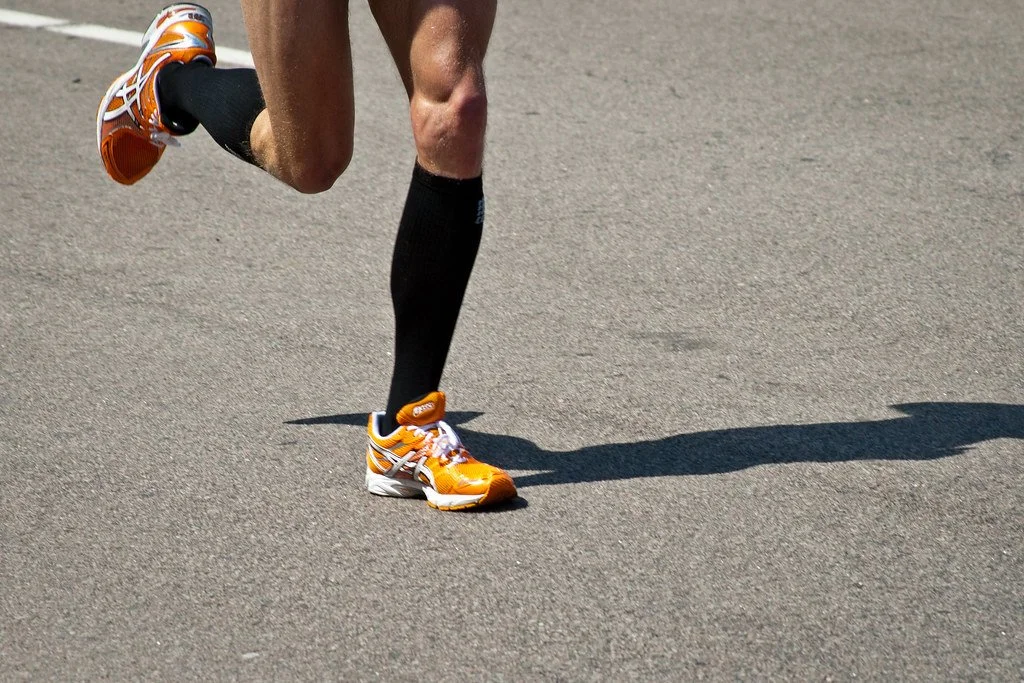
Most running injuries are predictable and treatable. Here's what the evidence actually says.
Let me say something that might be professionally controversial: most running injuries are not bad luck. They are predictable, often preventable, and in the vast majority of cases, entirely treatable without surgery, injections, or a six-month sabbatical from the sport you actually enjoy.
Getting from "injured" to "back running" does require understanding what's happening in the tissue. Slapping on a compression sleeve and hoping for the best is not a treatment plan. There's a lot of well-meaning but oversimplified advice floating around running communities (and, frankly, some corners of sports medicine) that keeps people in pain longer than necessary.
This guide covers the most common running injuries, what the research shows about treating them, and the red flags that tell you it's time to stop self-managing and see someone who went to medical school. I'll be specific about where the evidence is strong and where it's messier than the internet would have you believe.
📌 Quick Note: Running injuries are almost never a reason to quit running for good. The goal of treatment is to get you back on the road, not to hand you a lifetime membership to the elliptical.
Why Runners Get Injured: The Real Causes
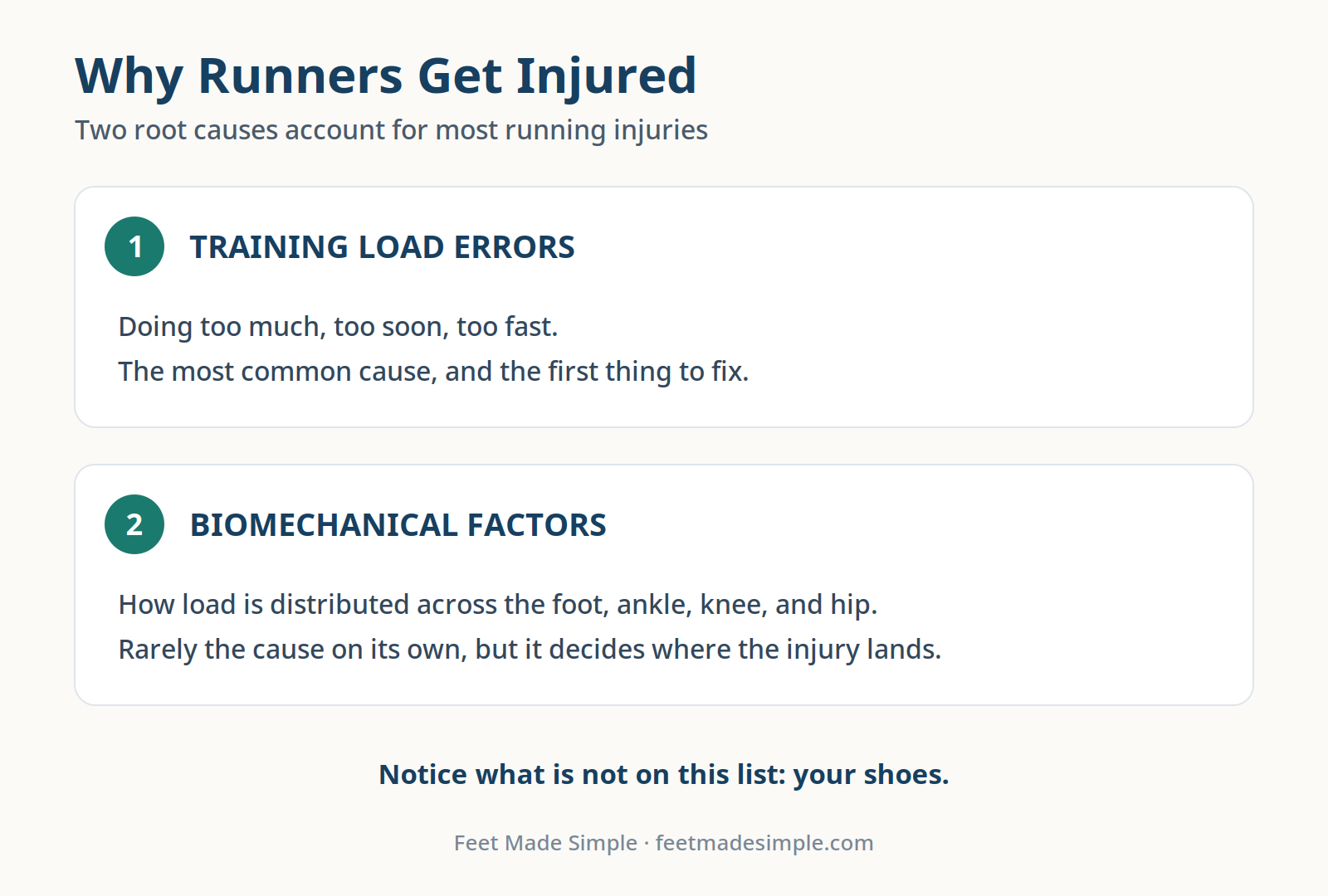
The two root causes of most running injuries. Spoiler: it's rarely your shoes.
Running is a high-impact, repetitive loading activity. A typical mile involves roughly 1,500 foot strikes. Each one sends a ground reaction force (the force the ground pushes back up into your leg) of about 2 to 3 times your body weight through the foot.¹ That adds up fast, and when the cumulative stress exceeds the tissue's ability to absorb and adapt to it, injury follows.
The overwhelming majority of running injuries trace back to one of two categories.
Training load errors: doing too much, too soon, too fast. A rapid jump in running volume is the risk factor runners can most easily control, and the best data we have hint that it matters. In a large cohort of novice runners, those who increased their weekly distance by more than 30% over a two-week period showed a trend toward more distance-related injuries: kneecap pain, IT band syndrome, shin splints, and some hip problems. The trend was exploratory, not proof. Overall injury rates were no different between the fast and slow progressors, and the injuries tied to pace rather than distance, including Achilles tendinopathy and plantar fasciitis, showed no link to the size of the jump at all.²
Biomechanical factors: the way load is distributed across the foot, ankle, knee, and hip during the gait cycle (the repeating sequence of landing, loading, and pushing off). These rarely cause injury on their own, but they amplify the effect of training errors and create injury patterns that repeat predictably until someone addresses them.
Notice what didn't make the list: weak arches, "bad" running shoes, or the fact that you supinate (roll toward the outside of your foot). These factors exist and can matter, but they are almost always secondary to load management. Fix the training error first. Then worry about your foot type.
🔗 Related Reading: Foot & Ankle Anatomy Explained: A Patient’s Guide to Bones, Joints, Nerves, Arteries: A plain-language tour of the structures named in this post, useful if terms like posterior tibialis or plantar fascia are new to you.
Running Injuries at a Glance
The Most Common Running Injuries: What They Are and What Works
Plantar Fasciitis: The Classic
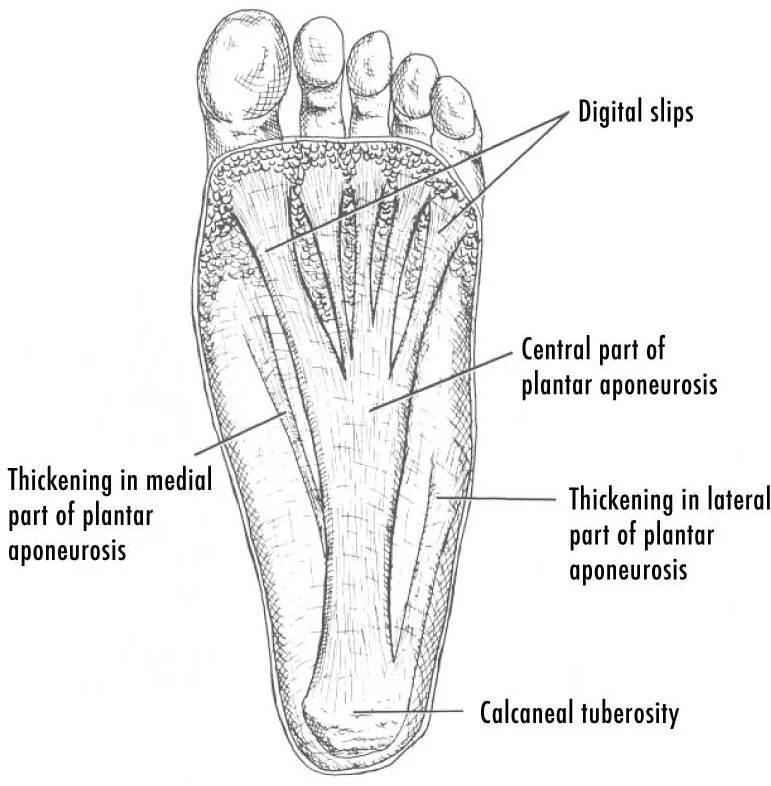
The plantar fascia runs from your heel to your toes. When it's angry, you'll know with your first step out of bed.
Plantar fasciitis is irritation (and more accurately, degeneration) of the plantar fascia, the thick band of connective tissue running along the bottom of the foot from heel to toes. It's the most common cause of heel pain in runners and non-runners alike, and it's one of the most mismanaged conditions in sports medicine.
The hallmark symptom is sharp heel pain with the first steps of the morning that eases after a few minutes of walking. This pattern is nearly pathognomonic (so characteristic that it practically makes the diagnosis on its own).
What the evidence says: There is moderate evidence that high-load strength training, specifically slow, heavy single-leg heel raises with the toes propped on a rolled towel, produces faster improvement. In that randomized trial, everyone received shoe inserts. The group that added the strength program was clearly ahead at three months compared with the group that added plantar fascia-specific stretching, and by one year the two groups looked similar, which tells you loading speeds recovery rather than working magic.³ Add calf stretching (both the gastrocnemius and soleus, the two main calf muscles), load management, and a supportive orthotic during the painful phase, and most cases improve substantially within several months, though a stubborn minority take up to a year.
Corticosteroid injections can give strong short-term relief, and I still use them selectively, but repeated injections carry a documented risk of plantar fascia rupture.⁴ I reserve them for cases that haven't responded to 8 to 12 weeks of good conservative care. Platelet-rich plasma (PRP, a concentrate made from your own blood) has moderate evidence behind it for recalcitrant (stubborn, treatment-resistant) cases: in chronic plantar fasciitis that had already failed other care, it produced better pain relief than a steroid injection at one year.⁵
🔗 Related Reading: Plantar Fasciitis: A Podiatrist's Guide to Diagnosis & Evidence-Based Management: Night splints, injection timing, and the PEACE & LOVE framework, covered in detail.
🔗 Related Reading: Custom vs. OTC Orthotics: What the Research Actually Says: When a drugstore insert is enough and when it isn't, sorted by what the trials actually show.
Achilles Tendinopathy: Not Tendinitis
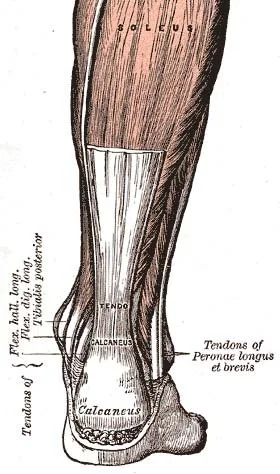
Midportion and insertional Achilles pain are treated differently. Know which one you have before you start heel drops.
The word "tendinitis" implies inflammation. In chronic Achilles pain, what's actually happening is Achilles tendinopathy, a disorganized, failed healing response within the collagen of the tendon itself. That distinction matters because it changes what works.
Anti-inflammatory treatments like NSAIDs (ibuprofen, naproxen, and friends), ice, and corticosteroids are poorly matched to a degenerative process. They can dull acute symptoms, but they don't fix the underlying problem. Progressive tendon loading does. Both the Alfredson eccentric protocol (heel drops where the calf lengthens under load) and heavy slow resistance (HSR) training (slow, heavy calf raises) have moderate evidence for midportion tendinopathy.⁷ In a head-to-head randomized trial, the two produced similar outcomes. Satisfaction tended to run higher with heavy slow resistance early on, though not by a margin the trial could prove. What did separate the two programs was follow-through: 92% of the heavy slow resistance group stuck with their program, against 78% of the eccentric group.⁶
Important distinction: Midportion tendinopathy (pain 2 to 6 cm above the heel) and insertional tendinopathy (pain right where the tendon attaches to the heel bone) are different conditions with different protocols. Dropping the heel below the level of the step works well for midportion cases but can compress and aggravate the insertion. If you've been doing deep heel drops for insertional pain with no improvement, this is probably why.
A heel lift reduces strain at the insertion during the painful phase. The evidence for heel lifts is limited, but they're cheap, low-risk, and make loading programs easier to tolerate.
🔗 Related Reading: Achilles Tendinopathy: Your Complete Guide to Understanding and Healing: Rehab progressions, dry needling, and return-to-run protocols, including how to tell midportion from insertional pain.
Patellofemoral Pain Syndrome (Runner's Knee): More Than Just Knee Pain
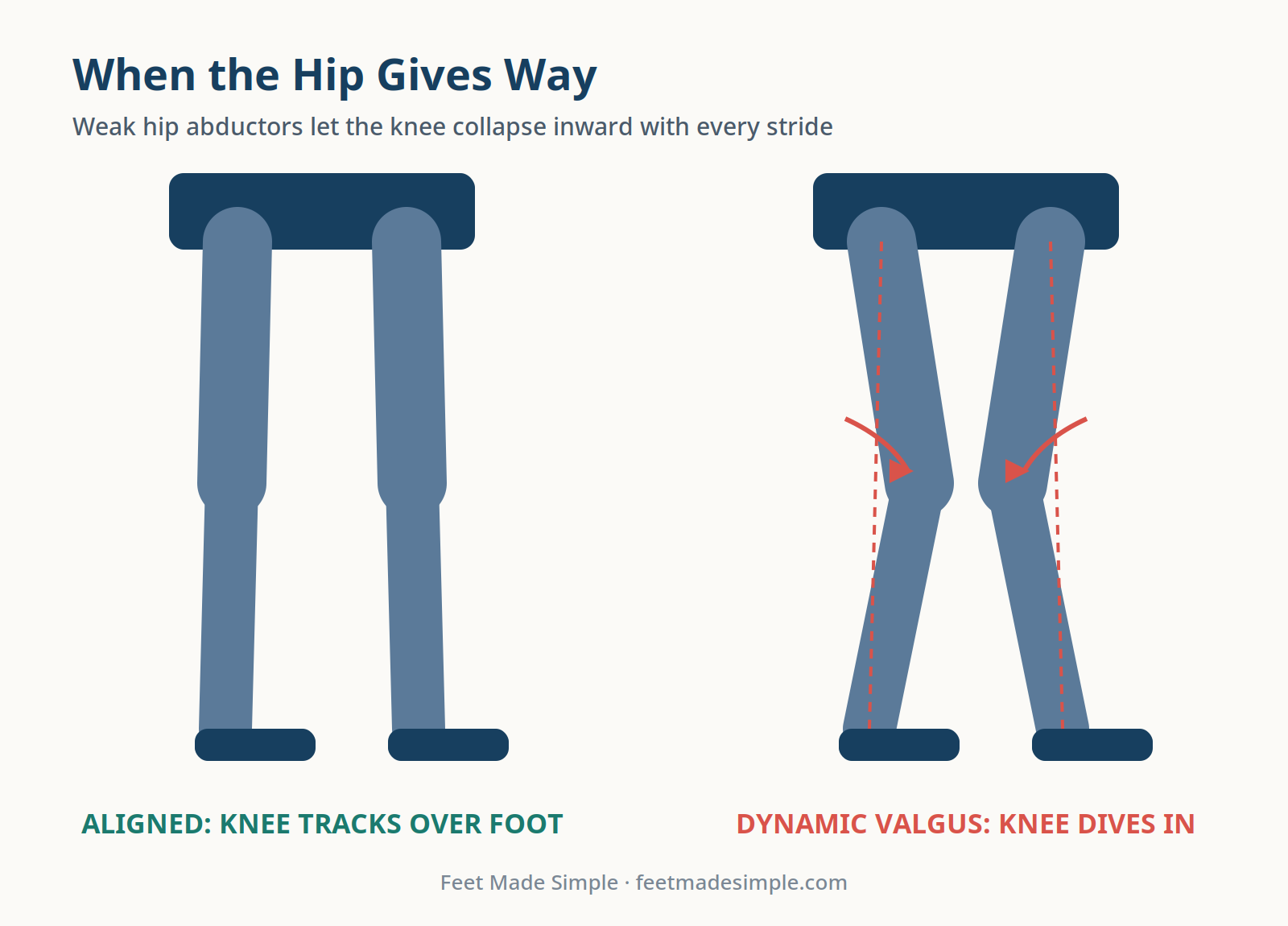
When the hip isn't doing its job, the knee pays the price. Runner's knee is often a hip problem wearing a knee costume.
Patellofemoral pain syndrome (PFPS), colloquially "runner's knee," is pain around or behind the kneecap where it glides over the thigh bone (the patellofemoral joint). It typically flares with running, stairs, squatting, and long stretches of sitting with the knee bent. It's the most common knee complaint in runners, and it's frustrating to treat because the knee is often not where the primary problem lives.
Thinking has shifted over the past 15 years or so toward a proximal (closer to the trunk, in this case the hip) cause. Weakness and poor control of the hip abductors and external rotators, the muscles on the side and back of the hip that keep the thigh from rolling inward, allow dynamic valgus (the knee collapsing inward as you land). That increases pressure on the outer part of the joint behind the kneecap.⁸ Treating only the knee while ignoring the hip is treating the symptom instead of the cause.
What the evidence says: Hip and core strengthening produces outcomes at least as good as knee-focused programs, with pain relief arriving sooner.⁹ A systematic review supports combining hip and quadriceps work as the most effective approach.¹⁰ Increasing cadence (steps per minute) by 5 to 10% meaningfully reduces load at the knee,¹¹ and retraining runners to limit inward hip collapse has emerging evidence: in a small study of 10 female runners, mirror feedback reduced pain.¹² Orthotics may help runners who pronate heavily, but they are an adjunct, not a replacement for strengthening.
Medial Tibial Stress Syndrome (Shin Splints): The Most Overused Diagnosis in Running
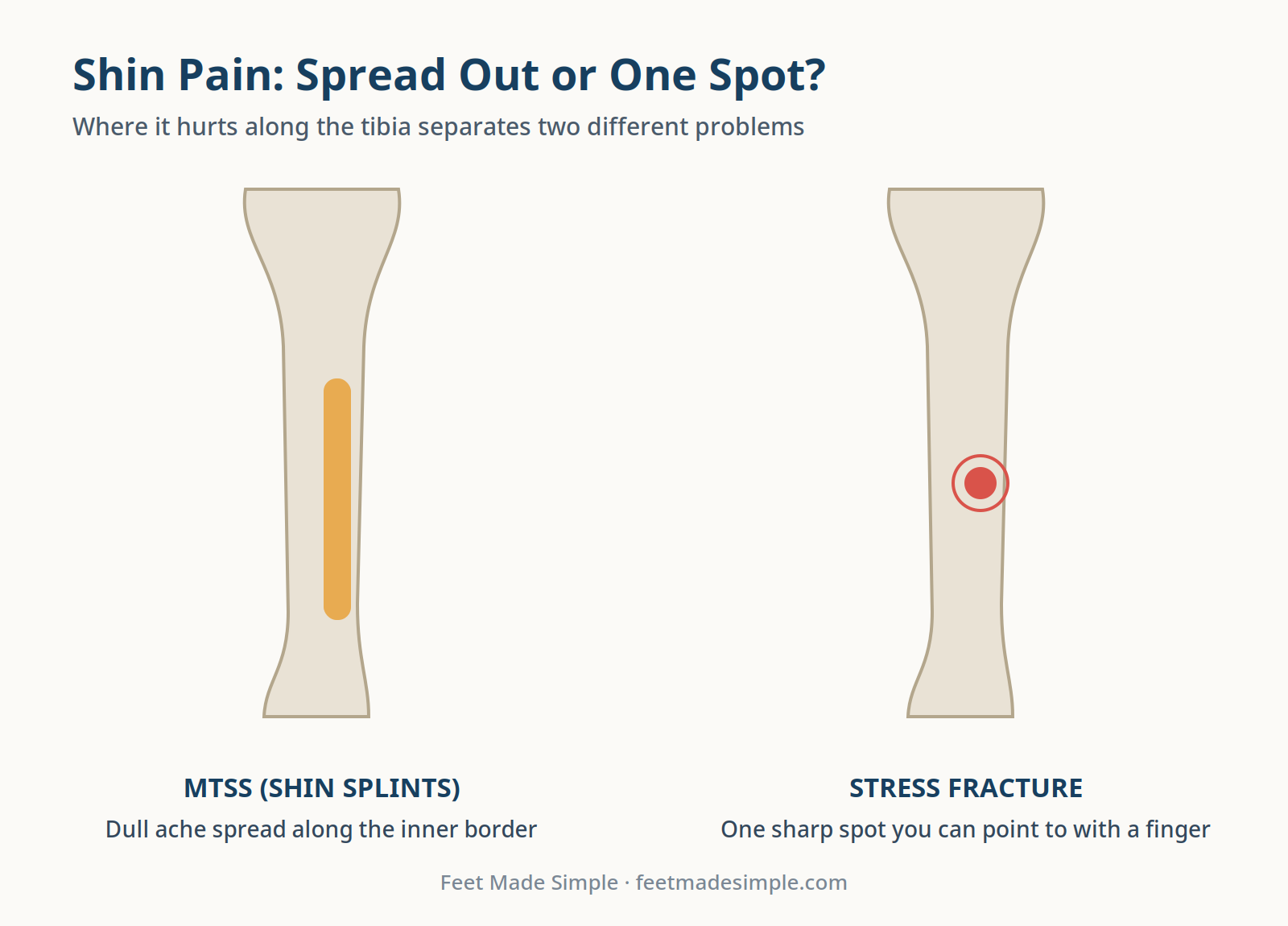
Diffuse pain along the shin is MTSS. One sharp spot that hurts when you press on it is a different conversation entirely.
"Shin splints" gets applied to virtually any shin pain in a runner. The condition it most accurately describes is medial tibial stress syndrome (MTSS), diffuse pain along the posteromedial border of the tibia (the inner back edge of the shinbone) that shows up with running and settles, at least early on, with rest.
MTSS is widely viewed as a bony overload response. The tibial cortex (the dense outer shell of the bone) is being stressed faster than it can remodel, and MTSS sits on a continuum with tibial stress fracture, the more serious end of the same spectrum.
⚠️ Important: One focal tender spot on the shinbone, especially with pain that lingers after you stop running, is a red flag for stress fracture. That warrants imaging, not a wait-and-see approach.
What the evidence says: Load management is the cornerstone of treatment, and that's backed more by strong clinical consensus than by large trials. Cut mileage, drop the high-impact sessions, and use pool running or cycling to hold onto fitness. Gait retraining is the other lever, and its evidence is emerging rather than settled: in one small study, runners with high impact loading used real-time biofeedback to soften their landings and cut the shock reaching the shinbone by nearly half, and the change held a month later.¹³ Those were uninjured runners and a lab measurement, not shin pain outcomes, so treat the approach as promising rather than proven.
Iliotibial Band Syndrome: The Runner Who Trains Through Everything
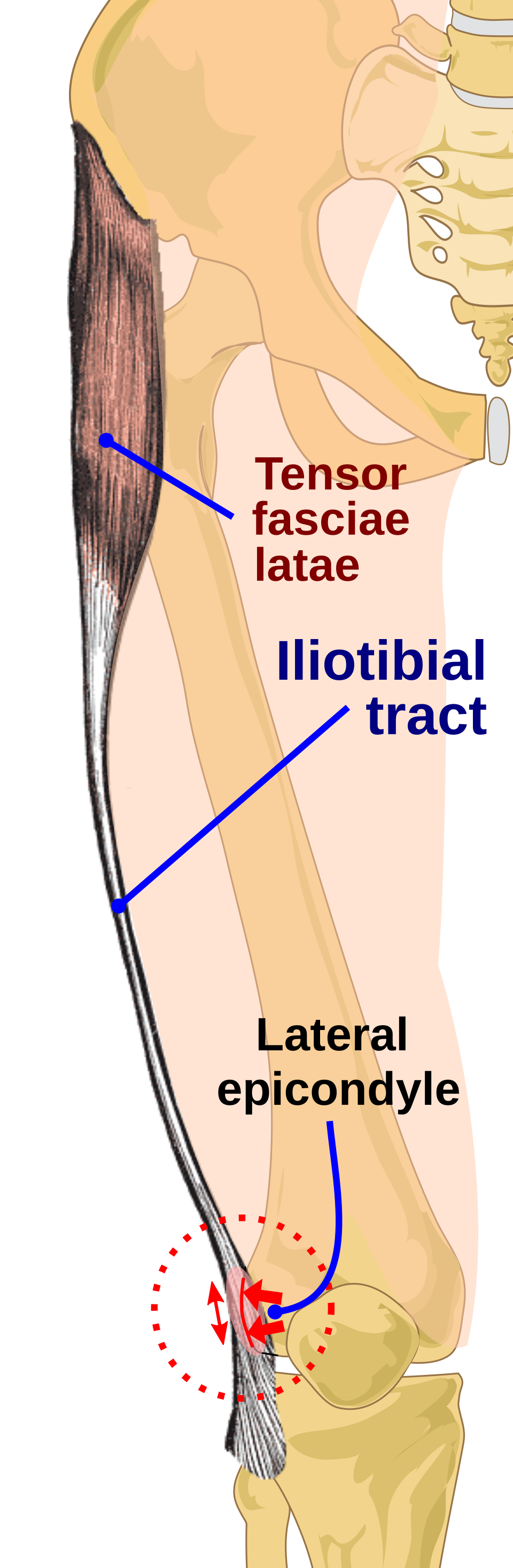
Newer anatomy research points to compression, not friction, as the source of IT band pain.
Iliotibial band syndrome shows up as sharp pain on the outside of the knee that appears at a predictable point in a run, often 15 to 20 minutes in or at a specific distance, and forces the runner to stop. The IT band is a thick strip of tissue running down the outside of the thigh. Anatomical research suggests the pain comes from compression of a sensitive fat layer beneath the band near the lateral femoral epicondyle (the bony bump on the outside of the knee end of the thigh bone), not from the band "rubbing" back and forth as we long believed.¹⁴
The typical patient: someone who recently ramped up mileage, runs mostly on cambered (sloped) roads or the same direction on a track, and has been ignoring early warning signs for weeks. IT band syndrome is usually a story of a few skipped rest days compounded into something much harder to fix.
What the evidence says: The evidence for hip abductor and gluteal strengthening is emerging, and it is worth seeing exactly what it rests on. In the key study, distance runners with IT band syndrome had weaker hip abductors on the painful side, and after a 6-week gluteus medius strengthening program, 22 of 24 were pain free, with no recurrences at 6 months.¹⁵ There was no comparison group, though, so strengthening cannot be separated from rest, time, and the rest of the rehab those runners were doing. Foam rolling the IT band, a beloved ritual of runners everywhere, does not lengthen the band (it's not that stretchy). It may temporarily calm symptoms, but the evidence is limited and it is not a treatment. A corticosteroid injection near the epicondyle can settle stubborn cases enough for rehab to proceed.
Stress Fractures: The One You Can't Run Through
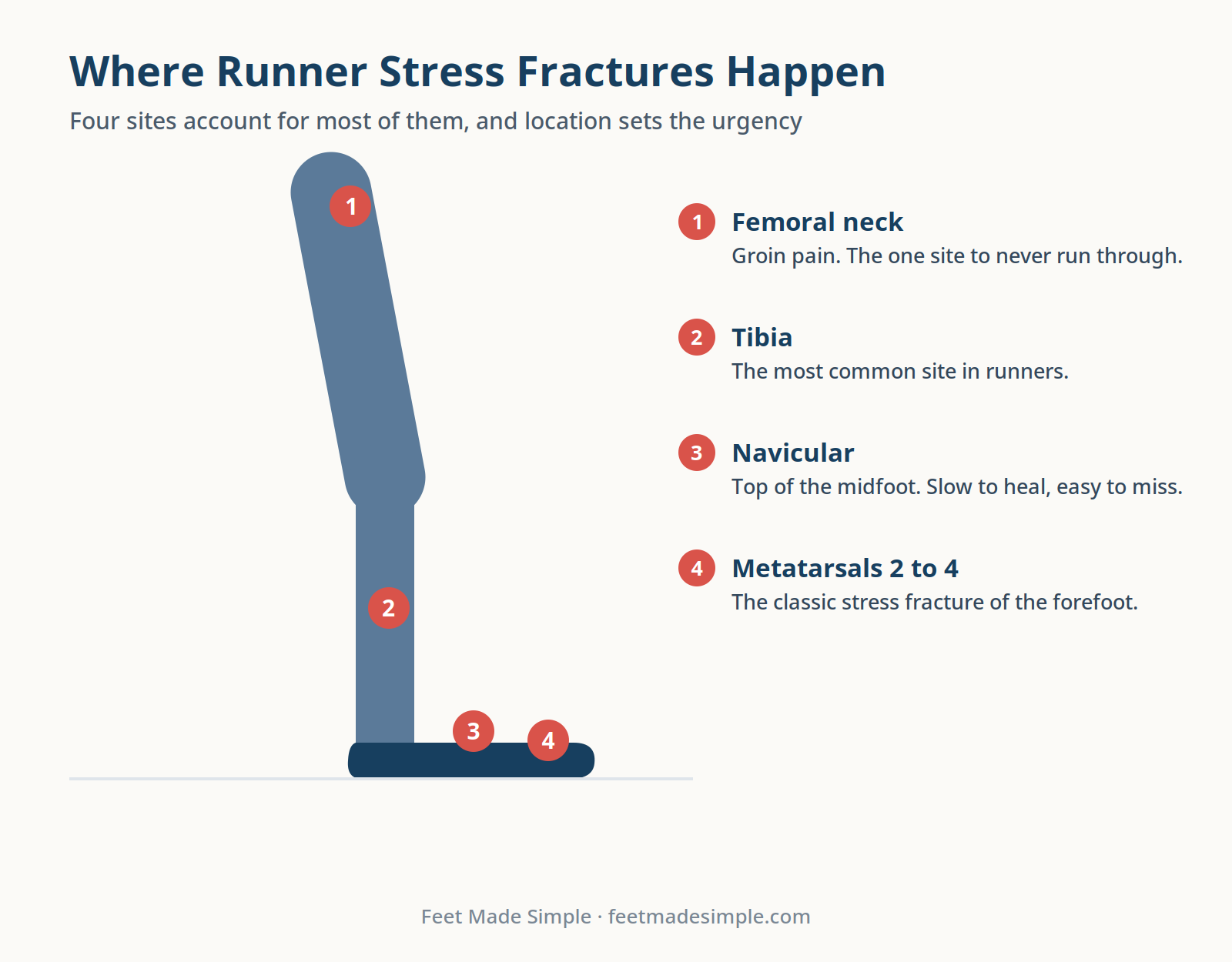
Not all stress fractures are equal. Location determines how seriously you need to take it.
Stress fractures are partial or complete cracks in bone caused by repetitive loading that outpaces the bone's ability to repair itself. In runners, they most often occur in the tibia, the metatarsals (the long bones of the forefoot), the navicular (a key bone at the top of the midfoot), and the femur. Some sites are relatively low-risk, like the second through fourth metatarsals and most of the tibia. Others are high-risk and need prompt specialist evaluation, including the navicular, the femoral neck, and the Jones fracture zone at the base of the fifth metatarsal, a watershed area with a notoriously poor blood supply.
⚠️ Red Flag: Focal bone tenderness, night pain, or pain that doesn't improve with rest needs imaging. MRI (magnetic resonance imaging) catches early stress injuries that X-rays often miss, and you should not run on a suspected stress fracture.
Treatment depends on location and severity: rest, a period of offloading or non-weight-bearing, and occasionally surgical fixation for high-risk sites. Any runner with recurrent stress fractures needs a bone health workup, including vitamin D, calcium, and screening for relative energy deficiency in sport (REDs), a state where food intake doesn't cover training demands. REDs disrupts hormones and bone health in runners of any sex, and missed periods are a major warning sign in female athletes.¹⁶
Forefoot Pain: When It's Not the Usual Suspects
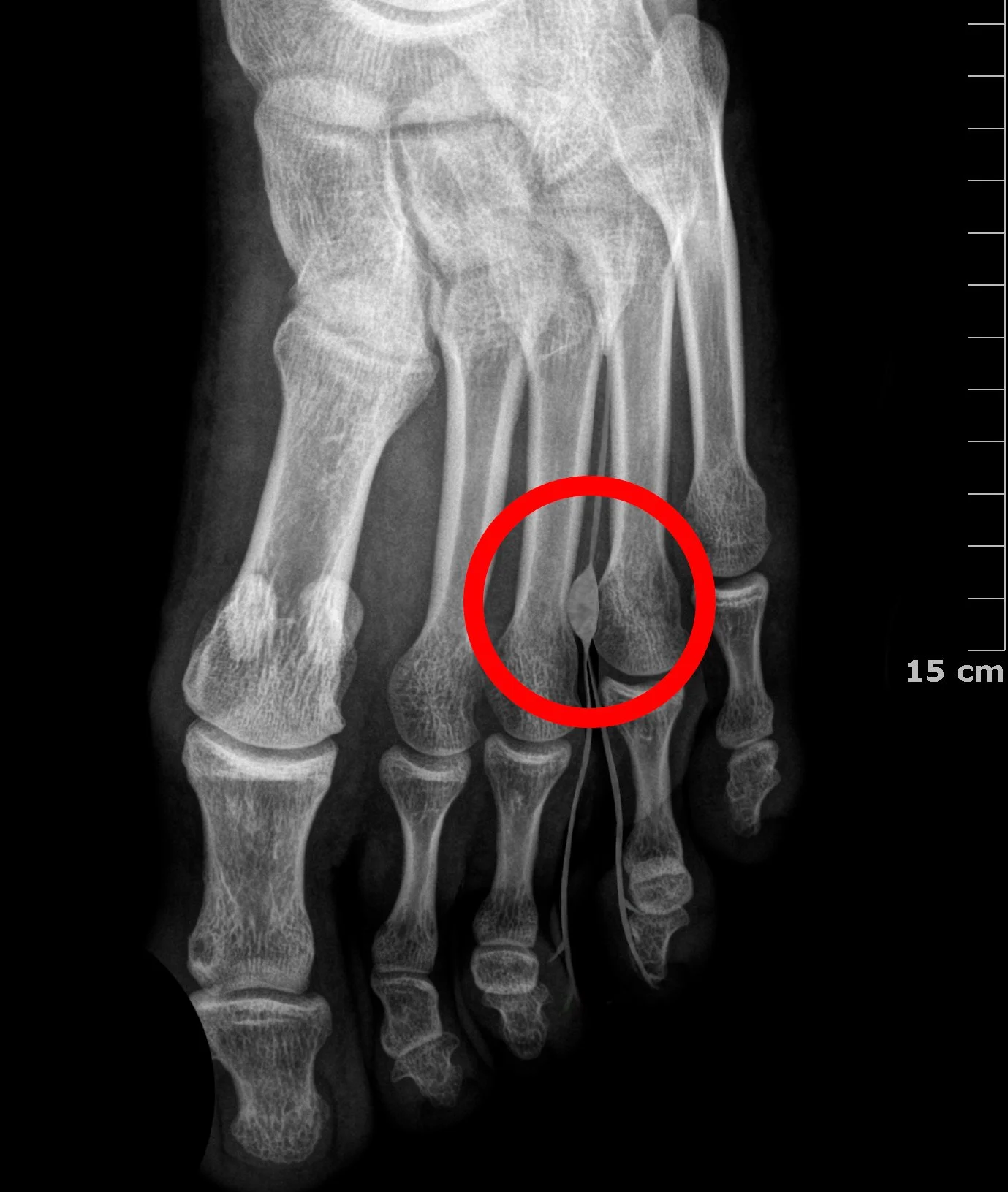
Forefoot pain in runners often comes down to two small but very vocal structures.
Pain in the ball of the foot doesn't always fit the classic running injury categories. Two conditions are worth knowing.
Sesamoiditis involves the two pea-sized bones embedded in the tendon beneath the big toe joint. It causes pain directly under that joint, often worst at push-off, and is common in high-arched runners who land on the forefoot.
Morton's neuroma is a thickening of the nerve between the third and fourth toes, causing burning, numbness, or the classic "pebble in my shoe" feeling. Narrow, low-volume shoes and rising mileage tend to make it worse.
Both respond poorly to being ignored. Early load management, footwear changes, and padding built into an orthotic go a long way.
🔗 Related Reading: Sesamoiditis: Big Pain From Little Bones Under the Great Toe: Diagnosis, padding placement, and when more aggressive treatment makes sense for pain under the big toe joint.
🔗 Related Reading: Morton's Neuroma: A Complete Guide to Symptoms, Diagnosis, and Treatment: Diagnosis, padding placement, and when more aggressive treatment makes sense for burning forefoot pain.
Ankle Sprains: The Injury Runners Don’t Take Seriously Enough
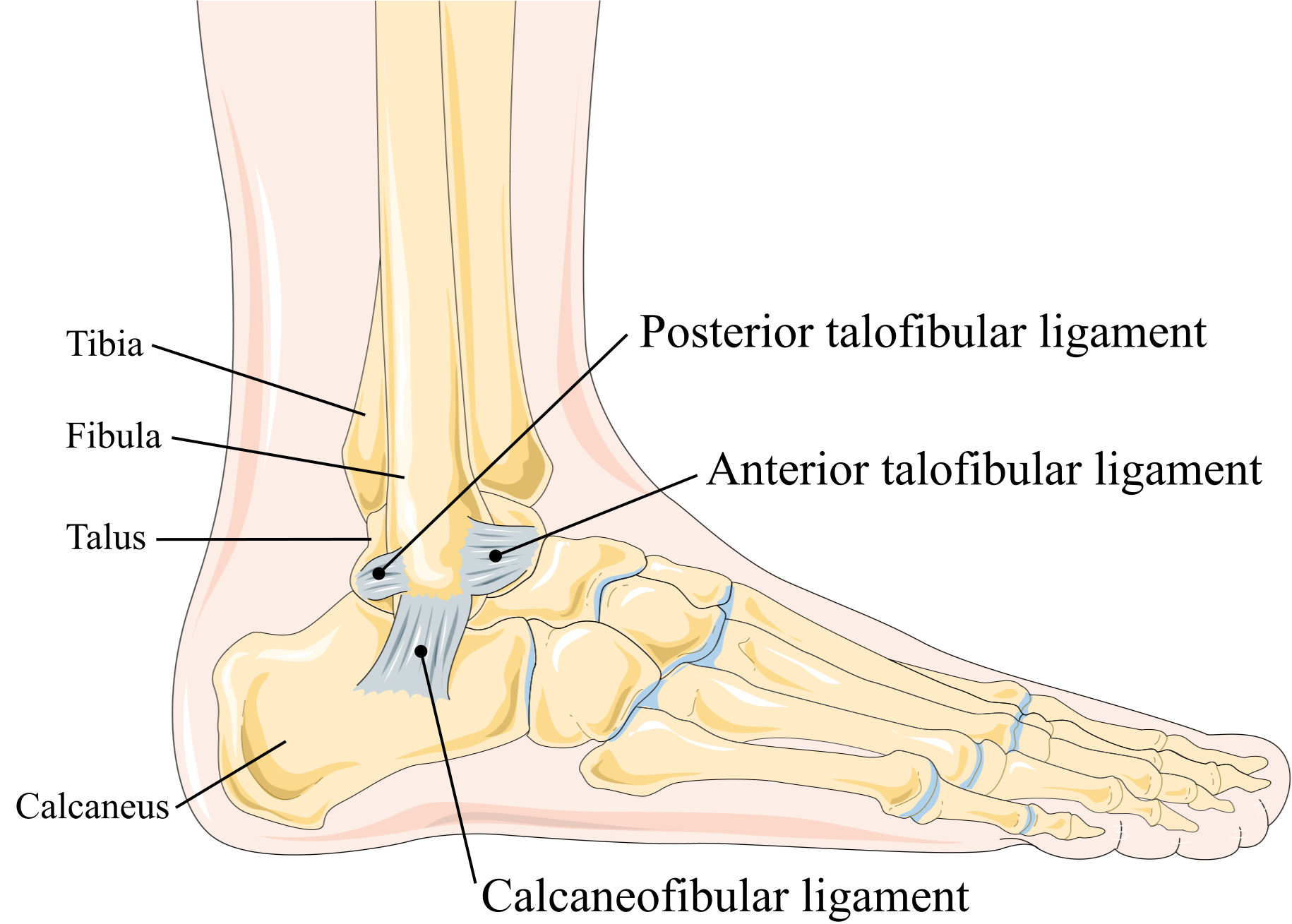
Underrehabbing an ankle sprain is one of the most reliable ways to guarantee you'll sprain it again.
Lateral ankle sprains are among the most common injuries in runners, especially on trails and uneven ground. They're also among the most underrehabbed. In one prospective study of people who sprained an ankle badly enough to visit an emergency department, 40% of the participants who were followed and assessed a full year after a first-time lateral ankle sprain still met the definition for chronic ankle instability.¹⁷
The "walk it off" approach has a predictable outcome: incomplete ligament healing, lingering deficits in proprioception (your joint's sense of where it is in space), and a higher risk of the next sprain. A real rehab program after a sprain is not optional if you plan to keep running.
🔗 Related Reading: Ankle Sprains: Your Complete Recovery and Prevention Guide: Sprain grading, acute care, balance and strength progressions, and return-to-sport criteria.
A Note on Overpronation and Flat Feet in Runners
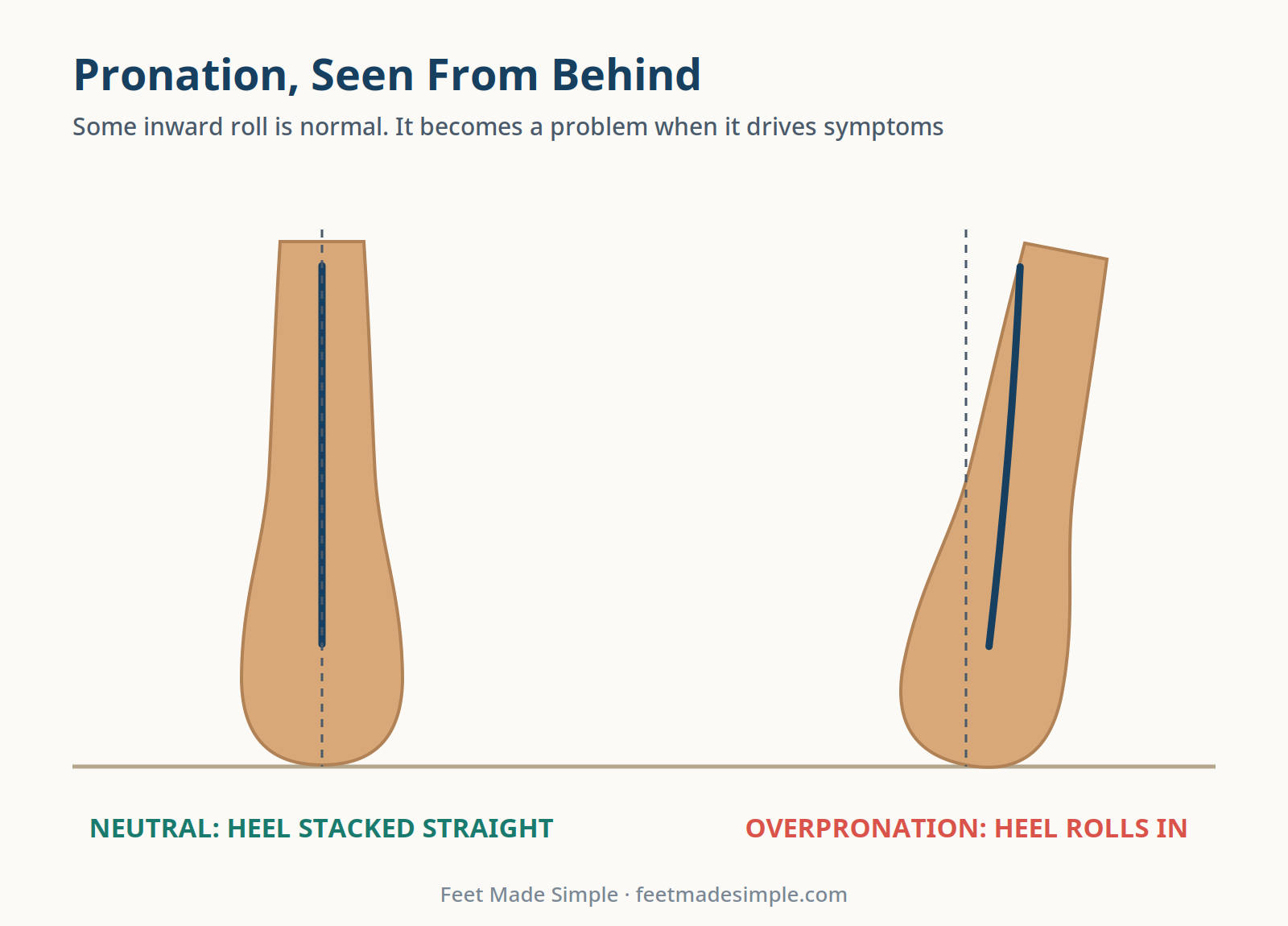
Some pronation is normal and necessary. “Overpronation” only matters when it’s producing symptoms.
Overpronation gets blamed for nearly everything in running, often by people trying to sell motion control shoes. Pronation itself is the normal inward roll of the foot that absorbs impact. Excessive or poorly controlled pronation can contribute to inner shin pain, kneecap stress, and overload of the posterior tibial tendon (the main tendon supporting the arch), but it's a contributing factor, not a sentence.
For most runners, hip and foot strengthening plus appropriate footwear, with orthotics where indicated, is enough. Runners with a collapsing adult flatfoot or progressive posterior tibial tendon dysfunction need a dedicated evaluation.
🔗 Related Reading: Posterior Tibial Tendon Dysfunction (Adult Acquired Flatfoot): When Your Arch Betrays You: The full spectrum, from early tendon irritation to advanced deformity, including where bracing and surgery fit.
Training Load: The Variable Nobody Wants to Talk About
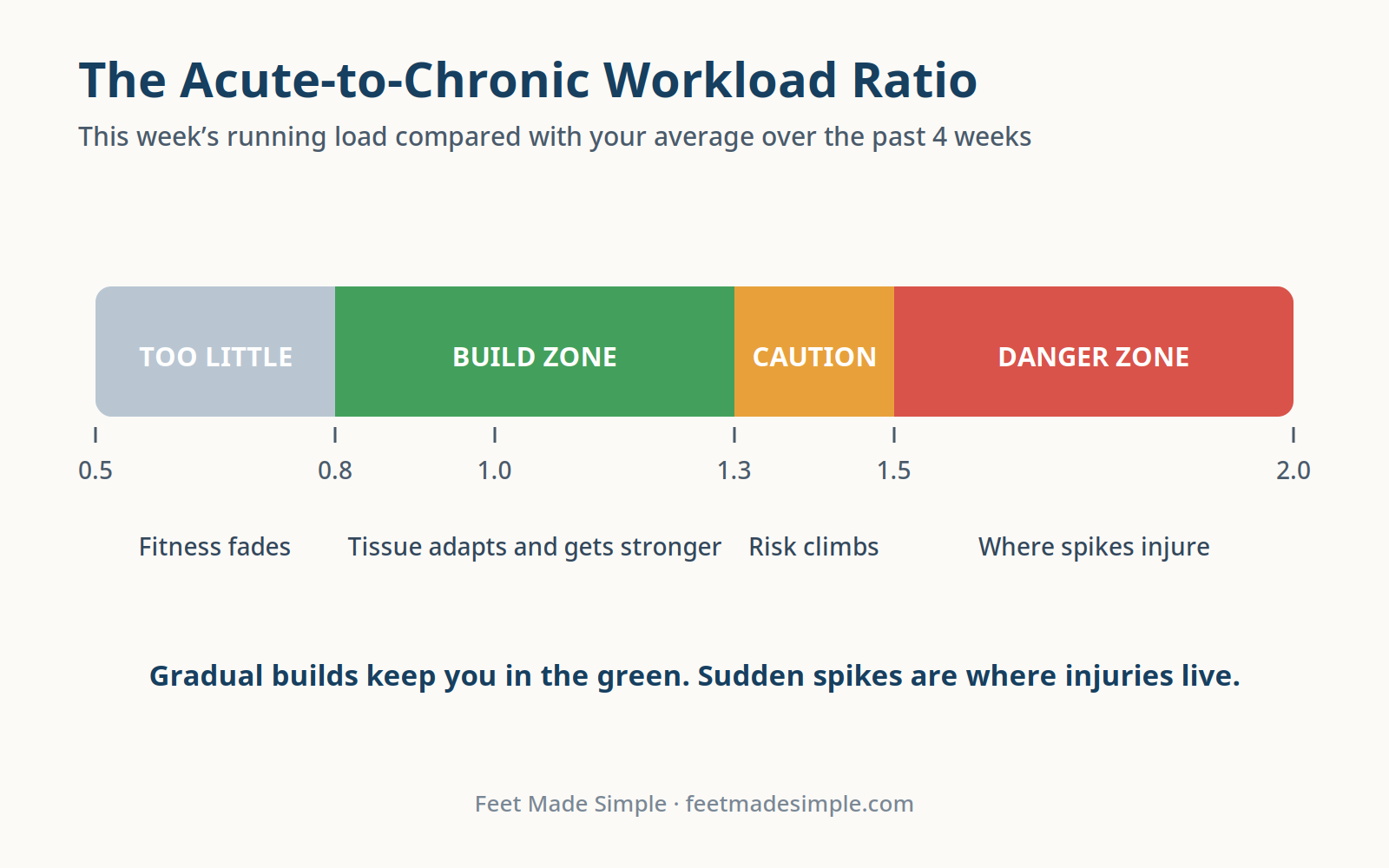
Your cardiovascular system adapts faster than your tendons and bones, and your ego adapts faster than either.
If one idea unlocks the prevention and treatment of running injuries more than any other, it's this: your tissues tolerate what they're used to. Researchers formalize that as the acute-to-chronic workload ratio, how much you're running this week compared to your average over the past month.
Here's where I have to be honest, because the research is messier than the slogans. The ratio concept comes largely from team sport data,¹⁸ and the famous 10% rule actually failed to reduce injuries in a randomized trial of novice runners.¹⁹ The best signal we have points the same way: sudden jumps in volume look risky, at least for distance-related injuries, even if the data aren't conclusive yet.² The four spikes I see constantly in clinic look like this.
The post-vacation spike. Two or three weeks off, then straight back to your old mileage as if nothing happened.
The race-prep surge. Cramming miles into the four to six weeks before a goal race.
The "I feel great" trap. Feeling strong and doubling mileage in a week, forgetting that tendons and bones adapt weeks behind your heart and lungs.
Returning from injury too fast. The pain is gone, so the tissue must be healed. It isn't. Symptom resolution and tissue healing are not the same thing.
Treat 10% as a reasonable guardrail rather than a law of physics. Individual tolerance varies, but anyone rebuilding after injury or a training gap is better served by a slow ramp than a bold one.
Footwear: What Actually Matters (And What Doesn’t)
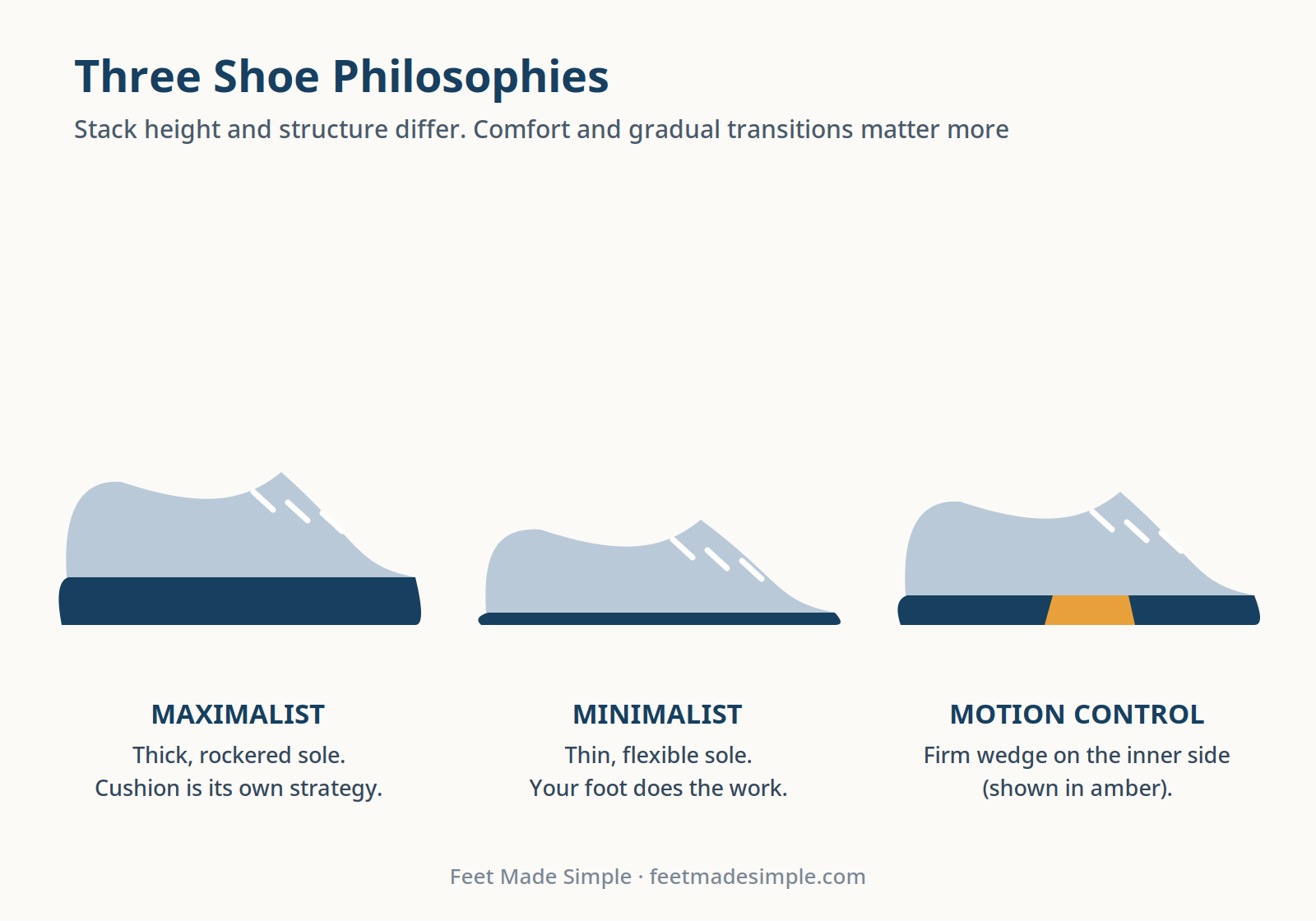
Three very different philosophies, one shared goal. The research has an opinion on which matters most.
Running shoe selection has been one of the most hotly debated topics in sports medicine for two decades, fueled in no small part by books and popular media that made causal claims the research never supported. The pendulum swung from "motion control shoes prevent injury" to "minimalist shoes prevent injury" and is now, mercifully, settling somewhere more nuanced.
Comfort is probably the best selection criterion. Researchers have proposed a "comfort filter": runners naturally pick shoes that suit how they move. That's expert opinion rather than tested evidence, but it fits a long record of failed attempts to prevent injury by prescribing shoes by foot type.²⁰ Stack height (the amount of cushioning between your foot and the ground) is a trade-off rather than a virtue, and maximalist shoes are not universally better or worse. Motion control shoes have weak evidence for preventing injury in the general running population, though they still have a role for symptomatic flat feet.
Minimalist shoes work for some runners, but the transition has to be slow. In one study, runners who followed a gradual 10-week switch still showed more bone stress changes on MRI than those who stayed in traditional shoes.²¹ In my clinic, jumping straight into zero-drop shoes (no height difference between heel and forefoot) is a common route to plantar fasciitis, Achilles tendinopathy, or a metatarsal stress fracture.
The recommendation that holds up best: wear a shoe that fits the shape of your foot, feels comfortable at your target pace, and has enough structure for your mileage. Replacing it around 400 to 500 miles is a sensible clinical rule of thumb, not a research-derived number. Everything else is secondary.
When to See a Podiatrist or Sports Medicine Physician
Not every running injury needs a clinic visit right away. Minor aches that settle after a few days off and don't return with a gradual comeback are generally safe to manage yourself. Get evaluated when:
Pain changes the way you run. Running on altered mechanics creates new problems.
Symptoms haven’t improved after 2 to 3 weeks of sensible load reduction.
You have focal bone tenderness, night pain, or swelling that won't settle. These need imaging to rule out stress fracture.
You've had the same injury more than once. Recurrence means the underlying cause was never addressed.
You've lost regular menstrual cycles, are restricting food intake, or have had multiple bone stress injuries. These are hallmarks of REDs and need a team approach.
You have diabetes, peripheral neuropathy (nerve damage that dulls sensation in the feet), or circulation problems. Injuries in these groups need closer monitoring.
A good sports medicine physician or podiatrist won't tell you to stop running unless there's a specific, articulable reason that continuing would cause harm. If that's the first and only thing you hear, a second opinion is reasonable.
Running Injury FAQ
Should I run through pain?
It depends on the pain. A mild ache that warms up and fades during a run is usually fine to continue at lower intensity. Sharp pain that builds as the run goes on is your body asking you to stop, and ignoring it is how small injuries become big ones. Bone pain with a tender spot is always a stop-and-get-checked situation.
Ice or heat?
Current soft tissue guidance, summarized in the PEACE & LOVE framework, has moved away from routine icing and anti-inflammatories because inflammation is part of healing.²² Short-term ice for pain relief is fine, but icing every ache for weeks isn't buying you much. Heat is useful for chronic stiffness before activity. The Plantar Fasciitis guide walks through the framework in more detail.
Do I need an MRI?
Not for most running injuries. A good clinical exam diagnoses the majority of overuse conditions. MRI earns its keep when a stress fracture is suspected but X-rays look normal, when the diagnosis is unclear, or when surgery is on the table.
Can I cross-train while injured?
Usually, yes, and you should. Pool running, cycling, and swimming maintain fitness while taking impact off the injured tissue. The exception is bone stress injuries, where weight-bearing options like the elliptical or stair climber may still load the bone too much.
How do I know I'm ready to run again?
A reasonable threshold: you can walk briskly for 30 minutes without pain, and the injured area isn't tender when you press firmly on it. From there, build back with walk-run intervals over 2 to 4 weeks. Returning to full mileage the moment the pain fades is a reliable route to relapse. The Achilles Tendinopathy guide includes a sample return-to-run progression.
Recommended Products
These items are listed for education and reference only. They are not a substitute for medical advice. Please see your podiatrist for specific recommendations. I may receive a commission if you purchase through these links, at no additional cost to you.
OTC Orthotics and Insoles for Runners
Powerstep Pinnacle Maxx: Firm shell, structured heel cup, wide forefoot platform. The most versatile OTC option for runners with plantar fasciitis or mild overpronation.
Superfeet Run Comfort: A lower-profile option built for lower-volume running shoes. A good middle ground between support and fit.
Footwear for Injured Runners
Brooks Ghost Max 3: Roomy toe box, removable insole, rocker sole, and maximal cushion. One of the most orthotic-friendly running shoes available and a good choice during recovery from plantar fasciitis or stress fractures.
Hoka Bondi 9: Maximum cushion with rocker geometry that reduces forefoot pressure. Pairs well with semi-rigid orthotics and is especially useful after forefoot injuries.
New Balance 1540: Motion control category. Best for runners with significant overpronation who need structure in addition to an orthotic.
Topo Ultraventure 4: Wide toe box and trail-ready grip. A smart pick for trail runners and anyone dealing with forefoot crowding or neuroma symptoms.
Hoka Clifton 9: A lower-profile alternative to the Bondi for runners who want cushion without quite as much stack height.
Recovery, Rehab, and Bracing
Theraband Resistance Bands: The standard for progressive hip, ankle, and foot strengthening. Cheap, durable, and part of nearly every running rehab program worth following.
ASO Lace-Up Ankle Brace: Solid support for returning to trails after an ankle sprain while your balance and strength catch up.
TheraBand Foot Roller: Massage for the arch, useful in a morning routine, not a substitute for strength loading.
Hyperice Normatec 3 Legs: Pneumatic compression for high-volume runners managing leg fatigue. The evidence is better for swelling reduction than for injury prevention.
References
1. Cavanagh PR, Lafortune MA. Ground reaction forces in distance running. Journal of Biomechanics. 1980;13(5):397-406. DOI: 10.1016/0021-9290(80)90033-0. PMID: 7400169.
2. Nielsen RØ, Parner ET, Nohr EA, Sørensen H, Lind M, Rasmussen S. Excessive progression in weekly running distance and risk of running-related injuries: an association which varies according to type of injury. Journal of Orthopaedic & Sports Physical Therapy. 2014;44(10):739-747. DOI: 10.2519/jospt.2014.5164. PMID: 25155475.
3. Rathleff MS, Mølgaard CM, Fredberg U, Kaalund S, Andersen KB, Jensen TT, Aaskov S, Olesen JL. High-load strength training improves outcome in patients with plantar fasciitis: a randomized controlled trial with 12-month follow-up. Scandinavian Journal of Medicine & Science in Sports. 2015;25(3):e292-e300. DOI: 10.1111/sms.12313. PMID: 25145882.
4. Acevedo JI, Beskin JL. Complications of plantar fascia rupture associated with corticosteroid injection. Foot & Ankle International. 1998;19(2):91-97. DOI: 10.1177/107110079801900207. PMID: 9498581.
5. Peerbooms JC, Lodder P, den Oudsten BL, Doorgeest K, Schuller HM, Gosens T. Positive effect of platelet-rich plasma on pain in plantar fasciitis: a double-blind multicenter randomized controlled trial. The American Journal of Sports Medicine. 2019;47(13):3238-3246. DOI: 10.1177/0363546519877181. PMID: 31603721.
6. Beyer R, Kongsgaard M, Hougs Kjær B, Øhlenschlæger T, Kjær M, Magnusson SP. Heavy slow resistance versus eccentric training as treatment for Achilles tendinopathy: a randomized controlled trial. The American Journal of Sports Medicine. 2015;43(7):1704-1711. DOI: 10.1177/0363546515584760. PMID: 26018970.
7. Sussmilch-Leitch SP, Collins NJ, Bialocerkowski AE, Warden SJ, Crossley KM. Physical therapies for Achilles tendinopathy: systematic review and meta-analysis. Journal of Foot and Ankle Research. 2012;5:15. DOI: 10.1186/1757-1146-5-15. PMID: 22747701.
8. Powers CM. The influence of abnormal hip mechanics on knee injury: a biomechanical perspective. Journal of Orthopaedic & Sports Physical Therapy. 2010;40(2):42-51. DOI: 10.2519/jospt.2010.3337. PMID: 20118526.
9. Ferber R, Bolgla L, Earl-Boehm JE, Emery C, Hamstra-Wright K. Strengthening of the hip and core versus knee muscles for the treatment of patellofemoral pain: a multicenter randomized controlled trial. Journal of Athletic Training. 2015;50(4):366-377. DOI: 10.4085/1062-6050-49.3.70. PMID: 25365133.
10. Lack S, Barton C, Sohan O, Crossley K, Morrissey D. Proximal muscle rehabilitation is effective for patellofemoral pain: a systematic review with meta-analysis. British Journal of Sports Medicine. 2015;49(21):1365-1376. DOI: 10.1136/bjsports-2015-094723. PMID: 26175019.
11. Heiderscheit BC, Chumanov ES, Michalski MP, Wille CM, Ryan MB. Effects of step rate manipulation on joint mechanics during running. Medicine and Science in Sports and Exercise. 2011;43(2):296-302. DOI: 10.1249/MSS.0b013e3181ebedf4. PMID: 20581720.
12. Willy RW, Scholz JP, Davis IS. Mirror gait retraining for the treatment of patellofemoral pain in female runners. Clinical Biomechanics. 2012;27(10):1045-1051. DOI: 10.1016/j.clinbiomech.2012.07.011. PMID: 22917625.
13. Crowell HP, Davis IS. Gait retraining to reduce lower extremity loading in runners. Clinical Biomechanics. 2011;26(1):78-83. DOI: 10.1016/j.clinbiomech.2010.09.003. PMID: 20888675.
14. Fairclough J, Hayashi K, Toumi H, Lyons K, Bydder G, Phillips N, Best TM, Benjamin M. The functional anatomy of the iliotibial band during flexion and extension of the knee: implications for understanding iliotibial band syndrome. Journal of Anatomy. 2006;208(3):309-316. DOI: 10.1111/j.1469-7580.2006.00531.x. PMID: 16533314.
15. Fredericson M, Cookingham CL, Chaudhari AM, Dowdell BC, Oestreicher N, Sahrmann SA. Hip abductor weakness in distance runners with iliotibial band syndrome. Clinical Journal of Sport Medicine. 2000;10(3):169-175. DOI: 10.1097/00042752-200007000-00004. PMID: 10959926.
16. Mountjoy M, Ackerman KE, Bailey DM, Burke LM, Constantini N, Hackney AC, Heikura IA, Melin A, Pensgaard AM, Stellingwerff T, Sundgot-Borgen JK, Torstveit MK, Jacobsen AU, Verhagen E, Budgett R, Engebretsen L, Erdener U. 2023 International Olympic Committee's (IOC) consensus statement on Relative Energy Deficiency in Sport (REDs). British Journal of Sports Medicine. 2023;57(17):1073-1097. DOI: 10.1136/bjsports-2023-106994. PMID: 37752011.
17. Doherty C, Bleakley C, Hertel J, Caulfield B, Ryan J, Delahunt E. Recovery from a first-time lateral ankle sprain and the predictors of chronic ankle instability: a prospective cohort analysis. The American Journal of Sports Medicine. 2016;44(4):995-1003. DOI: 10.1177/0363546516628870. PMID: 26912285.
18. Gabbett TJ. The training-injury prevention paradox: should athletes be training smarter and harder? British Journal of Sports Medicine. 2016;50(5):273-280. DOI: 10.1136/bjsports-2015-095788. PMID: 26758673.
19. Buist I, Bredeweg SW, van Mechelen W, Lemmink KAPM, Pepping GJ, Diercks RL. No effect of a graded training program on the number of running-related injuries in novice runners: a randomized controlled trial. The American Journal of Sports Medicine. 2008;36(1):33-39. DOI: 10.1177/0363546507307505. PMID: 17940147.
20. Nigg BM, Baltich J, Hoerzer S, Enders H. Running shoes and running injuries: mythbusting and a proposal for two new paradigms: "preferred movement path" and "comfort filter." British Journal of Sports Medicine. 2015;49(20):1290-1294. DOI: 10.1136/bjsports-2015-095054. PMID: 26221015.
21. Ridge ST, Johnson AW, Mitchell UH, Hunter I, Robinson E, Rich BSE, Brown SD. Foot bone marrow edema after a 10-wk transition to minimalist running shoes. Medicine and Science in Sports and Exercise. 2013;45(7):1363-1368. DOI: 10.1249/MSS.0b013e3182874769. PMID: 23439417.
22. Dubois B, Esculier JF. Soft-tissue injuries simply need PEACE and LOVE. British Journal of Sports Medicine. 2020;54(2):72-73. DOI: 10.1136/bjsports-2019-101253. PMID: 31377722.
Image credits: Hero photo via Flickr, CC BY 2.0. Iliotibial band diagram and ankle ligament diagram via Wikimedia Commons, CC BY-SA 3.0. Forefoot X-ray via Wikimedia Commons, CC BY-SA 4.0.
Dr. Dawson
Hi, I’m Dr. Dawson, DPM, FACFAS, DABFAS, DABPM, a double board-certified foot and ankle surgeon. I spend most of my week in clinic and the operating room, and a surprising amount of the rest explaining why the $8 foam insert at the drugstore is not an orthotic or why a viral trend didn’t do what they hyped it to. I started Feet Made Simple™ because patients deserve foot and ankle information built on peer-reviewed research, not product hype. Every post is written by me, fully referenced, and honest about where the evidence is strong and where it isn’t. Biomechanics nerd at heart. Based in Charlotte, NC.